Tag Archives: howard hughes medical institute

Dodging the cognitive hit of early-life seizures

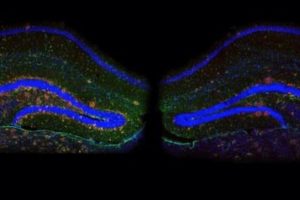
About half of newborns who have seizures go on to have long-term intellectual and memory deficits and cognitive disorders such as autism, but why this occurs has been unknown. In the December 14 Journal of Neuroscience, researchers at Children’s Hospit…

Leave a comment Continue Reading →

Gene therapy achieves early success against hemophilia

Symptoms improved significantly in adults with the bleeding disorder hemophilia B following a single treatment with gene therapy developed by researchers at St. Jude Children’s Research Hospital in Memphis and de…

Leave a comment Continue Reading →

Quest for designer bacteria uncovers a ‘Spy’

ANN ARBOR, Mich.—Scientists have discovered a molecular assistant called Spy that helps bacteria excel at producing proteins for medical and industrial purposes.
Bacteria are widely used to manufacture proteins used in medicine and indus…

Leave a comment Continue Reading →

Firefly glow: Berkeley Lab scientists develop a hydrogen peroxide probe based on firefly luciferin

A unique new probe based on luciferase, the enzyme that gives fireflies their glow, enables researchers to monitor hydrogen peroxide levels in mice and thereby track the progression of infectious diseases or cancerous tumors without harming t…

Leave a comment Continue Reading →

Unlocking the secret(ase) of building neural circuits

LA JOLLA, CA — Mutant presenilin is infamous for its role in the most aggressive form of Alzheimer’s disease — early-onset familial Alzheimer’s — which can strike people as early as their 30s. In their latest study, researchers at the Sal…

Leave a comment Continue Reading →

Missing molecules hold promise of therapy for pancreatic cancer

By determining what goes missing in human cells when the gene that is most commonly mutated in pancreatic cancer gets turned on, Johns Hopkins scientists have discovered a potential strategy for therapy.
The production of a particular cluster of …

1 Comment Continue Reading →

Cholera and vaccine experts urge United States to stockpile vaccine

As the cholera epidemic in Haiti continues to rage, public health workers are focusing their efforts on treating the tens of thousands who have already been hospitalized with cholera-like symptoms and providing clean water and adequate sanitation to…

Leave a comment Continue Reading →

MIT biologists find that restoring the gene for cancer protein p53 slows spread of advanced tumors

CAMBRIDGE, Mass. — In a new study to be published in the Nov. 25 issue of Nature, MIT cancer biologists show that restoring the protein p53′s function in mice with lung cancer has no effect early in tumor development, but restoring the function lat…

Leave a comment Continue Reading →

More evidence that melanoma does not conform to the cancer stem cell model

ANN ARBOR, Mich—University of Michigan researchers have determined that most types of melanoma cells can form malignant tumors, providing new evidence that the deadliest form of skin cancer does not conform to the increasingly popular cancer st…

Leave a comment Continue Reading →

Caltech scientists describe the delicate balance in the brain that controls fear

PASADENA, Calif. — The eerie music in the movie theater swells; the roller coaster crests and begins its descent; something goes bump in the night. Suddenly, you’re scared: your heart thumps, your stomach clenches, your throat tightens, your muscle…

Leave a comment Continue Reading →

The zebrafish’s neural circuit prevents it from biting off more than it can chew

Between alerting us to danger and allowing us to spot prey, vision keeps many animals, including humans, alive. But exactly how does this important sense work, and why is it easier for us to spot movement of small objects in our field of vision,…

Leave a comment Continue Reading →

Penn study identifies molecular guardian of cell’s RNA

PHILADELPHIA – When most genes are transcribed, the nascent RNAs they produce are not quite ready to be translated into proteins – they have to be processed first. One of those processes is called splicing, a mechanism by which non-coding gene…

Leave a comment Continue Reading →

‘Reaper’ protein strikes at mitochondria to kill cells

Our cells live ever on the verge of suicide, requiring the close attention of a team of molecules to prevent the cells from pulling the trigger. This self-destructive tendency can be a very good thing, as when dangerous precancerous cells are permit…

Leave a comment Continue Reading →

Temperature rhythms keep body clocks in sync, UT Southwestern researchers find

DALLAS — Oct. 14, 2010 — Researchers at UT Southwestern Medical Center have found that fluctuations in internal body temperature regulate the body’s circadian rhythm, the 24-hour cycle that controls metabolism, sleep and other bodily functions.

Leave a comment Continue Reading →

Fast-track gene-ID method speeds rare disease search

ANN ARBOR, Mich. — A University of Michigan-led research team has identified a gene responsible in some families for a devastating inherited kidney disorder, thanks to a new, faster method of genetic analysis not available even two years ago….

Leave a comment Continue Reading →

Undergraduate research highlighted in DNA and Cell Biology Journal

New Rochelle, NY, September 16, 2010 — Not only do undergraduate students gain valuable hands-on experience by participating in scientific research projects, but they also make meaningful contributions, examples of which are highlighted in the curr…

Leave a comment Continue Reading →

Genome comparison of ants establishes new model species for molecular research

PHILADELPHIA – By comparing two species of ants, Shelley Berger, PhD, the Daniel S. Och University Professor at the University of Pennsylvania, and colleagues Danny Reinberg, PhD, New York University, and Juergen Liebig, PhD, Arizona State Univers…

Leave a comment Continue Reading →

Diabetes in the Elderly Linked to Fewer Cellular ‘Power Plants’

Elderly people may develop insulin resistance — one of the major risk factors for diabetes — because “power plants” in their muscle cells decline or fail with age, according to Howard Hughes Medical Institute researchers at Yale University School of Medicine. In studies of young and elderly people, the researchers found that older people had lower levels of metabolic activity in their mitochondria, the “factories” that provide power to cells. The findings suggest that reduced mitochondrial activity underlies insulin resistance, which is a major contributor to type 2 diabetes in the elderly.

Leave a comment Continue Reading →