There are more exoplanets further away from their parent stars than originally thought, according to new astrophysics research. In a new paper appearing in the Jan. 12 edition of the journal, Nature, astrophysicist Kem Cook [...]
Tag Archives | lawrence livermore national laboratory

Speeding up Mother Nature’s very own CO2 mitigation process
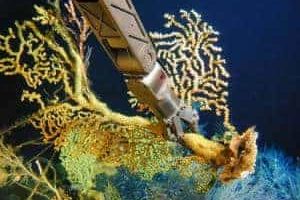
LIVERMORE, Calif. — Using seawater and calcium to remove carbon dioxide (CO2) in a natural gas power plant’s flue stream, and then pumping the resulting calcium bicarbonate in the sea, could be beneficial to the oceans’ marine life.
Greg Rau, se…
From dusty punch cards, new insights into link between cholesterol and heart disease
A stack of punch cards from a landmark study published in 1966, and the legwork to track down the study’s participants years later, has yielded the longest analysis of the effects of lipoproteins on coronary heart disease.
The study, published in …
Cornstarch might have ended the Gulf spill agony sooner
On May 25th, 2010, the online arm of Upstream, a newspaper for the international oil and gas industry, reported that British Petroleum had started top-kill procedures on the Macondo well in the Gulf of Mexico.
“The company said that the operation,…
URI geologist develops improved seismic model for monitoring nuclear explosions in Middle East
KINGSTON, R.I. — December 16, 2010 — Geologists from the University of Rhode Island and Princeton University, in collaboration with Lawrence Livermore National Laboratory, have taken an important step toward helping the United States government…
New pictures show fourth planet in giant version of our solar system
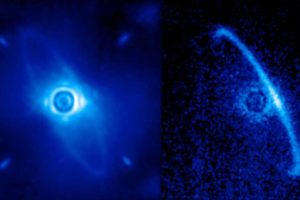
LIVERMORE, Calif. — Astronomers have discovered a fourth giant planet, joining three others that, in 2008, were the subject of the first-ever pictures of a planetary system orbiting another star other than our sun.
The solar system, discovered b…
From toxicity to life: Arsenic proves to be a building block
LIVERMORE, Calif. – Arsenic – an element that triggers death for most Earthly life forms – is actually allowing for a bacterium to thrive and reproduce.
In a study that may prompt the rewriting of textbooks, a team of astrobiologists and chemists…
Taming thermonuclear plasma with a snowflake
Physicists working on the National Spherical Torus Experiment (NSTX) at the Princeton Plasma Physics Laboratory are now one step closer to solving one of the grand challenges of magnetic fusion research — how to reduce the effect that the hot pla…
Insulin-creating cell research may lead to better diabetes treatment
LIVERMORE, Calif. — Beta cells, which make insulin in the human body, do not replicate after the age of 30, indicating that clinicians may be closer to better treating diabetes.
Type 1 diabetes is caused by a loss of beta cells by auto-immunity …
Project sets records for laser performance
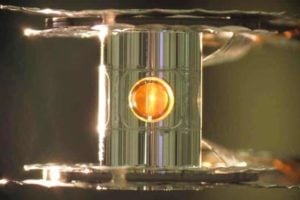
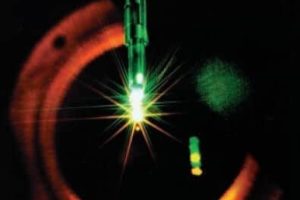
The National Ignition Facility (NIF) at Lawrence Livermore National Laboratory recently produced 10,400 Joules or 10.4 kiloJoules (kJ) of ultraviolet laser light in a single laser beamline, setting a world record for laser performance. In recent weeks NIF laser scientists also have used the first four NIF beamlines to set records for infrared and green single beam laser energies with 21 kJ and 11 kJ of energy delivered, respectively. NIF researchers focused this light into a special diagnostic system designed to provide precise measurements of laser beam quality and performance at these different frequencies.
New Look at Satellite Data Supports Global Warming Trend
A new analysis of satellite data collected since the late 1970s from the lowest few miles of the atmosphere indicates a global temperature rise of about one-third of a degree Fahrenheit between 1979 and 1999. The results are at odds with previous analyses that show virtually no warming in the satellite record over the 20-year period.
Semen quality may start to decline in one's 20s
With each passing year, semen quality in adult men declines, suggesting that age plays a greater role in male fertility rates than previously thought, according to a new study by researchers at the University of California, Berkeley, and Lawrence Livermore National Laboratory. The study, published Thursday, Feb. 6, in the journal Human Reproduction, suggests that even healthy men may become progressively less fertile as time goes by.
Zooming-in on star formation in the Orion Nebula
A team of astronomers is using one of the most advanced ground-based telescopes in the world to “zoom-in” on protostars in the Orion Nebula, revealing in unprecedented detail a variety of phenomena associated with star and planet formation in the presence of extremely massive, luminous stars. These phenomena include high-velocity jets of gas launched from the protostars themselves; evaporation flows driven by the intense radiation of nearby massive stars; and colliding winds that form thin, filamentary sheets of gas.
Researchers Apply Combat Simulation Technology to Homeland Security
Using a computer code originally developed for combat simulation, researchers from the Lawrence Livermore National Laboratory are supplying the same expertise that analyzes concepts of operation, technology and training to emergency responders as a part of the Lab’s role in homeland security. The Analytical Conflict and Tactical Simulation (ACATS) is an offshoot of the Joint Conflict and Tactical Simulation (JCATS) that the military uses for training, analysis, mission planning and mission rehearsal. JCATS also has been used to support actual military operations in places such as Panama and the Persian Gulf.