

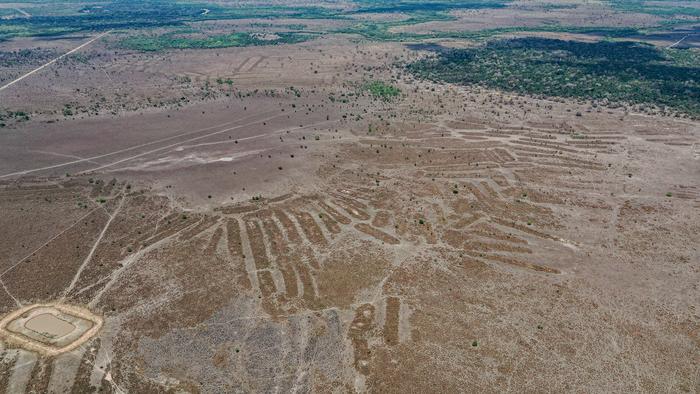
In the flooded grasslands of Bolivia’s Llanos de Moxos, the land itself keeps a memory. Beneath its shimmering wetlands and winding channels, archaeologists have uncovered traces of communities that thrived here for more than a thousand years, long before European contact reshaped the continent.
New findings published in Frontiers in Environmental Archaeology reveal how Indigenous societies engineered monumental earthworks, raised fields, and canal networks across the Great Tectonic Lakes of Exaltación. Led by Professor Carla Jaimes Betancourt of the University of Bonn, the research combines LiDAR imaging, excavation, and collaboration with the Cayubaba and Movima peoples to reconstruct a history of human ingenuity in the heart of the Bolivian Amazon.
Earthworks Beneath the Wetlands
Seen from above, the grasslands appear like ripples after rain. But LiDAR scans tell another story: geometric patterns of circles, squares, and long raised strips emerge beneath the vegetation, remnants of ancient fields and water-control systems built between 600 and 1400 CE. The Paquío and Jasschaja sites, located near Lakes Rogaguado and Ginebra, record centuries of adaptation to shifting floods and soils.
At Paquío, an early occupation around AD 600 expanded into a thriving maize-based economy between 1000 and 1200, marked by shell middens, pottery, and intricate canal systems. Farther east at Jasschaja, dating to 1300–1400 CE, archaeologists found evidence of intensified forest management and a rich botanical record that includes palms, legumes, and Brazil nuts, suggesting a shift toward diversified agroforestry.
“These landscapes are not pristine wilderness, but the result of continuous human creativity,” said Professor Jaimes Betancourt. “The raised fields and canals show how people worked with, not against, the rhythms of water and soil.”
Excavations revealed a diet as diverse as the ecosystem itself: fish such as peacock bass and South American lungfish, reptiles like caimans and turtles, and mammals including capybaras and pacas. Plant remains pointed to careful use of palm fruits, maize, and wild legumes, showing that ancient Amazonians balanced cultivation with gathering and hunting in dynamic wetlands.
Living Heritage and Lessons for the Future
The team’s work was rooted in dialogue with Indigenous communities. Representatives from the Cayubaba Indigenous Council guided access to sacred sites, helped identify research areas, and ensured that excavation respected local wishes. The collaboration reflected a broader recognition that these landscapes remain living archives of human-environment interaction, not static ruins of a vanished world.
The study argues that long-term resilience in the Amazon came not from domination of nature, but from flexibility and ecological diversity. Over centuries, people transformed floods into fertility through earthworks that managed water, supported crops, and fostered biodiversity.
“Their legacy challenges modern assumptions about development,” Jaimes Betancourt said. “They show us that sustainability is not new—it is ancient knowledge embedded in the land.”
As deforestation and industrial farming now threaten the Llanos de Moxos, researchers say these archaeological insights carry urgent relevance. The wetlands still store carbon, regulate water, and sustain wildlife, yet their cultural history is equally vital. Protecting both the ecology and the memory of this landscape, the study suggests, may be key to preserving resilience in the Amazon’s future.
Frontiers in Environmental Archaeology: 10.3389/fearc.2025.1662950