Skip to content
ScienceBlog.com
  • Featured Blogs
    • EU Horizon Blog
    • ESA Tracker
    • Experimental Frontiers
    • Josh Mitteldorf’s Aging Matters
    • Dr. Lu Zhang’s Gondwanaland
    • NeuroEdge
    • NIAAA
    • SciChi
    • The Poetry of Science
    • Wild Science
  • Topics
    • Brain & Behavior
    • Earth, Energy & Environment
    • Health
    • Life & Non-humans
    • Physics & Mathematics
    • Social Sciences
    • Space
    • Technology
  • Our Substack
  • Follow Us!
    • Bluesky
    • Threads
    • FaceBook
    • Google News
    • Twitter/X
  • Contribute/Contact

Carbon Sequestration

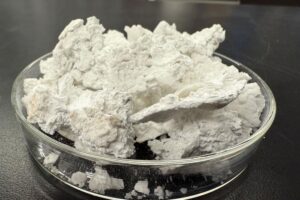
Holding half its weight in carbon dioxide, the material could replace sand in concrete and other construction materials while trapping greenhouse gas.

Scientists Create ‘Artificial Sand’ That Eats CO2, Could Transform Construction Industry

canopy of trees

Tree diversity increases carbon sequestration

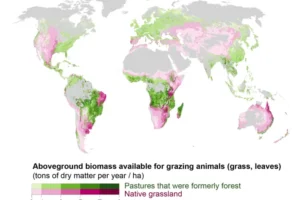
Amount of edible pasture grasses and vegetation grown in each gridcell per year for grazing livestock (pasture aboveground biomass). Darker colors refer to more annual pasture growth per unit area. Green shows pasture growth in potential forest areas, where pasture has replaced areas that were once forested. Pink shows pasture growth in native grassland areas.

Small Meat Production Cuts in Wealthy Nations Could Have Major Climate Impact

Excavated in Canada, this Eastern red cedar log turned out to be remarkably well-preserved for its age: 3,775 years old.

Ancient Log Discovery Supports ‘Wood Vaulting’ as Promising Climate Solution

Trees seen from overhead

Mature Forests Show Surprising Resilience in Face of Rising CO2

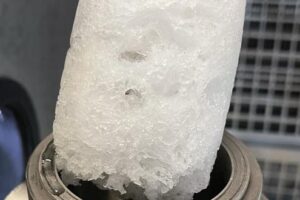
Carbon capturing hydrates created in Vaibhav Bahadur's lab.

Team Develops Fastest Carbon Storage Tech Without Harmful Chemicals

Forrest land

Side effects of wide scale forestation could reduce carbon removal benefits by 1/3

Mangroves are major carbon sinks. New research shows that the climate mitigation effect is even better than previously thought.

Tidal landscapes a greater carbon sink than previously thought

pond

Ponds release more greenhouse gas than they store

Soil with CO2 bubbles coming off of it

Project Examines Key Role Soils Play in Keeping the Planet Cool

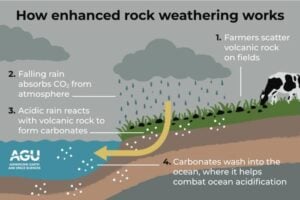
A climate intervention strategy called enhanced rock weathering, if applied globally, could help meet a key IPCC goal for slowing climate change, according to new research published in the AGU journal Earth’s Future. Enhanced rock weathering improves soil health, sequesters carbon, and combats ocean acidification.

“Planting” rocks in farms could help meet key IPCC carbon removal goal

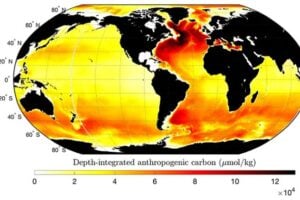
Map of depth-integrated anthropogenic carbon Credit: Laura Cimoli/GLODAP

Giant underwater waves affect the ocean’s ability to store carbon

Seaweed

Seaweed farms could help clean marine pollution

Jacaranda tree in bloom; a common sight in Southern California. (Sundry Photography/iStock/Getty)

Landscaping for drought: We’re doing it wrong

Older posts
Page1 Page2 Next →
Substack subscription form sign up

Comments

  • Curtis Webber on The GPS-Killer? This Quantum Device ‘Feels’ Motion Like a Brain—Down to the Atomic Level
  • Ran on How the Age You First Had Sex Could Shape How You Age Decades Later
  • Sparty on How the Age You First Had Sex Could Shape How You Age Decades Later
  • Josh Mitteldorf on A Single TV Segment Sent Leucovorin Prescriptions for Autistic Children Soaring 2,000 Percent
  • Josh Mitteldorf on A Single TV Segment Sent Leucovorin Prescriptions for Autistic Children Soaring 2,000 Percent
© 2026 ScienceBlog.com | Follow our RSS / XML feed