Skip to content
ScienceBlog.com
  • Featured Blogs
    • EU Horizon Blog
    • ESA Tracker
    • Experimental Frontiers
    • Josh Mitteldorf’s Aging Matters
    • Dr. Lu Zhang’s Gondwanaland
    • NeuroEdge
    • NIAAA
    • SciChi
    • The Poetry of Science
    • Wild Science
  • Topics
    • Brain & Behavior
    • Earth, Energy & Environment
    • Health
    • Life & Non-humans
    • Physics & Mathematics
    • Social Sciences
    • Space
    • Technology
  • Our Substack
  • Follow Us!
    • Bluesky
    • Threads
    • FaceBook
    • Google News
    • Twitter/X
  • Contribute/Contact

environmental science

15% of Americans deny climate change is real, AI study finds

Nearly 15% of Americans deny climate change is real, AI study finds

a nighttime pollinator, like a moth, holding its nose at the stinky fumes coming off near some wildflowers

Nighttime Pollution Threatens Pollinators

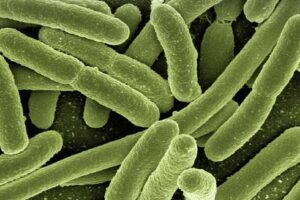
This image shows a microscopic view of E. coli bacteria, a species with an intimate relationship with humans.

New Technology Unscrambles the Chatter of Microbes

Illustration of heating earth

Increased temperature difference between day and night can affect all life on earth

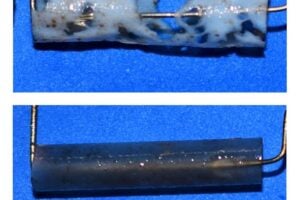
After 16 weeks in seawater, bioplastic straws made of foam (top image) broke down at least twice as fast as the solid versions (bottom image).

Lifetime of ‘biodegradable’ straws in the ocean is 8-20 months, study finds

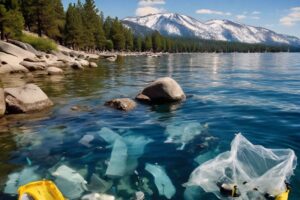
Painting of trash at the shore of a lake

First dive survey of Lake Tahoe’s lakebed finds high amounts of plastic and other litter

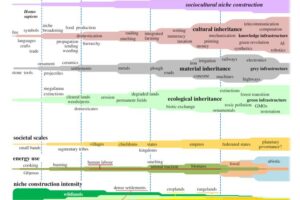
Infographic

A new force of nature is reshaping this planet

Ohio State logo

How mountains affect El Niño-induced winter precipitation

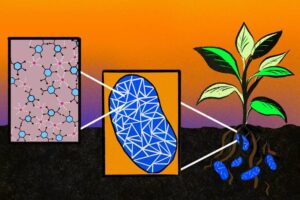
MIT chemical engineers devised a metal-organic coating that protects bacterial cells from damage without impeding their growth or function. These coated bacteria could make it much easier for farmers to deploy microbes as fertilizers. At left, the inset shows the components that create the protective shell of the microbes, as represented in the center inset by triangular formations. Credits:Image: Jose-Luis Olivares, MIT based on figures courtesy of the researchers

Microbes could help reduce the need for chemical fertilizers

Ohio State logo

Ice cores from Earth’s highest tropical peak provide insight into climate variability

The conversion was achieved by simply removing two fluorine atoms from 1,2-difluoroalkene derivatives

Converting PFAS “forever chemicals” into valuable compounds

Shipping container

Soiled Stowaways

Artic ice. Pixabay

Increased West Antarctic Ice Sheet melting ‘unavoidable’

Hurricane Ian, pictured from the International Space Station as it orbited 258 miles above the Caribbean Sea east of Belize. Credit: NASA Johnson.

Flesh-eating bacteria spotted in Florida’s coastal waters following Hurricane Ian

Older posts
Newer posts
← Previous Page1 Page2 Page3 Page4 … Page6 Next →
Substack subscription form sign up

Comments

  • Josh Mitteldorf on Red States and Blue States Are Becoming the Same Unhappy Country
  • Josh Mitteldorf on Scientists Have Written the Rules for First Contact, and Step One Is Don’t Panic
  • John E on A New Theory Says DMT Entities Might Be Real, and Proposes How to Test It
  • ScienceBlog.com on A New Theory Says DMT Entities Might Be Real, and Proposes How to Test It
  • John E on A New Theory Says DMT Entities Might Be Real, and Proposes How to Test It
© 2026 ScienceBlog.com | Follow our RSS / XML feed