
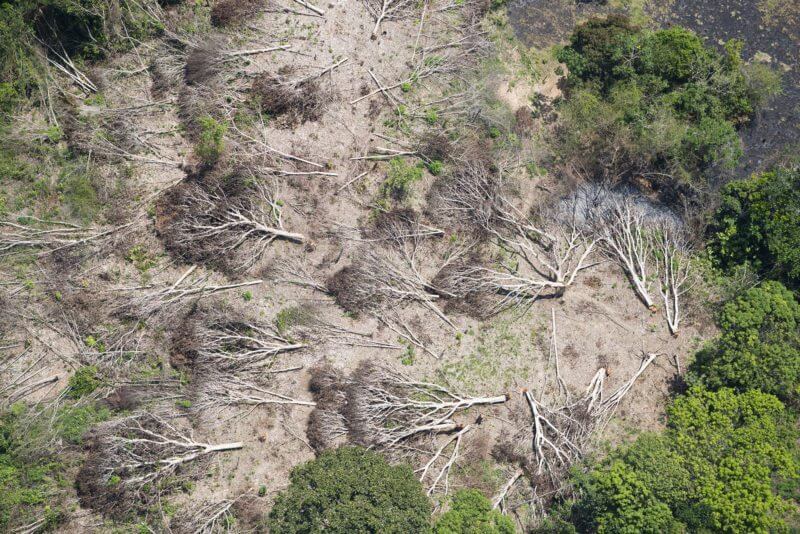
Tropical forests have long been considered one of the world’s most important tools in combating climate change, their fast-growing trees and rich soils sucking millions of tons of carbon out of the atmosphere every year. But a new study says these forests have switched from being carbon sinks to sources of carbon, releasing an estimated 425 million tons of CO2 each year, more than the annual emissions from U.S. cars and trucks combined.
The reversal, the study says, is the result of worsening deforestation and a reduction in the density, or a thinning, of tropical forests.
The research was led by ecologists at the Woods Hole Research Center and Boston University. It combined 12 years of satellite data with on-the-ground biomass measurements from forests in 22 countries across three continents.
The scientists did note, however, that nations could rapidly restore these forests as carbon sinks by reducing logging, slowing development, and better managing the ecosystems to curb disturbance and degradation.
“We actually have a lot of room to improve this,” Alessandro Baccini, a forest ecologist at the Woods Hole Research Center and lead author of the study, told PBS. “The old story of ‘planting trees and stop chopping them down’ is exactly what needs to happen long-term.”
ScienceBlog.com has no paywalls, no sponsored content, and no agenda beyond getting the science right. Every story here is written to inform, not to impress an advertiser or push a point of view.
Good science journalism takes time — reading the papers, checking the claims, finding researchers who can put findings in context. We do that work because we think it matters.
If you find this site useful, consider supporting it with a donation. Even a few dollars a month helps keep the coverage independent and free for everyone.