Skip to content
ScienceBlog.com
  • Featured Blogs
    • EU Horizon Blog
    • ESA Tracker
    • Experimental Frontiers
    • Josh Mitteldorf’s Aging Matters
    • Dr. Lu Zhang’s Gondwanaland
    • NeuroEdge
    • NIAAA
    • SciChi
    • The Poetry of Science
    • Wild Science
  • Topics
    • Brain & Behavior
    • Earth, Energy & Environment
    • Health
    • Life & Non-humans
    • Physics & Mathematics
    • Social Sciences
    • Space
    • Technology
  • Our Substack
  • Follow Us!
    • Bluesky
    • Threads
    • FaceBook
    • Google News
    • Twitter/X
  • Contribute/Contact

University of Manchester

Manchester is one of the most dynamic and lively places in Europe. A big city with a compact and friendly centre. A trendsetting music and style capital that still has a place for traditional street markets and local pubs. A place with an illustrious past that's always at the cutting edge of what's new.Manchester's ability to welcome and embrace change throughout its history has given it a rare energy. Manchester was at the epicentre of the industrial revolution, and the spirit that brought the world into the modern age is evident in its trademark Victorian buildings and monuments, such as the gothic Town Hall in Albert Square. But over the last few years the city centre has undergone an extensive transformation. New public spaces have been created and imaginative buildings and developments have appeared, reshaping Manchester's skyline.Manchester also sets itself apart in terms of sporting prowess with two of the biggest football clubs on the planet. The changes to the city's infrastructure as a result of the success of the 2002 Commonwealth Games has left first-class sports facilities for all the public to enjoy, especially students.The University of Manchester is at the heart of this exciting city - geographically, historically and culturally. The campus is just a short walk from the city centre and all its attractions. And our own buildings and history are integral to Manchester's unique character.
Alexei Verkhratsky

The Forgotten Cells That Could Heal the Diseased Brain

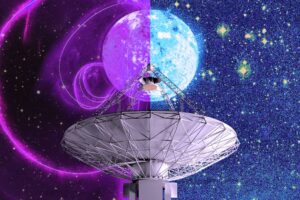
Artist’s depiction of CSIRO’s ASKAP radio telescope with two versions of the mysterious celestial object: neutron star or white dwarf

Astronomers Discover Slowest Spinning Neutron Star, Defying Expectations

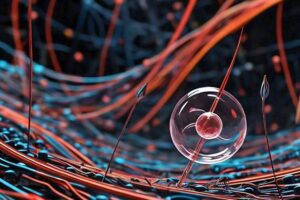
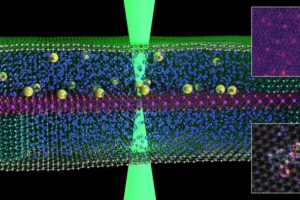
An artistic rendering of a one-dimensional superconducting system, with electrons propagating in opposite directions within a nanoscale space.

Manchester Researchers Achieve Robust 1D Superconductivity in High Magnetic Fields

A giant pair of swimming Ichthyotitan severnensis. Credit: Gabriel Ugueto

Massive Prehistoric Marine Reptile Jawbones Discovered on UK Beach

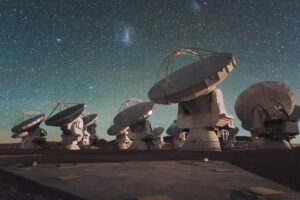
Satellite astronomy dishes pointed at the night sky

Astronomers reveal a new link between water and planet formation

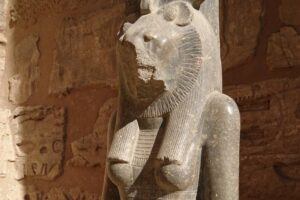
Sekhmet goddess of medicine with protective snake on forehead

Researchers extol skills of ancient Egyptian medics

A very tiny bunny

Hundreds of mammal species are being pushed toward extinction

Graphene scientists capture first images of atoms ‘swimming’ in liquid

Black Rhino extinction risk sharply increased by killing of specific female rhinos

Scientists develop cosmic concrete from space dust and astronaut blood

How does a machine smell? Better than it did

What monkeys and middle managers have in common

3D color X-Ray spots contraband, corrosion and cancer

Substack subscription form sign up

Comments

  • Josh Mitteldorf on Red States and Blue States Are Becoming the Same Unhappy Country
  • Josh Mitteldorf on Scientists Have Written the Rules for First Contact, and Step One Is Don’t Panic
  • John E on A New Theory Says DMT Entities Might Be Real, and Proposes How to Test It
  • ScienceBlog.com on A New Theory Says DMT Entities Might Be Real, and Proposes How to Test It
  • John E on A New Theory Says DMT Entities Might Be Real, and Proposes How to Test It
© 2026 ScienceBlog.com | Follow our RSS / XML feed