
March 3, 2011
•
Posted by: sb
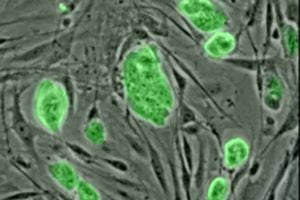
CHICAGO — Northwestern Medicine researchers for the first time have transformed a human embryonic stem cell into a critical type of neuron that dies early in Alzheimer’s disease and is a major cause of memory loss.
This new ability to reprogram …
March 3, 2011
•
Posted by: sb
A new study provides fascinating insight into the genetic basis of bipolar disorder, a highly heritable mood disorder characterized by recurrent episodes of mania and depression. The research, published by Cell Press online February 24 in the Americ…
March 2, 2011
•
Posted by: sb
PHILADELPHIA – The gene for the protein p53 is the most frequently mutated in human cancer. It encodes a tumor suppressor, and traditionally researchers have assumed that it acts primarily as a regulator of how genes are made into proteins. No…
March 1, 2011
•
Posted by: sb
LA JOLLA, Calif., March 1, 2011 — When patients receive a bone marrow transplant, they are getting a new population of hematopoietic stem cells. Fresh stem cells are needed when a patient is low on red blood cells, as in anemia, or white blood cel…
February 25, 2011
•
Posted by: sb
Scientists at Trinity College Dublin have made an important discovery concerning how fledgling cancer cells self-destruct, which has the potential of impacting on future cancer therapies. The Trinity research group, led by Smurfit Professor of Medi…
February 25, 2011
•
Posted by: sb
New research enhances the current knowledge of how human immunodeficiency virus type-1 (HIV-1), which causes AIDS, controls the cell cycle of cells that it infects. The new findings may shed light on how the virus reactivates after entering a dorman…
February 23, 2011
•
Posted by: sb
Researchers at the University of Illinois at Chicago have discovered a signaling mechanism in the bacterial ribosome that detects proteins that activate genes for antibiotic resistance.
“The ribosome is one of the most complex molecular machines i…
February 22, 2011
•
Posted by: sb
Tampa, Fla. (Feb. 22, 2011) — Transplanting human umbilical cord blood-derived endothelial progenitor cells (EPCs) has been found to “significantly accelerate” wound closure in diabetic mouse models, said a team of Korean researchers publishing …
February 17, 2011
•
Posted by: sb
Tampa, Fla. (Feb. 17, 2011) — Two studies published in the current issue of Cell Transplantation (19:12) investigate frontiers of islet cell transplantation for treating diabetes. Researchers in Milan, Italy re-examine the role of bone marrow st…
February 16, 2011
•
Posted by: sb
In fact, according to new research from Johns Hopkins, the fusion of muscle cells is a power struggle that involves a smaller mobile antagonist that points at, pokes and finally pushes into its larger, stationary partner using a newly identified …
February 14, 2011
•
Posted by: sb
Tampa, Fla. (Feb. 14, 2011) — Transplanting autologous renal progenitor cells (RPCs), (kidney stem cells derived from self-donors), into rat models with kidney damage from pyelonephritis – a type of urinary infection that has reached the kidney – …
February 10, 2011
•
Posted by: sb
Richmond, Va. (Feb. 10, 2011) — Scientists at Virginia Commonwealth University Massey Cancer Center have developed a novel treatment strategy for multiple myeloma that pairs two targeted agents to kill cancer cells. The study’s findings, published…
February 3, 2011
•
Posted by: sb
MADISON – By coaxing healthy and diseased human bone marrow to become embryonic-like stem cells, a team of Wisconsin scientists has laid the groundwork for observing the onset of the blood cancer leukemia in the laboratory dish.
“This is the first…
February 1, 2011
•
Posted by: sb
Researchers at Johns Hopkins have found a better way to create induced pluripotent stem (iPS) cells — adult cells reprogrammed with the properties of embryonic stem cells — from a small blood sample. This new method, described last week in Cell Re…
February 1, 2011
•
Posted by: sb
“Nucleolus”, or small nucleus, is the term coined by early biologists for the tiny structure within the nucleus which they saw under the microscope. In this structure within the nucleus, RNA molecules and proteins are assembled to form ribosomes, th…
January 27, 2011
•
Posted by: sb
The most common type of breast cancer in older women — estrogen and progesterone receptor (ER/PR) positive breast cancer — has been linked to a protein that fends off aging-related cellular damage.
A new study led by Vanderbilt-Ingram Cancer…
January 25, 2011
•
Posted by: sb
In regenerative medicine, large supplies of safe and reliable human embryonic stem (hES) cells are needed for implantation into patients, but the field has faced challenges in developing cultures that can consistently grow and maintain clinical-grad…
January 24, 2011
•
Posted by: sb
New research led by UC Davis scientists provides insight into why some body organs are more susceptible to cell death than others and could eventually lead to advances in treating or preventing heart attack or stroke.
In a paper published Jan. 21 …
January 21, 2011
•
Posted by: sb
Scientists at Johns Hopkins have deciphered the genetic code for a type of pancreatic cancer, called neuroendocrine or islet cell tumors. The work, described online in the Jan. 20 issue of Science Express, shows that patients whose tumors have certa…
January 20, 2011
•
Posted by: sb
A University of Manchester scientist has revealed the mechanism that binds skin cells tightly together, which he believes will lead to new treatments for painful and debilitating skin diseases and also lethal heart defects.
Professor David Garrod,…