Dark matter clusters could reveal nature of dark energy

Scientists are hoping to understand one of the most enduring mysteries in cosmology by simulating its effect on the clustering of galaxies. That mystery is dark energy – the phenomenon that scientists hypothesise is causing the universe to expand at an ever-faster rate. No-one knows anything about dark energy, except that it could be, somehow, blowing … Read more

From dust to pebbles to planets – insight into the birth of a solar system

Detailed simulations of planetary formation are revealing how tiny grains of dust turn into giant planets and could shed light on where to find new Earth-like worlds. Scientists theorise that planets form from rotating discs of gas that surround newly formed stars, known as proto-planetary discs. Pebble-sized objects in these discs then clump together to … Read more

Dark energy is the biggest mystery in cosmology, but it may not exist at all – leading physicist

Leftover light from Type Ia supernovae has been used to calculate the expansion rate of the universe and infer the existence of dark energy.

The most mysterious phenomenon in cosmology – dark energy – may not exist at all, according to Professor Subir Sarkar, head of the particle theory group at the University of Oxford in the UK. In the late 1990s, astronomers found evidence from supernovae that the universe has been expanding faster and faster as it gets … Read more

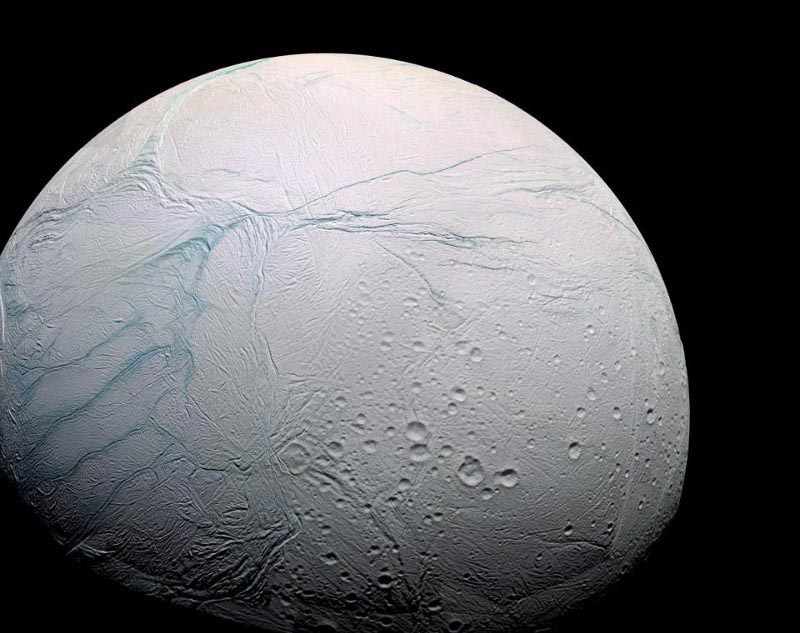
Ingredients for life on Saturn’s moon may be ‘tip of the iceberg’

Saturn moon Enceladus

There are likely to be many more ingredients for life on Saturn’s moon Enceladus than those identified so far, says Dr Frank Postberg from the University of Heidelberg, Germany, the lead author of a paper published on 27 June which revealed the presence of complex carbon-based molecules in the moon’s core. He says a fresh mission could … Read more