
From fragmented to connected: a shared hub for Europe’s AI

Europe’s AI researchers are joining forces through an EU-funded digital platform that allows them to share tools, data and computing power to drive collaboration and innovation. By Michael Allen Across Europe, researchers are using AI to tackle everything from underwater noise pollution to media fact-checking and smarter farming. Until recently, there was no widely used … Read more

From storms to sensors: how cross-border research with UK partners shapes safer and greener technologies

In one project with UK partners, researchers test automated vehicles to improve safety. © Maikol Funk Drechsler, THI/CARISSMA, 2025

Since the UK rejoined Horizon Europe in 2024, EU-funded cross-border research with UK partners has been delivering safer, smarter, more sustainable technologies for everyday life. By Ali Jones On a test track in southern Germany, engineers watch as an automated vehicle drives through simulated heavy rain. As the vehicle pushes through sheets of water and … Read more

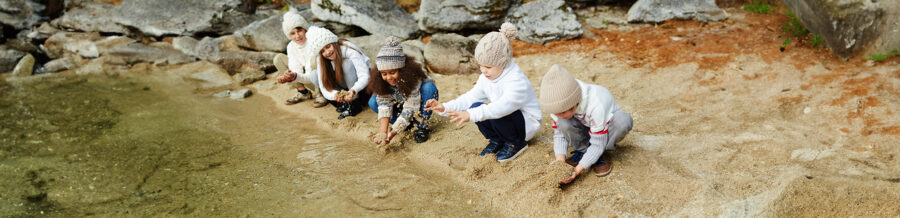
Making a splash: bringing ocean learning into every classroom

EU-funded researchers are helping learners of all ages better understand their connection to the ocean and role in protecting it. © Pressmaster, Shutterstock.com

Europeans care about the ocean, but few understand how their daily choices affect it. EU-funded researchers are working with teachers to bring “blue” education into classrooms across Europe. By Bárbara Pinho Around 40% of the EU’s population lives within 50 kilometres of the coast, and large parts of the continent’s economy, climate resilience and wellbeing … Read more

Scientists hunt dark matter ‘stars’ that mimic black holes

Artist’s rendition of two dark matter stars, or bosons, colliding in deep space. © Nicolás Sanchis-Gual y Rocío García Souto, University of Valencia, Spain, 2021

Hypothetical dark matter stars known as ‘boson stars’ could leave telltale ripples across the cosmos, offering researchers a new way to probe the invisible forces shaping the universe. By Jonathan O’Callaghan In 2019, a strange event was observed in the depths of space. Called GW190521, the event sent out gravitational waves – invisible ripples in … Read more

Tiny particles, big impact: towards less invasive brain stimulation

Researchers are exploring how nanotechnology could treat brain disorders without surgery or implants. © PeopleImages, Shutterstock.com

Living with a brain disorder often means relying on medication that does not work for everyone and, in some cases, surgery. EU-funded researchers are now investigating whether nanotechnology could one day offer a safer, less invasive alternative. By Michaela Nesvarova For decades, treating serious brain disorders has often meant making a difficult trade-off. Symptoms could … Read more