Skip to content
ScienceBlog.com
  • Featured Blogs
    • EU Horizon Blog
    • ESA Tracker
    • Experimental Frontiers
    • Josh Mitteldorf’s Aging Matters
    • Dr. Lu Zhang’s Gondwanaland
    • NeuroEdge
    • NIAAA
    • SciChi
    • The Poetry of Science
    • Wild Science
  • Topics
    • Brain & Behavior
    • Earth, Energy & Environment
    • Health
    • Life & Non-humans
    • Physics & Mathematics
    • Social Sciences
    • Space
    • Technology
  • Our Substack
  • Follow Us!
    • Bluesky
    • Threads
    • FaceBook
    • Google News
    • Twitter/X
  • Contribute/Contact

drug delivery

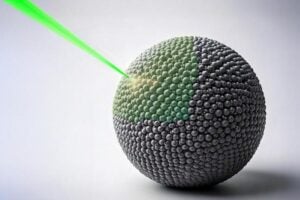
A simple pulse of light can control the activity of a molecule at a specific location without affecting surrounding cells, thereby limiting unwanted side-effects.

Scientists Create ‘Light Switch’ for Precision Drug Delivery

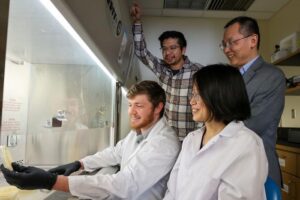
From top left: Biologist Bryan Hsu with immunologist Liwu Li. Bottom left: Zachary Baker, a doctoral student in the Hsu Lab, and research assistant professor Yao Zhang from the Li Lab.

Biologists transform gut bacteria into tiny protein pharmacies

Riccardo Rampado & Prof. Dan Peer

Scientists Hack Body’s Natural Highway to Deliver Drugs Straight to the Gut

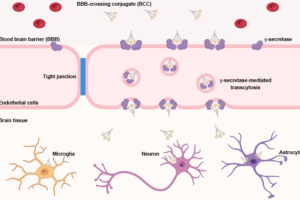
Brain barrier-crossing conjugates enable the systemic delivery of large therapeutic molecules to the brain.

New Method Delivers Medicine Past Brain’s Natural Defense Shield

A zinc-air microbattery designed by MIT engineers could enable the deployment of cell-sized, autonomous robots for drug delivery within in the human body, as well as other applications such as locating leaks in gas pipelines.

Engineers design tiny batteries for powering cell-sized robots

Sound waves

New Drug Delivery Method Hits the Bullseye

Using a microscopy image and graphic rendering, the artists illustrate a minimal synthetic cell that can sense a directional chemical cue and self-organize in response.

‘Synthetic’ cell shown to follow chemical directions and change shape, a vital biological function

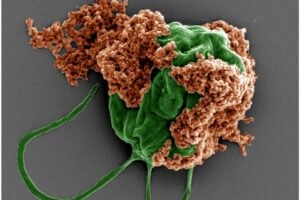
Colored SEM image of a microrobot made of an algae cell (green) covered with drug-filled nanoparticles (orange) coated with red blood cell membranes. Scale bar: 2 µm.

Microrobots Deliver Cancer-Fighting Drugs Directly to Lung Tumors, Boosting Survival in Mice

Dr. Shyh-Dar Li and Dr. Jiamin Wu

Oral insulin drops offer relief for diabetes patients

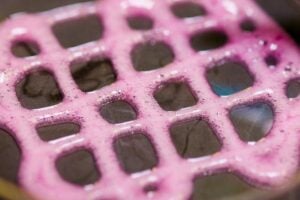
Foam containing gene therapy components is placed in a lab dish.

Medicated foam could make gene therapies more accessible

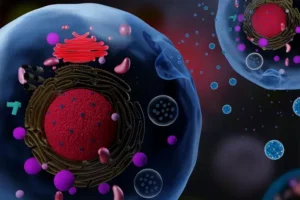
Extracellular vesicles are small bubbles that cells can send to each other to exchange information. Image: Getty Images

Harnessing Cell Communication Bubbles for Targeted Cancer Treatment

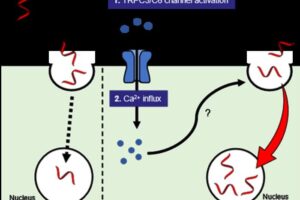
L687 induces intracellular uptake of ASO through intracellular Ca2+ influx

New Compound Unlocks Cancer Cells for Targeted Gene Therapy

stripy liquid

Stripes in a flowing liquid crystal suggest a route to “chiral” fluids

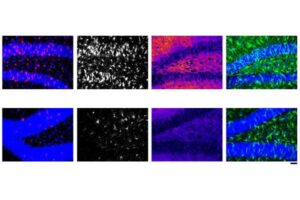
In the brain's immune cells, called microglia, the gene product PU.1 is associated with excessive inflammation in neurological disorders such as Alzheimer's disease. MIT researchers delivered a small interfering RNA (siRNA) via lipid nanoparticles to reduce expression of PU.1 in mice. Microglia stained for PU.1 or related markers are less evident in the bottom row, which reflects the effects of the siRNA, compared to an experimental control (top row).

Nanoparticles Target Brain Cells to Quell Alzheimer’s Inflammation

Older posts
Page1 Page2 Next →
Substack subscription form sign up

Comments

  • Not Buying Yer Bullshit on More Than a Third of Americans Have Lost Relationships Over Politics
  • Marco Messina on More Than a Third of Americans Have Lost Relationships Over Politics
  • Anon on Why Fructose Behaves Less Like a Calorie and More Like a Hormone
  • Mark Mellinger on Living Plastic Can Self-Destruct on Command
  • Marie Feret on The Silent Frequency That Makes Old Buildings Feel Haunted
© 2026 ScienceBlog.com | Follow our RSS / XML feed