Skip to content
ScienceBlog.com
  • Featured Blogs
    • EU Horizon Blog
    • ESA Tracker
    • Experimental Frontiers
    • Josh Mitteldorf’s Aging Matters
    • Dr. Lu Zhang’s Gondwanaland
    • NeuroEdge
    • NIAAA
    • SciChi
    • The Poetry of Science
    • Wild Science
  • Topics
    • Brain & Behavior
    • Earth, Energy & Environment
    • Health
    • Life & Non-humans
    • Physics & Mathematics
    • Social Sciences
    • Space
    • Technology
  • Our Substack
  • Follow Us!
    • Bluesky
    • Threads
    • FaceBook
    • Google News
    • Twitter/X
  • Contribute/Contact

greenhouse gases

satellite

Earth’s Carbon Footprint Now Threatening Satellite Operations

polar bear

Arctic Thaw Pushes Earth Past Critical Climate Milestone

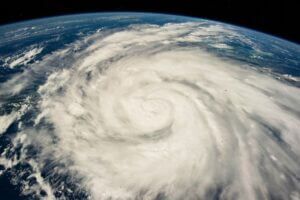
Hurricane Ian, pictured from the International Space Station as it orbited 258 miles above the Caribbean Sea east of Belize. Credit: NASA Johnson.

Scientists issue urgent warning on climate emergency

Map of main gas pipelines and sources of methane emissions related to oil and gas industry operations.

Methane emissions are rising faster than ever

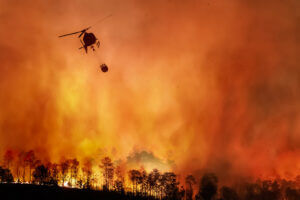
Major fire with helicopter dropping water

Reducing Air Pollution, Greenhouse Gases Simultaneously Key to Mitigating Wildfires

Circe has used its gas fermentation technology to make cocoa butter from microbes, which can be incorporated into chocolate truffles and other foods. Credit: Wyss Institute at Harvard University

Bioproduction Tech Promises to Decarbonize Industries from Food to Fuel

Ohio State logo

A climate-friendly way to capture carbon dioxide in the air

methane reactor

“Methane cleaner” could become a permanent fixture in cattle and pig barns

Ohio State logo

Tropical ice cores offer deeper insights into Earth’s temperature record

In greening air travel, small parts can make a big difference

Pigs in a truck

Calcium additive makes slurry more climate-friendly

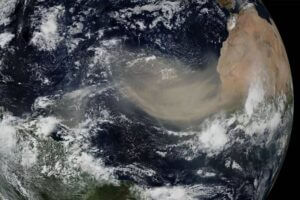
A visualization from space of the “Godzilla” dust storm on June 18, 2020, when desert dust traveled from the Sahara to North America. A UCLA study finds that an increase in microscopic dust in the atmosphere has concealed the full extent of greenhouse gases’ potential for warming the planet.

Increased atmospheric dust is masking greenhouse gas warming effect

Oxygen starved Pacific Ocean chart

Pacific Ocean’s oxygen-starved ‘OMZ’ is growing, new Princeton research finds

Substack subscription form sign up

Comments

  • Norwood johnson on Electrons in New Crystals Behave as If They Live in Four Dimensions
  • ScienceBlog.com on Hidden Geometry Could Finally Fix Quantum Computers
  • Theo Prinse on America Is Going Back to the Moon. This Time, It Plans to Stay
  • george w on Hidden Geometry Could Finally Fix Quantum Computers
  • Tom Hughes on Years of Exercise, Blood Pressure Drugs Failed to Slow Cognitive Decline in Seniors at Dementia Risk
© 2026 ScienceBlog.com | Follow our RSS / XML feed