They touch
in flick-skin intervals –
wing-to-wound,
a brief grooming
passed without notice.
The reach spreads
through tail-cling
and fang-glance,
each contact
a question asked
in smear.
What we call
containment
is mostly timing –
how long
a mouth forgets
its purpose,
how much heat
a body
can carry
before it starts
to give way.
In this
skin-trade
of defences,
a new kind
of message
takes root.
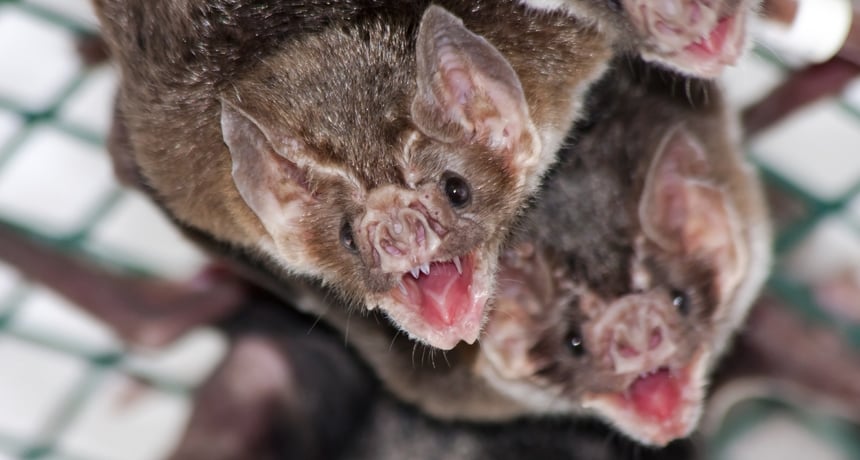
This poem is inspired by recent research, which has found that vampire bats can lick rabies vaccines off each other, spreading immunity through grooming.
Vampire bats are often feared as carriers of rabies. In Latin America, they are the main source of outbreaks affecting both livestock and people. Until now, efforts to control rabies have mostly relied on culling. But this is a blunt and often ineffective tool. What if there were another way?
This research explores a new, more humane approach: using a gel-based vaccine that spreads naturally through the colony as bats groom each other. Scientists trialled this method in a wild vampire bat colony in rural Mexico. The results were striking. By applying the gel to just one in five bats, over 85% of the colony received it. The vaccine stayed stable even in tough field conditions, and the gel proved easier to use than older formulas.
This method may not only help control rabies. It could also offer a new way to address other diseases carried by bats. And in a world where disease control often arrives too late or too forcefully, a method that works with social behaviour (rather than against it) feels quietly radical.
Discover more from The Poetry of Science
Subscribe to get the latest posts sent to your email.
Astonishing science and love the poem tgat draws me to it – even when it has sat unread for quite a few months!