
Sustainability is a ‘top priority’ for chemists

Greening chemical reactions includes cutting the amount of energy used and reducing the need for toxic solvents.

A group of chemicals known as bi-metallics could help the pharmaceutical industry become more environmentally friendly by cutting the amount of energy used to produce drugs, according to Professor Eva Hevia from the University of Strathclyde, UK, who says that sustainability is a top priority for chemists. She has been developing applications for mixed-metal chemicals, which combine … Read more
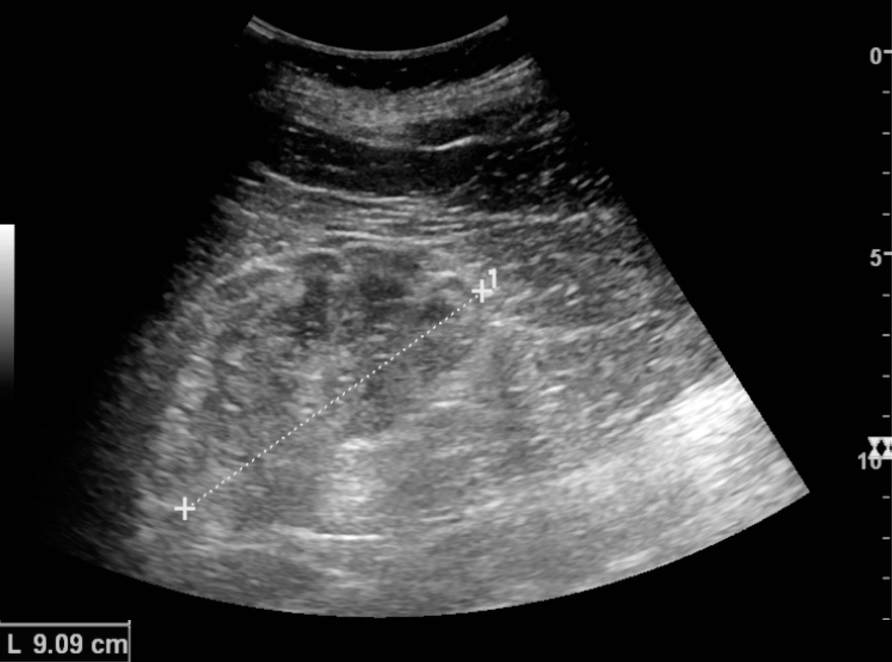
Tissue engineering is no quick fix for kidney disease, but early intervention can help

Kidney disease often lacks symptoms until it is at an advanced stage.

by Frieda Klotz Recent advances in kidney research have yielded dramatic headlines touting scientists’ ability to grow kidneys in the lab. But some experts worry that hype about tissue engineering is excessively raising patients’ hopes. In 2013, US scientists announced that they had grown kidneys that could process urine in rats. The announcement was hailed as potentially … Read more

Discarded waste could be a treasure trove of rare metals

Magnetic fields are among the techniques being developed to extract metal particles from slags (stony waste matter).

Miners could soon be scouring mounds of industrial waste to extract rare metals that are needed for products such as electronics, pacemakers, aircraft parts and bicycle gears. Researchers are attempting to figure out how to recover metals that are in limited supply in Europe from material that is often dumped or used in low-grade applications. They … Read more

Cosmic ‘dustpedias’ could reveal new types of galaxy

Cosmic dust is too cold to be captured by optical telescopes, so visual images of galaxies don't give the full story of conditions.

by Gareth Willmer Measuring the vast quantities of cosmic dust in interstellar space may be a key to unlocking various mysteries of the cosmos, including how the grains form and whether new types of galaxy are obscured by the particle clouds. Cosmic dust grains, which are born in stars, are the building blocks for other stars … Read more

Refining intergalactic measurements could alter our whole understanding of physics

At the centre of the image is an important star called the RS Puppis, a Cepheid variable star which is a class of stars whose luminosity is used to estimate distances to nearby galaxies. This one is 15,000 times brighter than our sun.

by Ethan Bilby New efforts to figure out just how fast the universe has expanded since the Big Bang, a speed known as the Hubble constant, could upend current theories of physics, according to some scientists. Professor Grzegorz Pietrzyński at the Nicolaus Copernicus Astronomical Centre of the Polish Academy of Sciences in Warsaw is one … Read more

Memory-jogging robot to keep people sharp in ‘smart’ retirement homes

Sensors placed throughout a retirement home helped the ENRICHME robot to keep track of the movements and activities of residents taking part in the project’s trial.

A robot that reminds older people where they have put things and helps them exercise has been used by residents in three retirement homes in a trial to combat cognitive decline in later age. Almost a fifth of the European population are over 65 years old, but while quality of life for this age bracket is … Read more