

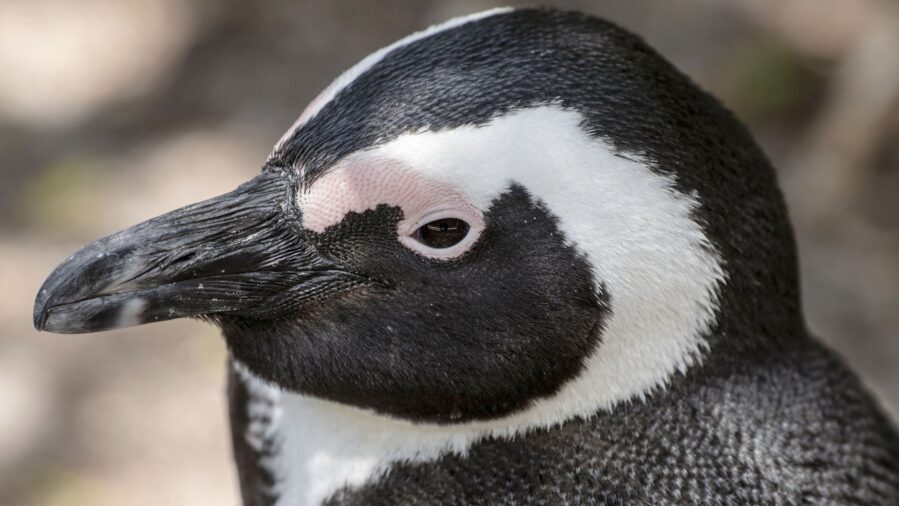
Picture a penguin standing on Robben Island in 2004, sleek and fat, ready to breed. Now imagine that same bird eight years later. Except you can’t, because there’s a 95% chance it’s dead.
That’s not a thought experiment. It’s what happened to African penguins at two major breeding colonies off Cape Town between 2004 and 2011, according to a new study in Ostrich: Journal of African Ornithology. Roughly 62,000 adult penguins that nested on Dassen and Robben islands simply vanished. Most likely starved at sea, too weak to complete their annual moult.
The culprit? Sardines. Or rather, the lack of them.
West of Cape Agulhas, sardine stocks collapsed below a critical threshold in 17 out of 20 years. When the biomass drops below 25% of peak levels, something breaks in the ecosystem. Adult penguin survival rates, which normally hover around 78-84% annually, plummeted to just 59%.
“Between 2004 and 2011, the sardine stock off west South Africa was consistently below 25% of its peak abundance and this appears to have caused severe food shortage for African penguins, leading to an estimated loss of about 62,000 breeding individuals.”
Dr. Richard Sherley, a conservation biologist at the University of Exeter who co-authored the study, notes that number exceeds three times the entire global penguin population remaining today.
The Moult Trap
Here’s what kills them. Every year, African penguins must come ashore for 21 days to moult. They shed every feather and grow new ones. During this time, they can’t swim, can’t hunt, can’t eat. They just stand there, metabolizing fat reserves and cannibalizing their own flight muscles to survive.
To prepare, they need about 35 days at sea to fatten up. Pre-moult adults weigh 31% more than breeding adults. Then, after the moult, they need another 42 days to rebuild lost muscle mass. Their top swimming speed immediately post-moult? About 10 kilometers per hour, roughly the same speed as the sardines they’re trying to catch.
It’s an evolutionary high-wire act that worked fine for millennia. Until the sardines disappeared.
The researchers tracked breeding pairs and moulting birds from 1995 to 2015. When food availability was high (1995-2002), most breeding birds successfully returned to moult. When it crashed (2003-2015), the proportion of “missing moulters” jumped above 60%. Some relocated, traveling 150 kilometers to find fish. Most never made it.
What Happened to the Fish
Two forces converged. Ocean temperatures and salinity patterns shifted, making west coast spawning grounds less productive. Sardines started spawning more successfully off the south coast.
But the fishing industry didn’t follow the fish. Most operations remained concentrated west of Cape Agulhas. Between 2005 and 2010, the harvest rate consistently exceeded 20%. In 2006, it hit 80%.
Fishermen were taking 80% of an already depleted stock while penguins starved within sight of the boats.
The researchers used a clever proxy to track food availability: Cape gannet diets. These wide-ranging seabirds sample sardine and anchovy populations across a huge area, providing a kind of ecosystem thermometer. When the gannet diet index went negative after 2002, penguin survival crashed.
“We hope that the recent conservation interventions put in place, together with reduced exploitation rates of sardine when its abundance is less than the 25% of maximum threshold, will begin to arrest the decline and that the species will show some signs of recovery.”
That’s careful scientific language for: we’re running out of time.
In 2024, African penguins were uplisted to Critically Endangered. The global population fell below 10,000 breeding pairs, an 80% decline in three decades.
South Africa has implemented year-round no-take fishing zones around the six largest penguin colonies, expanded in 2025 after legal pressure. But an international expert panel noted that “such closures alone would be unlikely to reverse the current decline.”
The sardines need to come back across the entire foraging range. That means managing fishing pressure region-wide, particularly when stocks fall below critical thresholds.
It means remembering that in 2000, South Africa mounted a heroic effort to save 19,000 oiled penguins from the Treasure oil spill. We cleaned them, nursed them, released them.
Then we let 62,000 starve.
The researchers continue monitoring breeding success and survival rates, looking for signs that conservation efforts are working. The penguins that remain are still trying to fatten up each year, still coming ashore to moult, still heading back to sea.
Still hoping there will be fish.
Ostrich: Journal of African Ornithology: 10.2989/00306525.2025.2568382