

Sperm is said to be the morphologically most diverse cell on Earth. This form of fast evolution has been believed to arise from the competition between males for the best sperm. Now, researchers from TUD and the University of Sheffield (UK) have discovered that the function of sperm, technically called male fertility, adapts to sexually transmitted microbes.
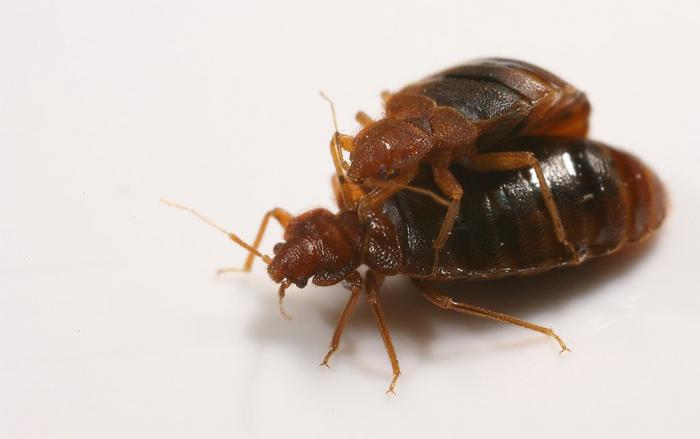
The study was carried out in an insect species, the notorious bed bug. “This species was a model that we could handle very well but we think the results will be similar in humans” explains Dr. Oliver Otti from TUD who led the study. By exposing sperm to microbes within females, the researchers found that fertility is reduced by 1/5th when sperm and microbes had no prior contact. However, fertility remained unaffected when sperm and microbes were familiar with each other. “Some microbes are known to damage sperm and so reduce fertility but this study is the first to show that sperm adapt to them”, states Oliver Otti. “We were expecting a small effect”, adds Klaus Reinhardt, Professor of Applied Zoology at TUD, “but that sperm function was reduced by more than a fifth, was really surprising”.
“Perhaps our results can explain why some studies find no effect of microbes on human male fertility but others do – the studies may differ in whether sperm and microbes have a joint evolutionary history or not.” These new findings might have a significant impact for evolutionary biology and medical research, particularly in understanding and treating infertility.