
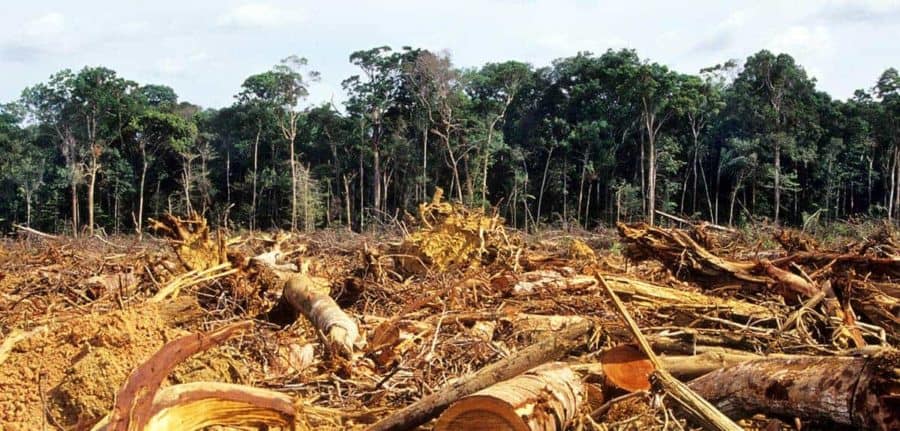
It is the dry season’s silent toll. A new study led by scientists at the University of São Paulo has shown that deforestation is responsible for nearly three-quarters of rainfall decline and 16 percent of temperature rise in the Amazon during this critical period. The research, published in Nature Communications, is the first to untangle the relative impacts of global climate change and local forest loss on the world’s largest tropical rainforest.
A measurable account of damage
By applying parametric models to decades of climate data, the team found that rainfall in the dry season dropped by 21 millimeters each year, with 15.8 millimeters of that decline directly linked to deforestation. Maximum temperatures rose by about 2 °C, of which 16.5 percent was due to forest clearing, the rest attributable to global emissions. As Professor Luiz Augusto Toledo Machado of USP’s Physics Institute put it:
“Through this study, we were able to separate and weigh each of these components, practically showing a kind of ‘account payable’.”
The results sharpen responsibility. Climate change, driven mostly by industrialized nations, accounts for much of the heating. But Brazil’s own deforestation leaves a measurable fingerprint on the Amazon’s shifting climate.
First losses hit hardest
The research also underscores a brutal asymmetry. The climate reacts most dramatically in the early stages of deforestation, between 10 and 40 percent forest loss. Professor Marco Aurélio Franco of USP’s Institute of Astronomy, Geophysics, and Atmospheric Sciences, first author of the study, stressed the implications:
“The effects of the changes, especially in temperature and precipitation, are much more significant in the first few percent of deforestation. In other words, we have to preserve the forest; that’s very clear.”
Conversion to pastureland remains the primary driver of deforestation. According to MapBiomas data, the Amazon lost 14 percent of its native vegetation between 1985 and 2023, equivalent to the territory of France. While deforestation recently slowed to its second-lowest rate in four decades, degradation from fires and fragmentation persists.
Rain machines at risk
The Amazon regulates water far beyond its borders through “flying rivers”—streams of moisture trees pump into the atmosphere that later feed rainfall in the Cerrado and even southeastern Brazil. Recent work by Machado and colleagues revealed a complex mechanism of cloud formation involving aerosols, lightning, and chemical reactions. Deforestation interrupts this cycle, extending dry seasons and fueling fires.
Extrapolations from the new study suggest that unchecked forest loss will continue to suppress rainfall and drive temperatures higher. These shifts threaten not only regional agriculture and water supplies but also the resilience of the forest itself. Already, altered monsoon patterns and recent megadroughts highlight the system’s fragility.
Parsing the global signal
The researchers also examined atmospheric concentrations of carbon dioxide and methane over 35 years. More than 99 percent of their increase was traced to global sources, not Amazon deforestation. As Machado explained, this does not diminish the importance of protecting forests for carbon uptake, but it clarifies that the rise in concentrations is a global imprint, not a regional one.
With COP30 set for Belém in November, the study offers a sobering but actionable message: preserving standing forest remains Brazil’s most powerful climate tool.
Explainer: Why Rainfall Drops When Forests Are Cut
Trees in the Amazon act as pumps. Their roots draw water from the ground and release it through leaves as vapor, a process called transpiration. This vapor feeds cloud formation and drives local and regional rainfall. When trees are removed, less moisture enters the air, and the cycle weakens. The result is a longer, hotter dry season, more fires, and fewer “flying rivers” of vapor reaching distant ecosystems. Scientists say this tight coupling of vegetation and climate means even partial deforestation can trigger outsized impacts.
Journal: Nature Communications
DOI: 10.1038/s41467-025-63156-0
ScienceBlog.com has no paywalls, no sponsored content, and no agenda beyond getting the science right. Every story here is written to inform, not to impress an advertiser or push a point of view.
Good science journalism takes time — reading the papers, checking the claims, finding researchers who can put findings in context. We do that work because we think it matters.
If you find this site useful, consider supporting it with a donation. Even a few dollars a month helps keep the coverage independent and free for everyone.