

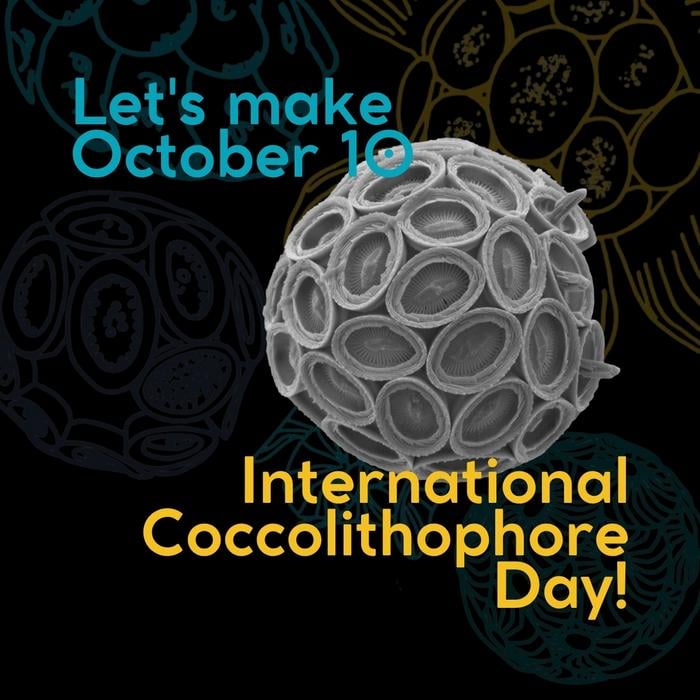
Smaller than a speck of dust yet pivotal to Earth’s survival, coccolithophores, the ocean’s microscopic, disc-shaped architects, are finally getting their moment in the spotlight. A coalition of five European research institutes has launched an effort to make October 10 International Coccolithophore Day, aiming to honor the plankton that quietly regulate our planet’s climate.
Under a microscope, a coccolithophore resembles a miniature planet wrapped in patterned armor: ornate calcium carbonate plates known as coccoliths. These plates form chalk and limestone over millennia, locking away carbon and recording the story of Earth’s changing climate. It is an ancient, intricate system, carbon cycling by the teaspoonful, but on a planetary scale.
A Delicate Balance Under Threat
Coccolithophores absorb carbon dioxide from seawater, produce oxygen, and pump over 1.5 billion tonnes of calcium carbonate into the ocean every year. That is roughly the weight of 10,000 aircraft carriers, an invisible yet immense contribution to stabilizing Earth’s climate. Yet climate change itself now threatens their delicate balance. Rising temperatures, acidifying seas, and shifting nutrient flows could endanger the species that help keep the planet habitable.
“Unlike other groups, they build intricate calcium carbonate plates that not only help draw down carbon dioxide from the atmosphere, but also transport it into deep ocean sediments, where it can be locked away for millennia,” says Professor Alex Poulton of the Lyell Centre in Edinburgh.
“This biomineralisation leaves behind an exceptional geological record, allowing us to study how they’ve responded to past climate shifts and better predict their future role.”
The effort to recognize Coccolithophore Day is led by the Ruder Boskovic Institute in Croatia, alongside partners in the UK, Norway, Portugal, and the International Nannoplankton Association. Together, they hope to elevate public understanding of how these algae connect microscopic processes to planetary outcomes.
“They are the ocean’s invisible architects, crafting the tiny plates that become vast archives of Earth’s climate,” says Dr. Jelena Godrijan of the Ruder Boskovic Institute.
“By studying their past and current responses to changes in the ocean, we can better understand how marine ecosystems function and explore how natural processes might help us tackle climate change.”
From Plankton To Planetary Processes
Across Europe, research teams are piecing together the coccolithophore story, from living plankton to ancient fossils. At the Lyell Centre, Professor Poulton’s OceanCANDY group models how warmer, more acidic oceans could affect the efficiency of carbon drawdown. Their simulations reveal which coccolithophore species are most resilient, and which may vanish as the seas shift.
In Norway, Dr. Kyle Mayers and his colleagues at NORCE study how coccolithophores interact with the food web, from the zooplankton that eat them to the viruses that burst their cells. These dynamics determine how much carbon sinks to the ocean floor and how much returns to the atmosphere. Mayers puts it simply: “Their fates are tied to every breath we take.”
Meanwhile, at Portugal’s Marine and Environmental Sciences Centre (MARE), Dr. Catarina V. Guerreiro tracks how airborne dust fertilizes ocean waters, subtly changing coccolithophore blooms across the Atlantic and into the Southern Ocean. Her research merges satellite images, sediment cores, and lab microcosms, turning scattered data into a global narrative of microscopic influence.
And at the International Nannoplankton Association, scientists connect the present to the past, linking today’s living coccolithophores to fossilized plates in ancient rocks. By studying their evolution through time, they refine our understanding of how oceans once responded to climate upheavals, offering a rare glimpse into Earth’s climatic resilience.
The push for International Coccolithophore Day is not only symbolic. It is a bid to widen the public’s view of ocean life beyond the charismatic and visible. As Dr. Sarah Cryer from the OceanCANDY team puts it, “We most often talk about whales, coral reefs, and ice caps, but coccolithophores are a vital part of the planet’s climate system. They remind us that the smallest organisms can have the biggest impact.”
If the proposal succeeds, October 10 will celebrate the tiniest of climate engineers, creatures that turn invisible sunlight and seawater into planetary stability. It is a reminder that saving the planet sometimes means paying attention to the smallest architects of all.
Global and Planetary Change: 10.1016/j.gloplacha.2023.104072
Nature Geoscience: 10.1038/s41561-024-01357-3