

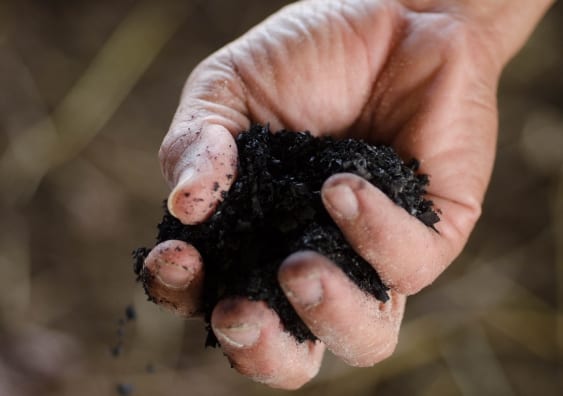
The global livestock industry produces mountains of manure that threaten waterways and air quality. At the same time, industrial wastewater carries dyes, pharmaceuticals, and heavy metals that evade conventional treatment. Scientists now demonstrate these two pollution problems can address each other.
A comprehensive review in Biochar X shows that heating animal manure in oxygen-free conditions transforms it into biochar, a porous material that removes toxic compounds from contaminated water. The analysis synthesizes research on converting cattle, sheep, chicken, and swine waste into filters capable of trapping industrial dyes, antibiotic residues, and metallic contaminants.
Manure-derived biochar works differently than plant-based versions. Livestock waste contains higher concentrations of calcium, phosphorus, magnesium, and potassium than crop residues. When heated through pyrolysis, these minerals create reactive sites and chemical phases that bind pollutants through multiple mechanisms: physical trapping in pores, electrostatic attraction, mineral precipitation, and ion exchange.
Performance Across Pollutant Types
For industrial dyes used in textiles and manufacturing, sheep manure biochar showed particularly strong results. Studies found it effectively removed methylene blue, methyl orange, and malachite green through combinations of pore filling, hydrogen bonding, and interactions between aromatic dye molecules and carbon structures in the biochar. The material’s effectiveness stems from both its high surface area and abundant oxygen-containing functional groups.
Antibiotics present a tougher challenge due to their complex molecular structures. Tetracycline, ciprofloxacin, and levofloxacin persist in water systems and promote drug-resistant bacteria. Research showed that biochars from swine, cattle, and rabbit manure could capture these drugs, though performance varied significantly based on pH levels and surface chemistry. For tetracycline specifically, the biochar’s removal worked best at pH 3.5-8.0, where the antibiotic exists in a charged form that interacts strongly with the biochar surface.
Heavy metal removal demonstrated clear advantages tied to manure’s mineral content. Lead, copper, and cadmium formed insoluble precipitates with phosphate and carbonate species inside the biochar matrix. Ion exchange with calcium, magnesium, and potassium from the biochar surface provided additional binding. In comparative tests, manure-derived biochars often matched or exceeded commercial activated carbon for removing certain metals, despite being produced from waste material.
“By turning animal waste into functional biochar, we can help clean wastewater while reducing the environmental burden of manure management,” explains Eilhann E. Kwon of Hanyang University, corresponding author of the study.
From Lab to Application
Production conditions significantly influence biochar performance. Higher pyrolysis temperatures generally increase ash content and promote precipitation-based removal of metals, while lower temperatures preserve functional groups that support hydrogen bonding and surface complexation. Physical or chemical activation can further enhance properties by opening pores and introducing additional reactive sites, though these treatments add processing steps and costs.
The review identifies several barriers to large-scale adoption. Manure composition varies by animal species, diet, and bedding materials, creating consistency challenges. Energy requirements for high-temperature pyrolysis and chemical activation need evaluation against performance gains. The disposal or regeneration of spent biochar requires careful planning to prevent releasing captured contaminants.
Despite these limitations, the authors conclude that manure biochar offers rare advantages: it converts a costly waste into a valuable product while providing affordable water treatment. Because livestock operations continuously generate large quantities of manure, the feedstock supply supports sustained production. The technology could integrate into advanced treatment stages at wastewater facilities or enable decentralized water purification systems in agricultural areas.
The research points toward closing loops between agriculture, waste management, and environmental protection. Future work must focus on scaling production, developing regeneration strategies, and ensuring long-term stability before manure-derived biochar can move from laboratory demonstrations to routine industrial use.