

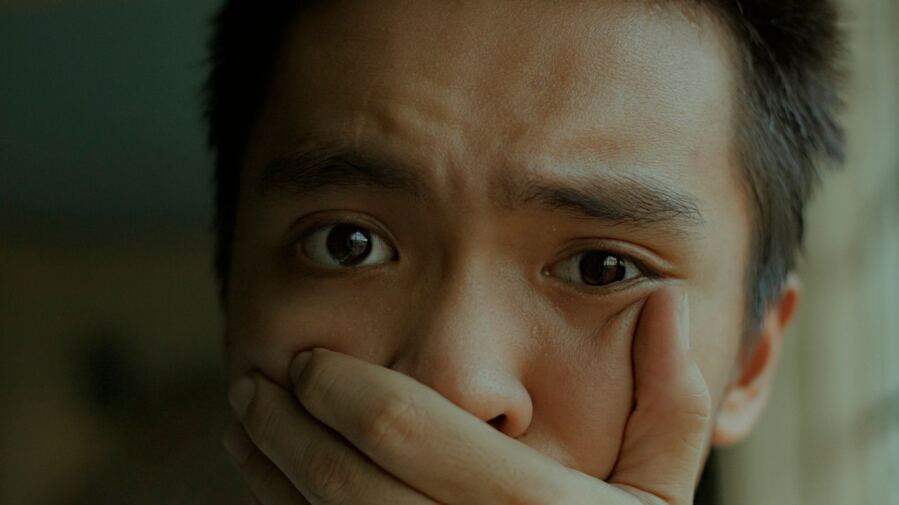
In Canada’s 2022 Mental Health and Access to Care Survey, about 24 percent of respondents aged 20 to 24 met the survey’s lifetime criteria for social anxiety disorder, compared with 6 percent of respondents over 65. The cross-sectional survey identifies an age difference but cannot determine what caused it.
The headline figure is stark enough on its own. Nearly 1 in 7 Canadian adults, about 13.9 percent, have met the criteria for social anxiety disorder at some point in their lives. Two decades ago that figure was closer to 1 in 12.
Social anxiety disorder, sometimes called social phobia, is more than ordinary shyness. It is a persistent, often disabling dread of situations where a person might be scrutinized: speaking up in a meeting, eating in front of strangers, making small talk at a party that everyone else seems to glide through. The condition drags down relationships, work, quality of life. An analysis published in Psychiatry Research reported that the 2022 lifetime-prevalence estimate was roughly 71 percent higher than the comparable estimate from 2002. “Social anxiety is becoming more common in Canada, and understanding why this increase is happening is essential for improving mental health support,” says Tak-Lai Nellie Chau, a recent master of social work graduate at the University of Toronto and one of the study’s lead authors.
To build the picture, Chau and her colleagues mined the 2022 Canadian Mental Health and Access to Care Survey, a once-a-decade snapshot of the country’s mental health. Their working sample ran to 8,716 adults aged 20 and over.
The Steepest Curve Belongs to the Young
What jumps out of the numbers is age. The odds of having lived with social anxiety fell steadily with every older bracket, a clean downward staircase from the early twenties to the late sixties. Those aged 20 to 34 carried more than five times the odds of the over-65s. Around 1 in 5 people in their late twenties and early thirties had been there too.
“Young adulthood is a key life stage where social pressures are high, which may increase vulnerability to social anxiety,” says Stephen A. Oliver, a co-author also at Toronto. He points to the squeeze of recent years: “Add to this the experience of increased isolation during the pandemic, growing pressures to achieve certain ideals on social media, and increased polarization and those pressures are bound to intensify.”
The study itself did not test why the rise happened, a caveat the team is careful to flag. But the obvious suspects loom. The 2022 data were gathered in the waning months of the COVID-19 pandemic, a stretch when a whole cohort came of age while keeping its distance, swapping crowded lecture halls and first jobs for screens. The researchers note that virtual environments can become a place to hide, a way to dodge the very face-to-face encounters that, with practice, tend to loosen anxiety’s grip. Spend the formative years avoiding the room, the logic runs, and the room only grows more frightening. Whether social media is cause or symptom remains genuinely unsettled, but the correlation with heavy use keeps surfacing in the wider literature.
A Long Shadow from Early Life
Age was only the loudest signal. Dig into the data and a quieter, more troubling pattern emerges, one that reaches back into childhood. Adults who had experienced childhood sexual abuse, or who had watched a parent or guardian hit another adult at home, carried markedly higher odds of social anxiety decades later.
Among those who had survived the most coercive forms of childhood sexual violence, more than 1 in 4 went on to meet the criteria. “These findings highlight the importance of a life course approach to understanding mental health,” says Esme Fuller-Thomson, who directs the university’s Institute for Life Course and Aging and supervised the work. “Childhood experiences can cast a long shadow on adult mental health.”
The condition rarely travels alone. People with a history of drug use disorder were nearly three times as likely to have had social anxiety, those with alcohol problems about 60 percent more so, a tangle that researchers have long read through the lens of self-medication: the drink before the party, the joint that quiets the dread. Chronic pain and a stack of physical health conditions tracked the same way. So did a thinner sense of social support, the bleak feeling of having no one to lean on. Curiously, two things people often assume would matter, household income and childhood physical abuse on its own, washed out once everything else was accounted for.
There were protective threads too. People who said spirituality mattered to them, and those who felt they had someone to count on in a crisis, were less likely to struggle, hinting at where support might do the most good. The team did not test treatments, but Fuller-Thomson is blunt about the stakes: “While our study did not test treatments directly, there is strong evidence from other research that cognitive behavioural therapy can be highly effective for social anxiety. Given that one in four young Canadians are affected, improving access to these evidence-based supports is essential.”
If she is right, the work ahead is less about discovery than reach. A generation has come of age more afraid of the room than the one before it, and the tools to help already exist. The open question is whether they can get to the people now quietly counting the exits.
Frequently Asked Questions
Is social anxiety just an extreme form of shyness?
No. Shyness is a personality trait; social anxiety disorder is a diagnosable condition marked by persistent, often disabling fear of being judged in everyday situations like speaking, eating, or socializing in front of others. It can significantly impair work, relationships, and quality of life, and it exists on a continuum where even milder cases cause real harm.
Why are young adults so much more affected than older people?
Among Canadians aged 20 to 24, about 24 percent have experienced social anxiety, compared with 6 percent of those over 65. Researchers point to pandemic isolation during a formative life stage, the pressures of social media, and reduced face-to-face practice, though the study could not prove cause. Some of the gap may also reflect older adults simply forgetting earlier episodes.
Which childhood experiences were associated with social anxiety in this survey?
The study found that adults who experienced childhood sexual abuse or witnessed domestic violence had notably higher odds of social anxiety in adulthood. The analysis cannot show that those experiences caused later social anxiety, and unmeasured factors may contribute to the association. Childhood physical abuse alone, however, was not a significant predictor once other factors were considered.
Is social anxiety treatable?
Yes. While this study did not test treatments, the authors note strong evidence that cognitive behavioural therapy is highly effective for social anxiety. With one in four young Canadians affected at some point, the researchers argue the priority is expanding access to these proven supports. You can read the full study at its DOI link.
Editor’s note: This article was updated on September 14, 2026, to align its headline and wording more closely with the evidence and sources.
