

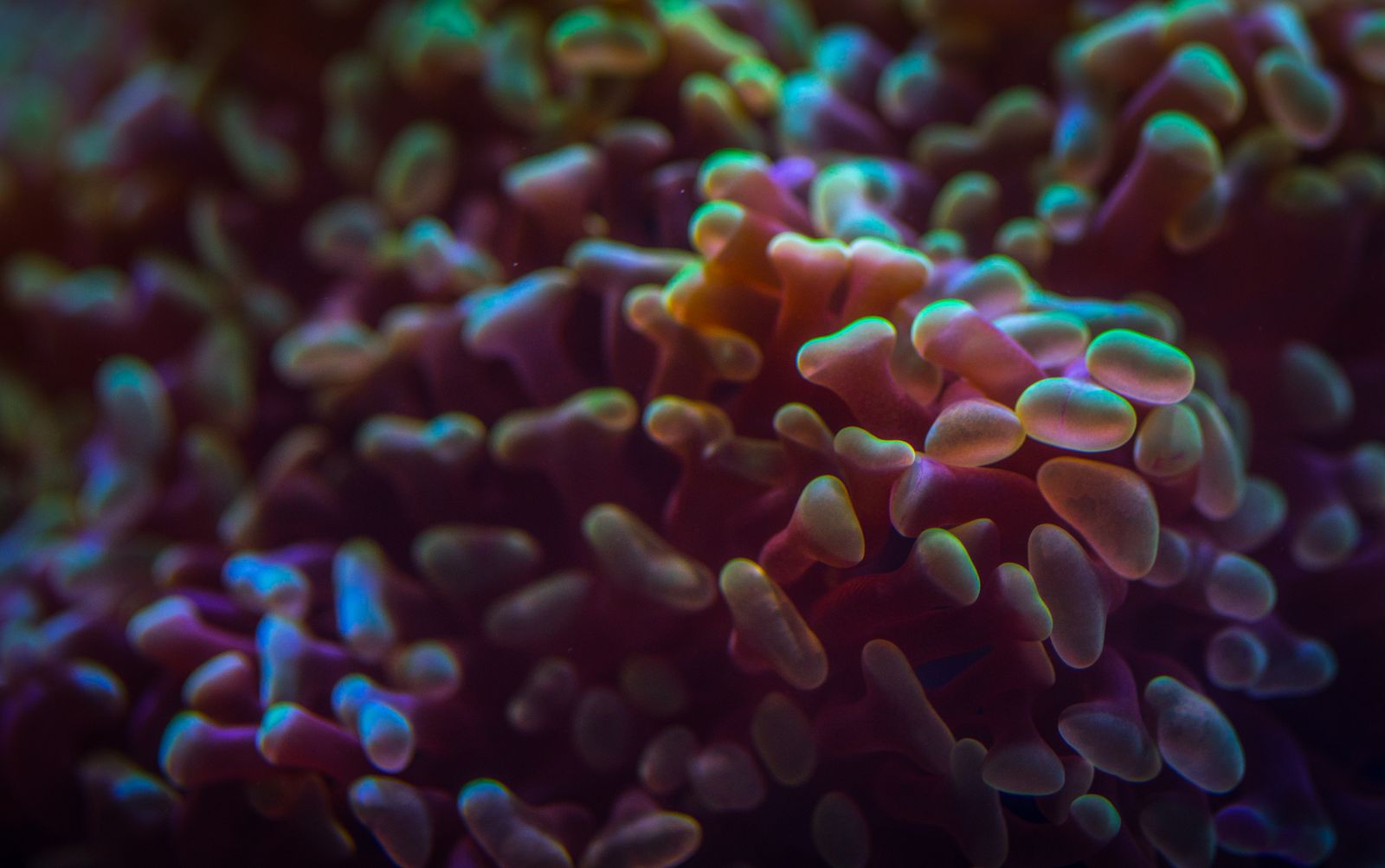
Australia’s Great Barrier Reef is edging toward ecological collapse, scientists warned recently, after repeated marine heatwaves killed corals faster than the system can regrow them. The world’s largest coral structure — a living formation stretching more than 2,000 kilometres and visible from orbit — has endured multiple mass bleaching events in recent years, and researchers say the window to save it as a functioning ecosystem is narrowing to years, not decades.
The warning follows fresh surveys showing coral cover along key northern and southern sections has fallen sharply after recent bleaching seasons. Scientists describe the trajectory in stark terms: the reef is not simply degrading, it is beginning to lose the capacity to rebuild itself between shocks.

What “collapse” actually means
Collapse, in reef science, is a technical word. It describes the point at which coral mortality outpaces recruitment for long enough that the three-dimensional reef structure itself begins to erode. Fish lose habitat. Grazers disappear. Opportunistic algae take over the substrate. The reef stops being a reef and becomes something flatter and simpler.
That is the trajectory researchers now see playing out. A synthesis of recent modelling work published through Nature projects significant declines in tropical coral taxa by mid-century under high-emission scenarios, with vulnerability hotspots concentrated in the most biodiverse reef complexes — the Great Barrier Reef among them.
The same synthesis notes a poleward shift in coral habitat suitability. Warm-adapted species are pushing into subtropical waters. Endemic tropical species, which have nowhere cooler to go, face severe habitat loss.
Six bleaching events in nine years
The reef’s bleaching record tells the story compactly. Before 2016, mass bleaching was a once-in-a-generation event. Since then, severe bleaching has struck repeatedly — in 2016, 2017, 2020, 2022, 2024 and 2025 — a cadence that gives corals almost no recovery time. Fast-growing branching corals can take a decade or longer to rebuild after a major mortality event. Slow-growing massive corals need far longer.
The 2024 austral summer was particularly brutal. Sea surface temperatures across the Coral Sea sat well above the long-term average for months. Aerial surveys documented widespread bleaching across the majority of surveyed reefs, with high mortality in the reef’s southern sector — an area that had, until recently, been considered relatively buffered.
Heat is only part of the problem
Warming water gets most of the attention, and for good reason. When temperatures climb above summer maxima, corals expel the symbiotic algae that supply most of their energy. Prolonged exposure kills them.
But heat compounds with other pressures. Ocean acidification, driven by the same CO₂ emissions warming the sea, slows the rate at which corals lay down calcium carbonate skeletons. Cyclones physically shatter reef structure. Agricultural runoff from Queensland’s coast delivers nutrients and sediment that favour algae over coral.
And then there are the predators. Crown-of-thorns starfish, which eat living coral polyps, have surged in outbreak numbers across parts of the reef. Science Blog has covered how these predators survive bleaching events and feast on the surviving corals, effectively finishing off reefs that heat stress has weakened. Recent research has also identified unexpected features of crown-of-thorns biology that may open new control options.
Why the Great Barrier Reef is a hard case
Not all reefs respond identically to warming. South Atlantic reefs, particularly those off Brazil, possess deeper bathymetric ranges, higher turbidity tolerance and more flexible symbioses with their algal partners, which has historically resulted in fewer bleaching events. Some researchers had flagged these as potential global-warming refugia.
That optimism is fading. Unprecedented heat waves in Brazilian turbid reefs have recently produced severe coral mortality — a signal that even the toughest systems have thresholds.
The Great Barrier Reef sits in clearer, shallower, warmer water than the Brazilian systems. It is dominated by branching Acropora corals, which grow fast but bleach easily. Its geography — a long, narrow band running along Queensland’s continental shelf — offers few natural refugia. When a marine heatwave settles over the Coral Sea, it hits nearly every part of the reef at once.
The recovery arithmetic no longer works
Coral biologists talk about recovery windows. After a bleaching event, if temperatures return to normal and no cyclone hits and larvae from upstream reefs settle successfully, a reef can begin to rebuild. Under 20th-century conditions, that arithmetic worked. Big mortality events were rare enough that recovery could keep pace.
Under current conditions, it does not. A reef bleached in 2020 that lost 30% of its coral cover, then bleached again in 2022, then again in 2024, has no chance to reach its pre-2020 state before the next event arrives. The baseline shifts downward with each cycle.
Population structures in key reef-building corals align with present-day currents and historical sea-level changes, creating zones of high diversity that act as reservoirs of resilience. These connectivity patterns matter because larvae from surviving reefs seed damaged ones. When too many source reefs bleach at once, the whole network weakens.
Interventions on the table
Australian researchers and managers are pursuing several interventions in parallel. Cloud brightening trials aim to shade reefs during peak summer heat. Assisted evolution programs are cross-breeding heat-tolerant coral strains and reintroducing them to damaged reefs. Larval reseeding projects are collecting spawn from surviving colonies and settling it onto degraded areas.
Acoustic techniques are also being tested. Healthy reefs are noisy places, full of the clicks and grunts of fish and invertebrates, and larvae use that sound to find suitable settlement sites. Divers in Jamaica have used underwater speakers to broadcast healthy-reef soundscapes over degraded areas, drawing in larvae and juvenile fish. Similar trials are under way on parts of the Great Barrier Reef.
Crown-of-thorns culling programs continue, though the scale of the reef makes manual removal a slow business.
The limits of local action
Every scientist working on these interventions says the same thing: none of it substitutes for cutting emissions. Assisted evolution can modestly raise coral thermal tolerance. Cloud brightening might shave a fraction of a degree off peak summer temperatures over a limited area. These are stopgaps, designed to buy time.
The broader picture is grim. As Science Blog has previously reported, climate change is expected to destroy familiar marine environments and undermine conservation efforts globally, not just on reefs. The Great Barrier Reef is simply the most visible test case — big, well-studied, economically important, and impossible to ignore.
UNESCO has considered listing the reef as “in danger,” a designation Australian governments have lobbied against. The scientific case for that listing has strengthened with every bleaching season.
What happens next
The reef is not gone. Parts of it remain vibrant, particularly deeper areas and some northern sections that escaped the worst of recent bleaching. Coral is a resilient life form; individual colonies survive and reproduce even in badly damaged systems.
The question is whether the reef as a system — the connected, structurally complex, biodiverse organism visible from space — can persist. Current trajectories suggest it cannot without both aggressive local intervention and rapid global decarbonisation.
Researchers were careful with the word “collapse.” They did not mean the reef would vanish. They meant it would stop working the way a reef works: as a self-maintaining, structure-building, life-supporting formation. On current warming trajectories, that transition is measured in years.