

Ask how to become a better person and you will usually be handed a list of virtues to grow: be kinder, more patient, more generous. It is a reasonable-sounding project, and a large body of psychology suggests it rests on a shaky assumption. The assumption is that good behavior flows mainly from good character, a stable inner quality you can strengthen like a muscle. What people actually do turns out to depend far more on the situation they are in than that picture allows.
The classic demonstration is almost too neat, which is part of why it stuck.
The seminary students in a hurry
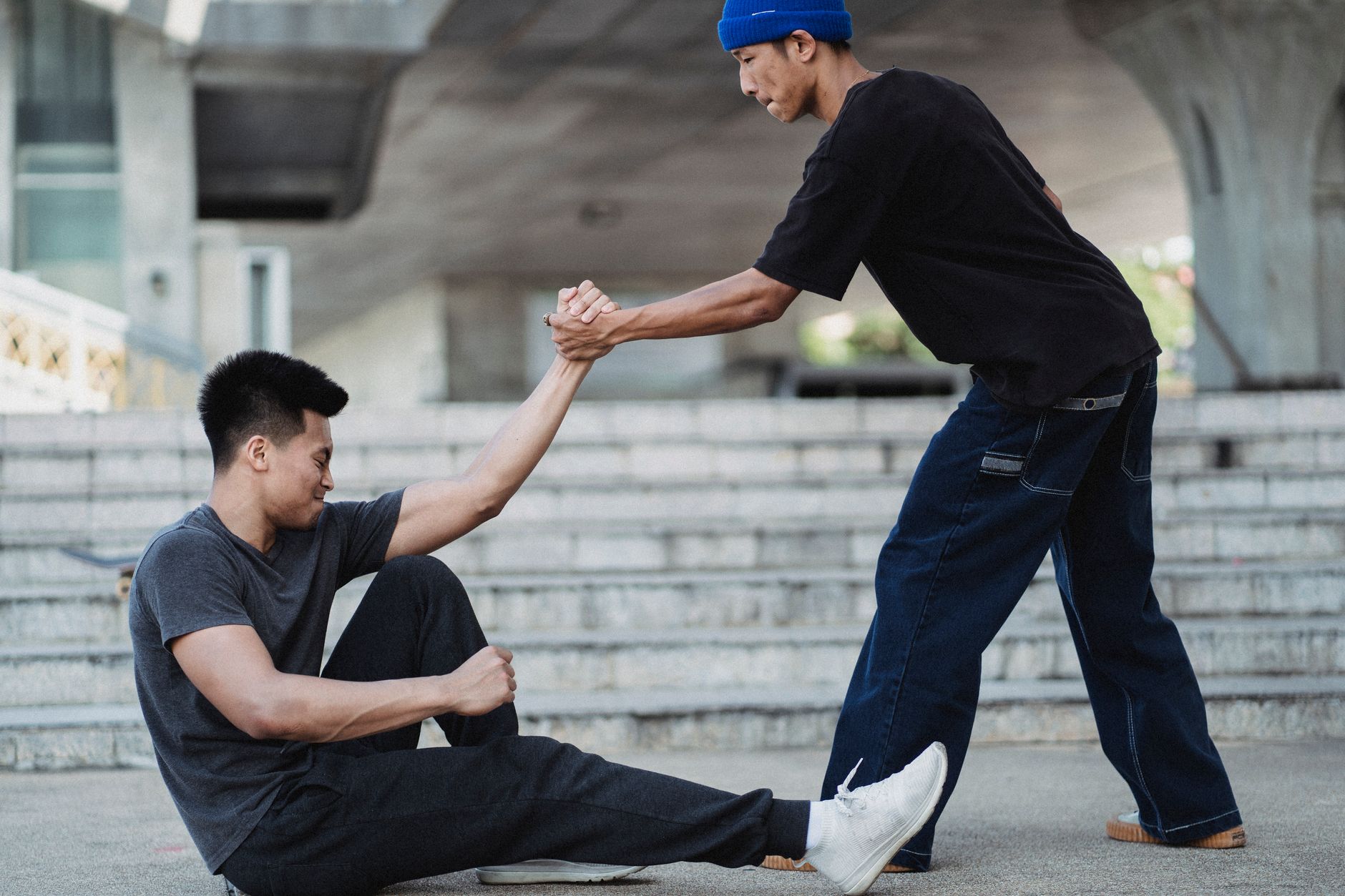
In 1973, the psychologists John Darley and Daniel Batson recruited 67 seminary students, young men training for the ministry, and asked each to walk to another building to record a short talk. Some were assigned to speak on the parable of the Good Samaritan, the story of a stranger who stops to help an injured man others have passed by. On the way, the researchers had arranged for each student to encounter a man slumped in a doorway, coughing and clearly in distress.
The one thing the researchers varied was how rushed each student was. Some were told they had a few minutes; others were told they were already late and should hurry. That single detail did most of the work. As the study reported, 63 percent of the unhurried students stopped to help, against just 10 percent of the hurried ones. Whether a student was about to preach on the Good Samaritan made no reliable difference. Some, on their way to talk about helping a stranger in a ditch, stepped over a stranger in a doorway.
The point is not that seminary students are secretly callous. It is that being in a hurry swamped whatever their character and beliefs would have predicted. The situation, not the virtue, decided the act.
What that does and does not prove
It would be easy to over-read this into the claim that character does not exist, and some psychologists have argued close to that. The honest version is narrower.
This is one study, and the strong situationist position has been debated for decades. People do differ in stable ways, and those differences show up when you average across many situations. What the research undercuts is the intuition that character reliably predicts any single act. On any given day, in any given doorway, the circumstances you are in are doing more of the deciding than the person you believe yourself to be.
The trap of feeling good about yourself
There is a second finding that complicates the self-improvement plan more directly, and it concerns the plan’s own logic. The usual advice is to accumulate good deeds until they add up to a better person. The problem is that feeling like a good person has a documented tendency to license the opposite.
In a 2001 paper, Benoît Monin and Dale Miller described what is now called moral licensing. Across several experiments, people who first had a chance to establish their credentials as fair-minded, by disagreeing with obviously biased statements, for instance, were afterward more willing to express preferences that looked prejudiced. Having banked the evidence of their own virtue, they felt freer to spend it. The effect is real but should be held loosely: it tends to be modest, and its replication record is mixed rather than airtight.
Still, the direction is worth taking seriously, because it turns the tidy model inside out. The running tally of good deeds that is supposed to make you better can instead become permission to lapse, precisely by convincing you that you are already good.
The things actually worth doing
Put these together and the useful advice looks less like cultivating virtue and more like engineering your circumstances, which is less inspiring and probably more effective.
Do not run your life so rushed that you cannot stop for the person in the doorway, since haste, not heartlessness, is what the evidence keeps catching. Arrange things so the decent action is the default rather than a feat of will: set up the standing donation, commit in advance, remove the friction that lets good intentions quietly fail in the moment. Do small good things often, but resist keeping score, because the scoreboard is what licenses the next lapse. And hold your own sense of being a good person lightly, since that comfortable feeling is the exact one the licensing research warns about.
None of this says effort or values are pointless. People who care about being good are more likely to build the very situations that make good behavior easy, which is character expressing itself through design rather than willpower.
What the research quietly removes is the flattering idea that betterness is mostly an inner achievement. It looks more like a set of arrangements, and the humility to keep suspecting that on the wrong day, in enough of a hurry, you would walk past too.