

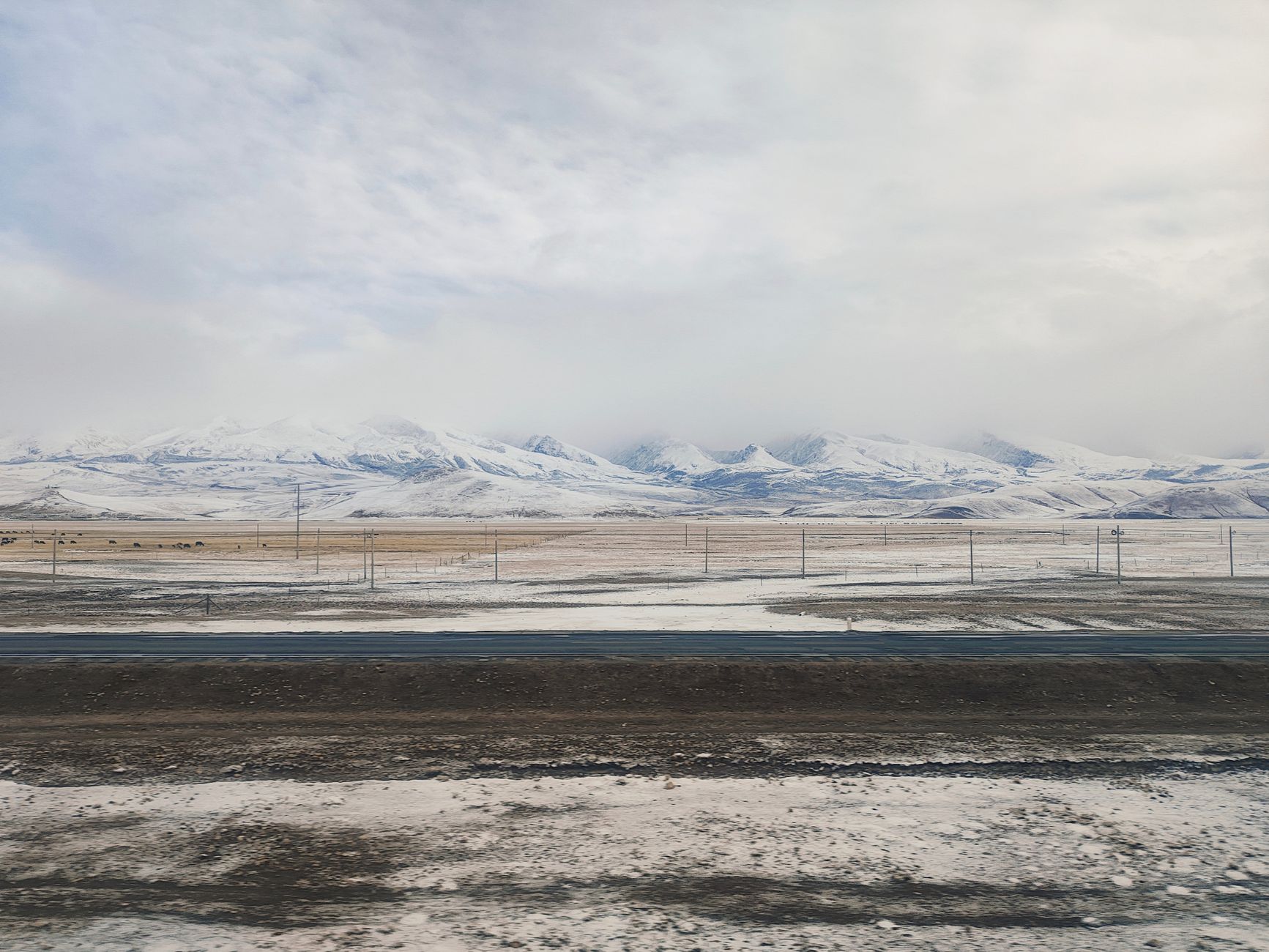
At 4,000 meters above sea level, oxygen still makes up roughly the same share of the air as it does at the coast. The problem is pressure. Each breath contains fewer oxygen molecules, forcing the body to work with a smaller supply.
People arriving from low altitude often respond by producing more red blood cells and more hemoglobin, the protein that carries oxygen. Tibetan highlanders tend to show a different pattern, maintaining relatively lower hemoglobin concentrations than many acclimatized newcomers at similar elevations. Part of that difference is associated with a stretch of DNA around a gene called EPAS1.
The striking part is where that DNA appears to have come from. Its closest known match is in the genome of the Denisovans, an extinct human population whose existence was first recognized from ancient DNA in a small finger bone. Interbreeding brought Denisovan-related DNA into the ancestors of living humans, and natural selection later made this particular segment unusually common among people living on the Tibetan Plateau.
I find the story more interesting when it is stated precisely. Tibetans did not receive a complete “high-altitude gene” that other humans lack. All humans carry EPAS1. What differs is a Denisovan-like haplotype, a linked group of variants around the gene, that became useful in one demanding environment.
EPAS1 helps coordinate the response to low oxygen
EPAS1 contains instructions for a protein called hypoxia-inducible factor 2 alpha, often shortened to HIF-2α. It is part of a wider oxygen-sensing system that changes the activity of many other genes when oxygen availability falls. Those downstream responses include the regulation of red blood cell production.
Adding red blood cells can increase the blood’s oxygen-carrying capacity. Yet a very large rise in hemoglobin also makes blood more viscous, which can create its own physiological costs. Tibetan highlanders are notable because their long-term response generally does not depend on the same large hemoglobin increase seen in some other high-altitude populations or recent arrivals.
In 2010, Cynthia Beall and colleagues reported that variation near EPAS1 showed an unusually strong signature of natural selection and was associated with lower hemoglobin concentration in Tibetan highlanders. Other oxygen-response genes, including EGLN1, also carry selected variants in Tibetan populations. The adaptation is therefore not the work of one switch.
The DNA looked too unusual to be ordinary human variation
The Denisovan connection emerged clearly in 2014. Emilia Huerta-Sánchez and an international team resequenced the region around EPAS1 in 40 Tibetan and 40 Han Chinese individuals. They focused on a 32.7-kilobase segment showing especially large genetic differences between the groups.
Within that segment, the most common Tibetan haplotype was much closer to the sequenced Denisovan version than expected for ordinary variation among present-day humans. The same pattern was rare in Han Chinese samples and absent from the other modern populations examined. At the most differentiated sites, allele-frequency gaps between Tibetans and populations in the 1000 Genomes data were at least 0.65.
The team’s paper in Nature tested another possibility: perhaps the shared sequence was extremely old variation retained independently by Denisovans and Tibetans. The length and pattern of the segment made that explanation much less convincing than introgression, meaning gene flow from Denisovans or a closely related archaic population into modern humans.
This is a strong case for adaptive introgression, but it is not a complete one-gene account of high-altitude life. The study identified the ancestry of a selected DNA segment. It did not establish one causal letter of DNA or explain every physiological trait found among Tibetan highlanders.
Natural selection amplified an inherited advantage
Interbreeding alone does not explain why the haplotype became common. Most archaic DNA fragments either disappeared or remained at low frequency as generations passed. The EPAS1 region followed a different path because carriers in a low-oxygen environment appear to have left more surviving descendants.
This is what population geneticists mean by adaptive introgression. A useful variant does not have to arise as a new mutation in the population facing a new environment. It can arrive through gene flow from another population whose ancestors carried it already.
A separate 2014 study led by Choongwon Jeong found that Sherpa and Tibetan populations share selected high-altitude ancestry around both EPAS1 and EGLN1. Variants near EPAS1 were associated with lower hemoglobin in the Sherpa sample in the same direction previously reported among Tibetans. That broader pattern reinforces the link between the haplotype, altitude, and the oxygen-response phenotype.
The exact biological chain remains less settled than the ancestry story. Many of the strongest signals lie in noncoding DNA, suggesting changes in gene regulation rather than a novel protein. Researchers continue to investigate which variants alter EPAS1 activity, in which tissues, and how they interact with other selected genes.
Denisovans really did live on the Tibetan Plateau
When the introgression paper appeared, Denisovans were known genetically from remains at Denisova Cave in Siberia. Five years later, their geography expanded. Researchers identified a partial lower jaw from Baishiya Karst Cave on the northeastern Tibetan Plateau as Denisovan by analyzing ancient proteins preserved in a tooth.
The jaw came from a cave 3,280 meters above sea level. Carbonate attached to it was dated to at least 160,000 years ago, showing that archaic humans occupied this high-altitude environment long before the arrival of modern humans in the region.
Further work at the same cave has extended that history. A 2024 Nature study identified a Denisovan rib fragment dating to approximately 48,000 to 32,000 years ago and reported evidence that the cave’s occupants processed a wide range of animals for meat, marrow, hides, and bone tools.
Those fossils make the genetic story geographically plausible, but they do not prove that the specific EPAS1 haplotype arose in that cave or that its occupants were direct ancestors of the people who passed it to modern humans. The 2014 genetic paper deliberately used the wording “Denisovan or Denisovan-related.” One sequenced genome cannot represent every Denisovan population that once lived across Asia.
Human evolution worked by mixing as well as branching
The old image of human evolution as a clean tree, with one lineage replacing another without contact, has become difficult to defend. Ancient genomes show repeated gene flow among modern humans, Neanderthals, Denisovans, and probably archaic populations for which no genome has yet been recovered.
Most inherited archaic DNA did not become an obvious adaptation. Some fragments were removed by selection, some persisted by chance, and a few became more common because local conditions changed their value. The Tibetan EPAS1 haplotype is one of the clearest examples of the last outcome.
It also resists a simplistic story about genetic superiority. An adaptation is tied to an environment. A restrained hemoglobin response can be advantageous under chronic low oxygen, while the same variants need not provide a general benefit elsewhere. Even on the plateau, ancestry, many genes, development, and culture all contribute to how people live at altitude.
The careful conclusion is that Denisovan-related DNA supplied useful variation, and natural selection did the amplifying. A small inherited segment survived the extinction of the population from which it came because it continued to matter in the people who carried it.
