

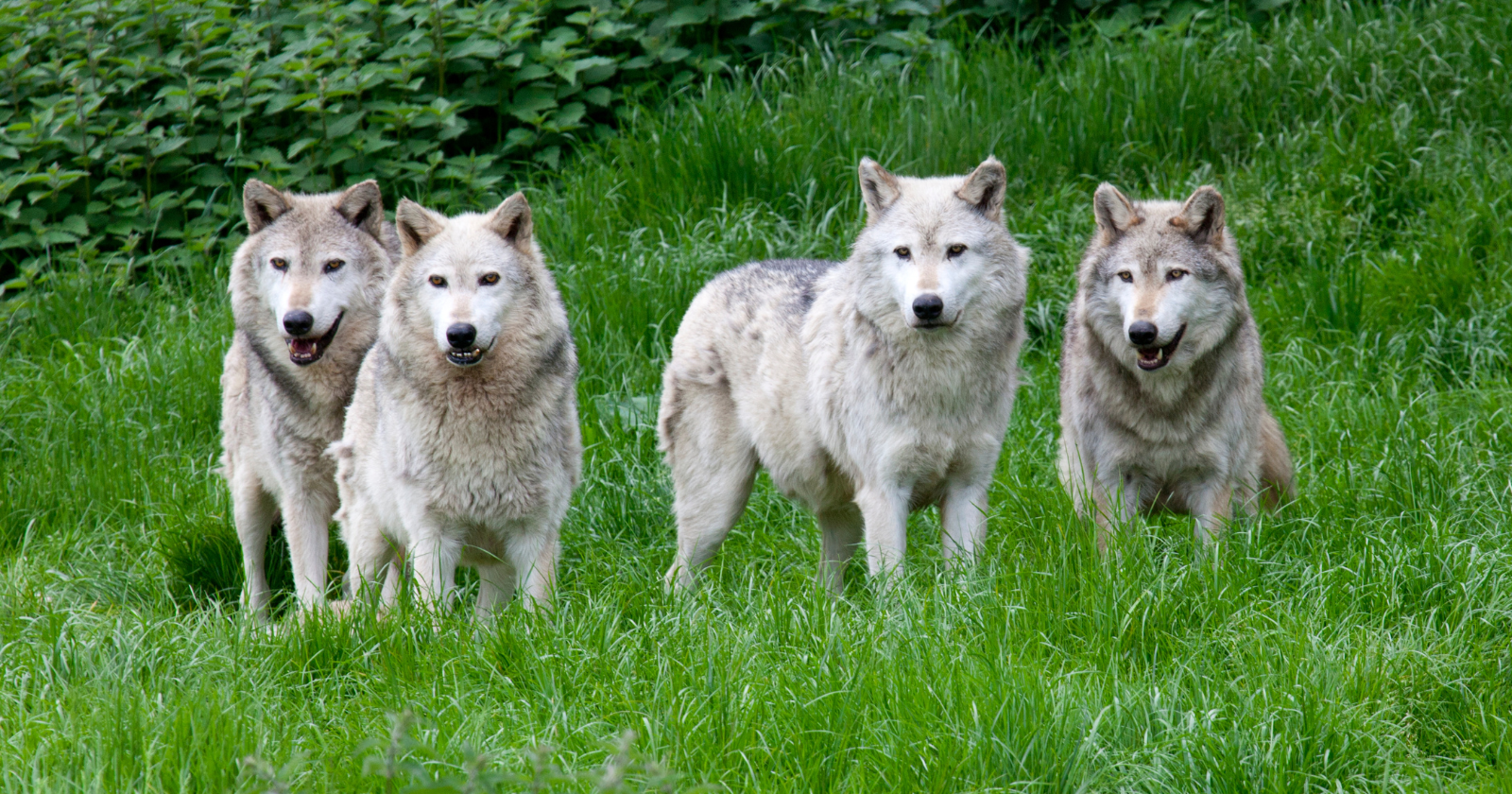
On the morning of January 12, 1995, fourteen wolves arrived at Yellowstone National Park in wooden crates.
They had been captured in Alberta and British Columbia several weeks earlier, held in acclimation pens near the park’s northern range, and were now being released — the first wolves to walk in Yellowstone since the last resident population had been eliminated by federal predator-control programs in 1926. A second batch of seventeen more Canadian wolves followed in 1996. The reintroduction was, at the time, one of the largest deliberate rewilding operations ever attempted in a major national park.
Almost immediately, ecologists began documenting effects. Elk populations dropped. Some aspen and willow stands, chronically over-browsed for decades, showed early signs of recovery. Beaver colonies expanded. A specific narrative began to take shape — one in which the wolves had triggered a cascade of ecological changes that reached all the way down the food chain to the plants and, eventually, to the rivers themselves.
By 2014, that narrative had become one of the most famous stories in modern conservation. It has since turned out to be more complicated than most people watching the video believed.
What the popular story said
The version most people know comes from a 2014 online video called “How Wolves Change Rivers,” produced by the non-profit Sustainable Human and narrated by the British environmental writer George Monbiot.
The video ran four minutes and 33 seconds and told a specific structural story. Wolves returned to Yellowstone. Wolves reduced elk numbers and changed elk behaviour, making them less likely to linger in exposed riverside areas where they could be ambushed. Willows and aspens along the rivers, no longer browsed to the ground, grew back. Beavers, which depend on willows, returned to the streams. Beaver dams stabilised bank erosion. And the rivers themselves — the video’s closing claim — narrowed, meandered less, and ran clearer.
The story was compelling, cleanly structured, and visually beautiful. It presented the trophic cascade — the ecological term for a top-down effect from a predator through multiple lower trophic levels — as a demonstrated fact.
“How Wolves Change Rivers” has since been viewed more than 45 million times across YouTube and other platforms. It remains one of the most-shared ecology videos in the history of the internet. It has been used in classrooms, cited in conservation campaigns, and featured in policy debates about predator reintroduction worldwide.
What most viewers have not encountered is the specific state of the peer-reviewed literature the video was based on.
What the science actually shows
The primary scientific case for the Yellowstone trophic cascade came from a research team led by William Ripple and Robert Beschta at Oregon State University. Their papers, published across the 2000s and early 2010s, documented the specific ecological changes the Monbiot video would later describe. They argued that wolves had caused those changes through a combination of direct predation and behavioural effects on elk.
The core claim was contested from early on. A 2010 paper in Ecology argued that the aspen recovery pattern was better explained by a gradual increase in elk numbers over the previous century than by an abrupt behavioural shift after wolf reintroduction. A 2021 paper in Ecology Letters, led by Utah State University’s Elaine Brice and Dan MacNulty with the University of Wisconsin’s Eric Larsen, showed that the Ripple/Beschta sampling method — using the five tallest young aspen in each stand as the measure of recovery — systematically overstated regrowth. Choosing the five tallest trees, MacNulty’s team found, tended to pick out the top 10-15 percent of young aspen in stands that had happened to survive.
The most direct challenge came in January 2024, when Tom Hobbs and David Cooper at Colorado State University published the results of a 20-year experimental study. Their conclusion was blunt: “the restoration of apex predators to Yellowstone should no longer be held up as evidence of a trophic cascade in riparian plant communities of small streams on the northern range.”
Ripple and Beschta and their colleagues have pushed back. A 2025 paper by Painter and others reaffirmed the case for a real, if weaker, trophic cascade effect, and criticised the Hobbs/Cooper analysis on methodological grounds. The debate is genuinely ongoing.
But the core claim in the Monbiot video — that wolves demonstrably changed the course of Yellowstone’s rivers through a clean cascade of ecological effects — is not currently supported by the state of the peer-reviewed literature. Elk numbers dropped. Some plant communities recovered in some places. Beavers increased. Whether wolves were the primary cause, or one factor among several including climate change, human hunting outside the park, and shifts in other predator populations, is what the science is still working out.
Why the disconnect matters
The Yellowstone wolves story is a specific case study in how popular science can outrun the evidence base it is drawn from.
By 2014, when the video was released, the trophic cascade thesis had already been peer-reviewed and challenged. The specific claim that wolves had reshaped the rivers was already the strongest interpretation of a contested body of research, and even the more modest claims about aspen and willow recovery were the subject of active scientific dispute. None of this appeared in the video. None of it appears in most popular retellings of the story since.
For ten years, tens of millions of viewers have encountered a version of the Yellowstone reintroduction in which the ecology was clean, the causation was clear, and the wolves’ effects were transformative. During those same ten years, the actual peer-reviewed literature has been steadily complicating that picture, and continues to.
This does not mean the reintroduction was a failure. Wolves are back in Yellowstone. They are functioning ecologically. They have measurable effects on elk populations and, through those effects, on other parts of the ecosystem. But the specific claim that they demonstrably changed the rivers — the claim that made the story famous — is not the same as the claim that they had ecological effects, which is what most working ecologists would actually endorse.
The gap between the two, and the specific speed at which the compelling version travelled while the qualified version did not, is worth being honest about.
Wolves are unusually charismatic. Rivers are unusually photogenic. The specific combination made a compelling story. The peer-reviewed literature, which almost never travels at the speed of a viral video, has been catching up ever since — quietly, complicatedly, and without ever quite reaching the audience that watched the original claim on YouTube.
Fourteen wolves came off the trucks in January 1995. What they actually changed, and what has been credited to them, are two different questions. The scientists working on the first one are, thirty years later, still working.
