

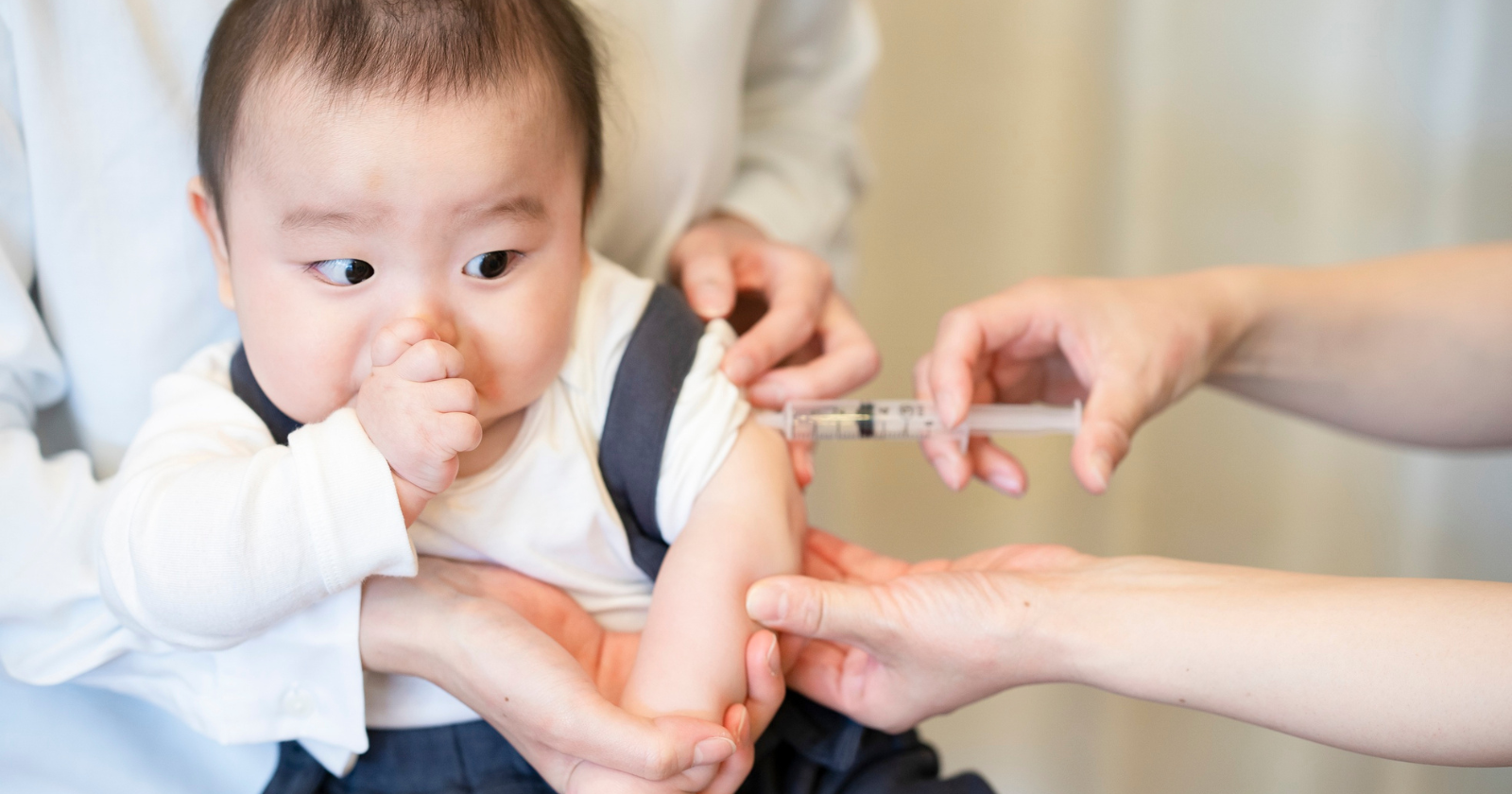
President Trump signed an executive order on Monday directing that the combined measles, mumps and rubella vaccine be separated into three individual shots, and that childhood immunizations more broadly be spread across separate doctor visits rather than given together. No major U.S. medical association had asked for this change. Several are now speaking against it.
White House press secretary Karoline Levitt confirmed the signing that afternoon. Health Secretary Robert F. Kennedy Jr., whose own vaccine advisers had previously floated splitting the MMR shot, appeared at the signing and repeated a claim linking vaccination to autism, a claim researchers have examined repeatedly and found no support for. NIH Director Jay Bhattacharya framed the order as restoring parental choice over how children are vaccinated, according to CIDRAP’s reporting.
What actually changes, and when
The order calls for single-disease measles, mumps and rubella shots to replace the combined MMR vaccine once individual versions are available in the U.S. market at the scale needed, and for the wider childhood schedule to be broken into more visits rather than fewer. Axios reports that critics, including vaccine supporters within the administration’s own circle, note the practical effect: more visits mean more chances for a family to miss one, and more missed visits mean lower overall coverage.
There is no evidence that the current combined schedule raises the risk of autism or any other developmental condition. This order changes which shots a family will be asked to schedule, and how many times they’ll need to bring a child in to get them — not the underlying safety evidence.
Why the three shots were combined in the first place
The MMR vaccine has been administered as a single combined shot in the United States since 1971, and the reasoning behind combining it was never about cost alone. Public health researchers have long pointed to a straightforward operational problem: every additional visit a vaccine schedule requires is another chance for a family to miss it, whether because of a missed appointment, a lapse in insurance, a change of address, or simply the accumulated friction of asking working parents to bring a child to a clinic more often than necessary. Combination vaccines were adopted across much of the developed world for exactly this reason, and the logic hasn’t changed since. Splitting a vaccine that has been given as one shot for more than five decades leaves the number of antigens a child receives unchanged — it just spreads the same protection across more shots and more visits.
Where the autism claim comes from, and why it persists
The claim linking MMR vaccination to autism traces to a single 1998 paper published in The Lancet by Andrew Wakefield, based on twelve children. The Lancet formally retracted the paper in February 2010, and an investigation published in the BMJ the following year characterized the underlying data as fraudulent. Wakefield was struck from the UK medical register in 2010. In the years since, researchers have looked for the association Wakefield claimed to find, across far larger populations than his original twelve-patient case series, and have not found it. That history doesn’t stop the claim from resurfacing whenever vaccine policy becomes politically contested, and Monday’s signing is the latest instance of a nearly thirty-year-old, thoroughly examined claim being invoked at the highest level of government.
The legal fight this revives
This isn’t the administration’s first attempt to change how the federal government recommends childhood vaccines, and the first attempt didn’t survive contact with a federal court. That fight traces back through 2025: Kennedy fired all seventeen sitting members of the Advisory Committee on Immunization Practices in June 2025 and replaced them with vaccine skeptics, altered COVID vaccine guidance for children and pregnant women that May, and then, in January 2026, used a CDC memo to cut the recommended childhood vaccine list from 17 to 11 without first bringing it to the reconstituted committee. U.S. District Judge Brian E. Murphy in Boston issued a preliminary injunction blocking those changes, finding they likely violated the Administrative Procedure Act. Murphy’s language was pointed: he wrote that there exists “a method scientific in nature and codified into law through procedural requirements,” and that “the government has disregarded those methods and thereby undermined the integrity of its actions.” That injunction also froze Kennedy’s ACIP appointments, preventing the reconstituted committee from acting in its new form. Monday’s order arrives in that same unresolved legal environment, and whether it fares any better than the last attempt is an open question rather than a settled one.
The backdrop this lands on
The timing matters because measles has stopped being a hypothetical concern. The U.S. recorded 2,288 confirmed measles cases in 2025, with 243 hospitalizations and three deaths, the worst year for the disease since 1991. By the following spring, additional outbreaks were already pushing the combined 2025–2026 total well past 3,000 cases, on pace to significantly exceed the prior year. Unlike earlier outbreak years, the great majority of recent cases have come from local transmission rather than travel, a pattern epidemiologists treat as a marker of eroding population immunity rather than isolated bad luck.
National MMR coverage among kindergarteners has slid from 95.2 percent in the 2019-2020 school year to 92.5 percent in 2024-2025, below the 95 percent threshold generally considered necessary to prevent sustained spread. The Pan American Health Organization declared in November 2025 that the Americas region had lost its regional measles-free status, after Canada’s outbreak met the threshold for endemic transmission.
The U.S.’s own individual elimination status — separate from the regional designation — is scheduled for formal review in November 2026. Losing that status, which the U.S. has held since 2000, would be a marker of how far vaccination coverage has slipped, not a reversible paperwork change.
Who is pushing back
The American Academy of Pediatrics has said it will continue recommending the existing, evidence-based schedule regardless of the order, and at least 23 states have indicated they’ll keep following AAP guidance rather than the new federal directive. The American College of Physicians, through its president Dr. Jan K. Carney, warned the change “could increase costs to patients and families” through additional copays and appointments. Epidemiologist Michael Osterholm put the broader concern plainly: “Parents deserve clear, evidence-based guidance about how to protect their children, not competing recommendations issued through political processes.”
Courts have already blocked one version of this administration’s attempt to rewrite federal vaccine recommendations. Whether Monday’s order survives a similar challenge, and whether it lands in the middle of an outbreak year that is already testing the limits of the country’s population immunity, are the two questions likely to define what happens next.