

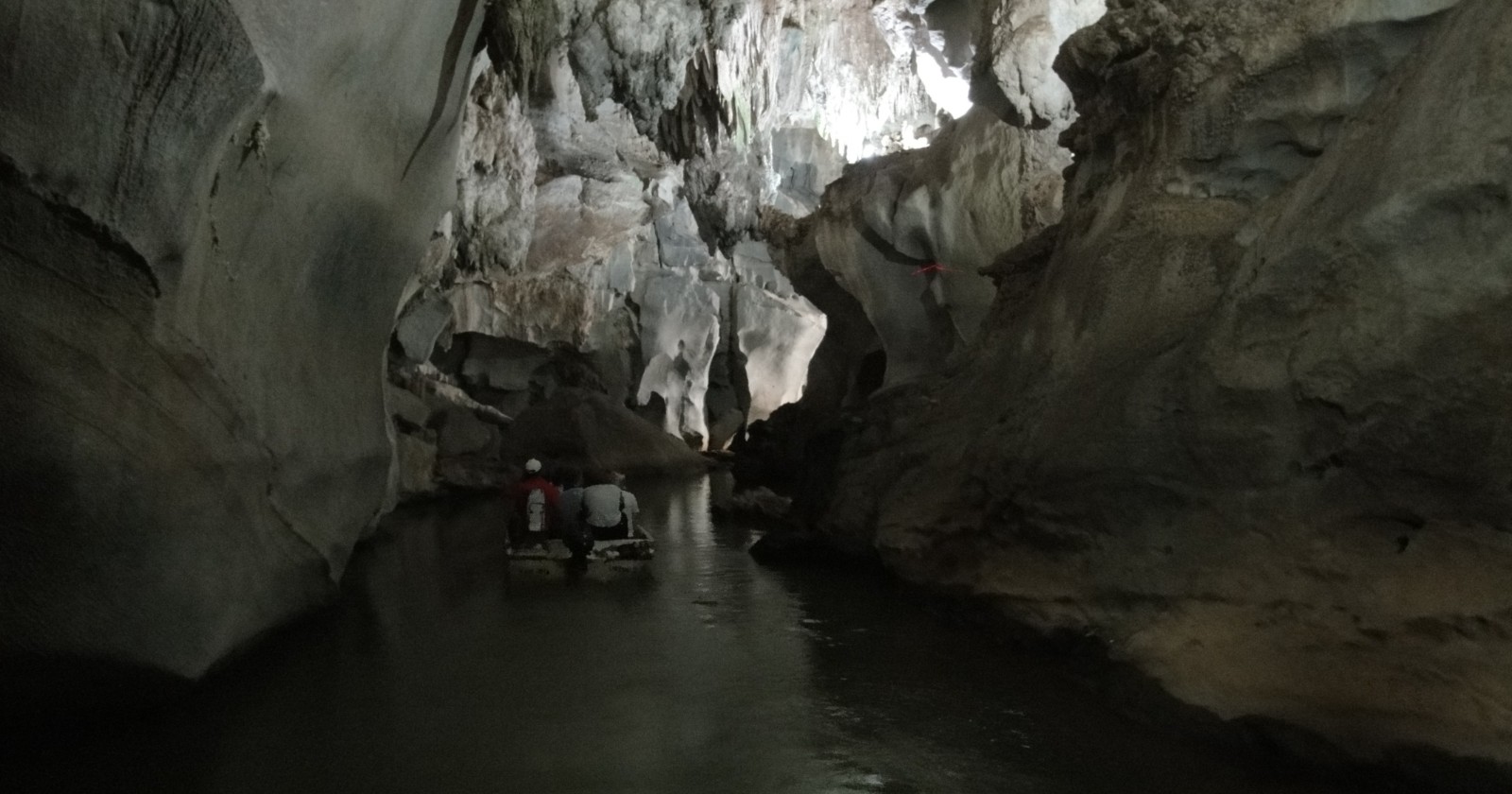
Canímar Abajo, a limestone rock shelter in Cuba, produced some of the best-preserved samples in a new survey of ancient DNA from across the Caribbean. Getting usable DNA out of one of them still meant grinding a piece of it away. Every ancient DNA result begins with a decision to destroy something, and in this region that decision has been unusually hard to make well, because the heat and humidity mean only a minority of samples hold enough human DNA for straightforward sequencing.
A survey published in Royal Society Open Science has now put numbers on the problem. Jazmín Ramos-Madrigal and colleagues, with Hannes Schroeder as senior author, pooled low-coverage shotgun sequencing data from 318 human skeletal and dental samples taken from 33 archaeological sites across the Caribbean, collected between 1998 and 2020. The authors describe it as the first systematic assessment of how, where and for how long ancient DNA survives in the region.
The headline is an expiry date. The team fitted decay rates to the 75 samples that were directly radiocarbon dated and still held enough human DNA to model, then took the slowest-decaying of those as a deliberate best case. After about 5,300 years, they estimate, more than 99.9 percent of that specimen’s DNA fragments would have broken below 30 base pairs, the length at which a fragment can no longer be matched reliably to a reference genome. Their conclusion is that recovery from Caribbean remains much older than roughly 5,000 years will be extremely difficult.
The inner ear held the most human DNA of anything they compared
One of the two effects the survey calls strong is anatomical. The petrous bone, the dense wedge of the skull that houses the inner ear, is often the preferred sampling target in the field, and this survey shows why under conditions this hostile.
The measure is endogenous DNA content: the proportion of usable reads that map to the human genome rather than to contaminating microbes. Averaged across the 199 teeth, 86 petrous bones and 11 rib and long bone fragments that passed the team’s quality filters, it ran as follows:
- petrous bone: 17.4 percent
- teeth: 1.2 percent
- ribs and long bones: 0.01 percent
The gap is not a matter of a few good specimens. Of 86 petrous bones in the comparison, 39 exceeded 10 percent endogenous DNA. Of 199 teeth, six did. Every rib and long bone fragment performed poorly. The differences between petrous bone and the other two categories were statistically significant at p below 0.01 regardless of where the remains had been buried.
The quality of whatever DNA survived is a different matter, and here the tissues converged. Fragment length and cytosine deamination rate, the two other standard measures of preservation, showed no significant difference between tissue types, with one exception: at open sites, teeth carried significantly longer fragments than petrous bones did.
Most of the fragment lengths the study quotes are modelled median values, derived from the decay constant rather than counted off the sequencer. The two exceptions in this article are the 30 base pair mapping cut-off above and the measured average that follows. The team prefers the modelled figures because the raw reads leave out the very shortest molecules, which are lost during extraction, library preparation and sequencing. The raw measured average across the dataset was about 51 base pairs; the modelled equivalent was about 25.
The uneven benefit of a roof over the grave
Caribbean human remains come mainly out of three kinds of place: open sites, caves and semi-open rock shelters. The expectation, supported by earlier work, was that caves would preserve DNA better because they are cooler and more stable.
The survey splits that expectation in two. On endogenous content, caves and open sites came out similar, averaging 5.6 and 2.9 percent, a difference that did not clear the paper’s strict p below 0.01 threshold. Petrous bones from rock shelters did score significantly higher, but the authors attribute that largely to the exceptional preservation at one site, Canímar Abajo in Cuba.
On molecular condition the picture is cleaner. Open-site samples had shorter modelled fragments, averaging 23.6 base pairs, against 33.6 in caves and 30.6 in rock shelters, and higher damage, at about 31 percent deamination against 24 and 23 percent. So shelter helps the molecules hold together without reliably raising the share of the sequence that belongs to the person.
Underlying geology may matter too. The authors note that DNA recovery has been particularly difficult in the Lesser Antilles and Aruba, where volcanic soils tend to be acidic, and better on limestone, which holds a higher pH. They had no soil pH measurements to test this, and present it as a pattern rather than a result.
A free triage step that is right three times in four
The most immediately useful finding needs no equipment at all. Before extraction, every sample had been sorted by eye into good, meaning dense and compact, or poor, meaning brittle and chalky.
That eyeball judgement correctly predicted whether a sample would land above or below 1 percent endogenous DNA in 76 percent of cases, with similar accuracy for petrous bones at 75 percent and teeth at 74 percent. Samples rated well preserved averaged 14 percent endogenous DNA; those rated poorly preserved averaged 0.9 percent.
That matters because the analysis is destructive and the remains are ancestral. A triage step that is free, non-invasive and right three times in four is a way of not grinding up bones that were never going to yield anything.
Caribbean DNA breaks down about four times faster
To compare regions, the team estimated decay rates from the 75 radiocarbon-dated Caribbean samples that still held enough human DNA to fit a decay parameter at all, alongside 24 previously published ancient genomes from North America, Greenland and Alaska. Caribbean DNA decayed on average about four times faster than in temperate North America and about 14 times faster than in the subpolar sites. The gap largely holds up when the comparison is restricted to open sites alone.
Damage tells a similar story with a twist. Deamination at the first position averaged about 28 percent in these samples, higher than the roughly 16 to 20 percent reported for Eurasian material of similar age, but lower than the roughly 34 percent reported from Southeast Asia. Hot and humid is not a single setting, and Southeast Asia appears to be harder on cytosine than the Caribbean is.
Where the region does better than its reputation is in what remains reachable. Only 108 of the 318 samples, about 34 percent, cleared the 1 percent endogenous threshold that makes plain shotgun sequencing affordable, but 189, about 59 percent, cleared 0.1 percent, the working minimum for targeted enrichment. On the 82 samples where both approaches could be compared, 1240k capture raised recovery at targeted sites by an average of 280-fold, with individual gains running from 1.5-fold to 7,268-fold once a single outlier of nearly 13,000-fold is set aside. It helped the worst-preserved material most. Samples below 5 percent endogenous gained an average of 606-fold, while those above 5 percent gained only about 12-fold.
The ranking question stayed open
The analysis that would have ranked these factors against each other was tried and abandoned. Multivariate models combining sample type, burial context and age did detect effects, but gave poor diagnostics and results that were not consistently reproducible across subsets, which the authors attribute to an unbalanced dataset and to missing variables, so they fall back on simple pairwise comparisons. Everything above is therefore a set of one-at-a-time contrasts.
A second limit sits in the paperwork. The samples were processed across three laboratories using different extraction and library protocols, and the team tested for batch effects from library protocols and sequencing platforms and found none. A separate comparison of protocols did turn up one exception: petrous bones from open sites showed protocol-linked differences they cannot fully separate from site-level variation.
Then there is the question of what the averages are hiding. Endogenous content had a mean of 5.8 percent and a median of 0.3 percent. The paper also reports 192 samples below 1 percent, a count it never reconciles in its main text with its own figure of 108 of 318 above that threshold. Among petrous bones alone, endogenous DNA ranged from 0.01 percent to 66.5 percent and modelled fragment lengths from 8 to 63 base pairs, with that spread appearing within single sites as well as between them. The 17.4 percent petrous average describes a distribution with a long tail rather than a typical bone, and the enrichment figures skew the same way, the 606-fold average for samples below 5 percent endogenous sitting against a median of 138, and the 12-fold average above that line against a median of 11.
The regional comparisons are ratios of modelled decay rates rather than of survival times, and they rest on a decay-kinetics framework fitted to fragment length distributions. The roughly 5,000-year ceiling comes from extrapolating one benchmark specimen, deliberately chosen as the slowest-decaying sample available, which makes it a best case rather than an average expectation.
Across all 102 directly dated individuals there was no clear correlation between radiocarbon age and any preservation measure. That sounds like a null result, but the authors read it as masking: when they narrowed the analysis to 11 petrous bones from a single Cuban site, endogenous content and fragment length did decline slightly, and damage rose significantly with age. Time is doing its work. Tissue and setting are simply louder.
The point of knowing the limit
The survey’s real product is the sampling rule rather than the expiry date. It is written for a region where every extraction spends a piece of somebody’s ancestor. Favour the inner ear and tooth cementum, and avoid ribs and long bones. Caves and shelters may have treated the molecules more kindly. Look at the bone first, screen several individuals rather than one, budget for extensive screening, and treat enrichment as the fallback while remembering what it costs. Capture rescues poor material, but it raises clonality and pushes GC content from 42.5 percent to 55.1 percent, which can complicate analysing captured and shotgun data together.
The 5,000-year figure turns out to be less bleak than it sounds. Most of Caribbean human history sits inside that window, so the limit is real without being disqualifying. What the survey narrows is the guesswork that used to precede the decision to destroy, and the number of bones ground up to learn nothing.