

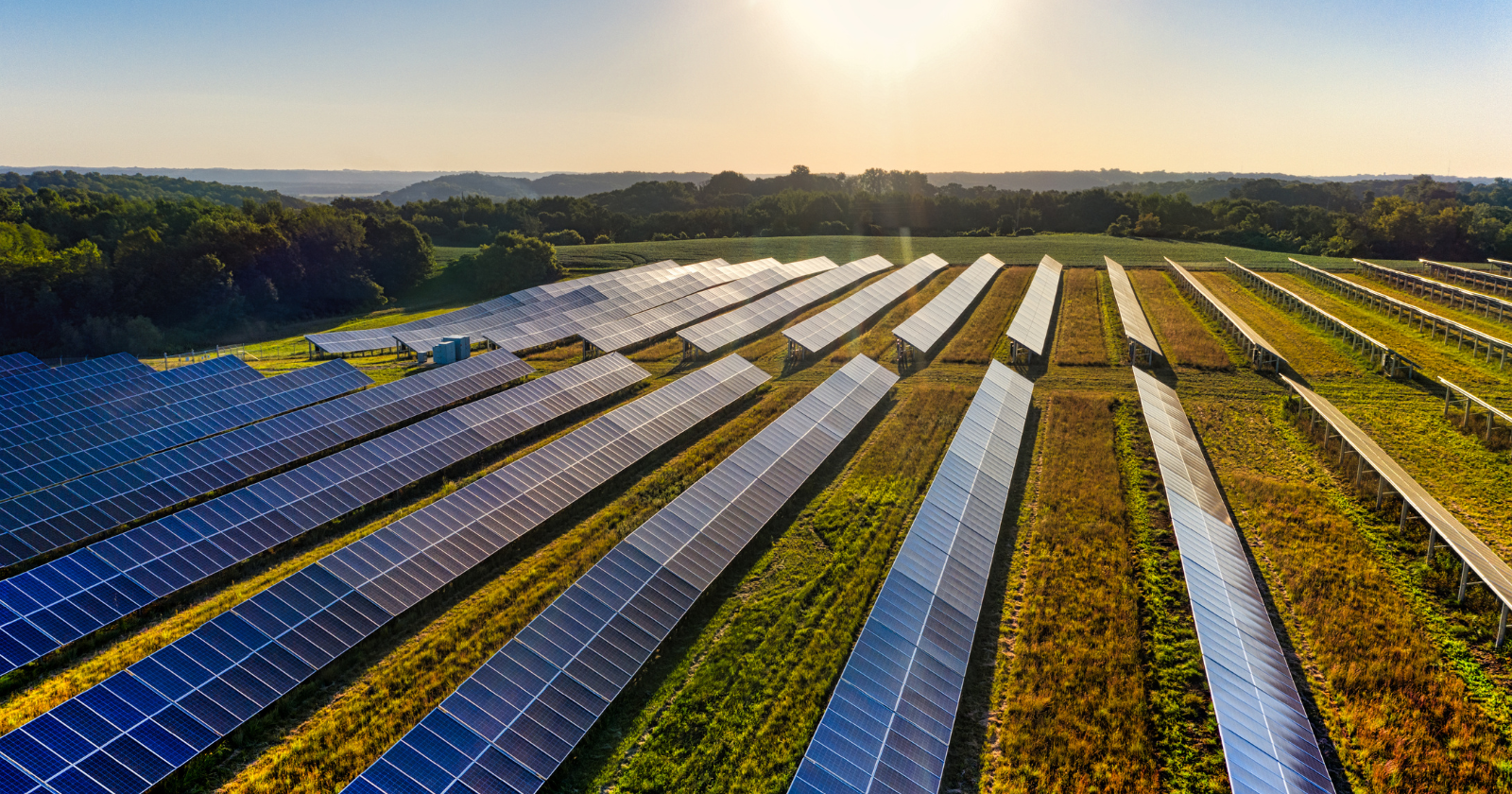
Just after midnight, with the sky clear and the temperature sliding toward zero, the panels start to move. Rows of solar modules that have spent the day tilted to track the sun swing flat, lying almost horizontal a few metres above the nectarine trees. Nothing else in the orchard changes. No smoke, no wind machines, no sprinklers icing the branches. The panels simply sit there, overhead, until sunrise.
That quiet manoeuvre is the subject of a French field trial that has drawn attention as one of the more concrete results to come out of the fast-growing field of agrivoltaics, the practice of combining solar power generation with farming on the same land. Spring frost is one of the costliest weather risks in fruit growing, and the trial suggests that solar panels built to tilt on command can do more than generate electricity. They can also act as an overnight shield against the cold.
Why blossom frost is such a persistent problem
Stone fruit trees such as nectarines flower early in spring, often before the last frost has passed. A clear, still night is the dangerous scenario. With no cloud cover to trap heat, the ground, leaves and flowers radiate their warmth straight out to space, and their surface temperature can drop several degrees below the surrounding air. A weather forecast reading of two or three degrees above zero offers no guarantee that a blossom won’t freeze.
Growers have long fought this with brute force: wind machines to mix warmer air down from higher layers, orchard heaters, or overhead sprinklers that rely on the latent heat released as water freezes on the buds. All of these work, to a point, but they are expensive to run, use large amounts of water, fuel or electricity, and do nothing for the orchard on any other night of the year. That has made a passive, dual-purpose alternative an appealing target for researchers.
How a solar panel becomes a frost shield
The system involved, developed by the French company Sun’Agri in partnership with the national agricultural research institute INRAE, uses motorised panels that already tilt through the day to manage sunlight and shade for the crop below. On nights when frost is forecast, the panels are commanded into a horizontal position directly over the canopy instead of parking edge-on or retracting.
The physics is the same reason a cloudy night is milder than a clear one. A flat panel overhead intercepts the long-wave infrared radiation that would otherwise escape upward from the leaves and flowers, and it re-radiates some of that heat back down. The trees lose less heat to the night sky, so their tissue stays a fraction of a degree warmer than it would in the open. It’s a passive effect that depends on the panel being large enough and close enough to substitute for the cloud cover the sky isn’t providing.
What the trial actually measured
The results come from a peer-reviewed paper published in May 2024 in the AgriVoltaics Conference Proceedings, based on frost events recorded during the 2022 and 2023 bloom seasons in a nectarine orchard in France. The authors, led by Gerardo Lopez and Perrine Juillion of Sun’Agri, compared trees under the tilting panels with an uncovered control plot during the same frost nights.
Sensors mimicking the temperature of flower buds recorded increases of between 1.61 and 1.69 degrees Celsius under the panels compared with the open plot, close to the 1.7-degree figure widely quoted for the effect. Ambient air temperature near the trees rose by a more modest 0.27 to 0.47 degrees, which is a useful reminder that the protection is happening at the level of the flower tissue itself rather than warming the whole orchard atmosphere.
During the 2022 frost event, the only one of the two seasons’ frosts that produced measurable flower damage, 35 percent of flowers in the unprotected control plot were injured. Under the panels, injury dropped to under 10 percent.
That is a substantial difference in a crop where blossom damage translates directly into a smaller fruit set later in the season.
Reading the result honestly
It covers one orchard, one crop, and two frost events across two seasons — a single-site result, not yet a multi-year programme. A degree and a half of protection matters most in marginal frosts, where the difference between light freezing and none at all determines the crop; in a hard freeze, no amount of panel shielding is going to save a nectarine flower. The paper itself is conference proceedings rather than a journal article with full independent peer review, which is a lower evidentiary bar than a placed study in an agricultural science journal.
There are also costs the frost figures don’t capture. Tiltable agrivoltaic structures are far more expensive to install than a fixed frost-fan or sprinkler system, and they only pay their way if the electricity they generate, plus any protection against summer heat stress and hail, is factored in alongside the frost benefit. Shading a crop for part of the day, even dynamically, can also affect fruit sugar content and colour if it is not carefully managed, an effect Sun’Agri and INRAE have studied separately in their broader agrivoltaics research on grapevines and apples.
The 1.7-degree, sub-10-percent figures are specific to this orchard and these frost nights — they aren’t a guarantee for other sites, and wider trials across more sites, crops and frost severities would be needed before growers could plan around these numbers with confidence.
Where this fits in the bigger picture
Agrivoltaics has mostly been sold on its ability to do two things with one paddock: grow food and generate power. This trial adds a third, more specific pitch, that a panel already installed for energy production can be repurposed on a handful of cold nights each spring to protect the crop it sits above, at essentially no marginal energy cost since night generation is zero anyway.
Whether that makes tiltable panels worth the extra capital cost compared with a wind machine or sprinkler system will depend on the orchard, the electricity price, and how many frost nights a region actually gets. For growers already weighing solar installation for other reasons, though, the French trial gives them a genuine, if narrowly demonstrated, reason to also value what the panels do after dark.