

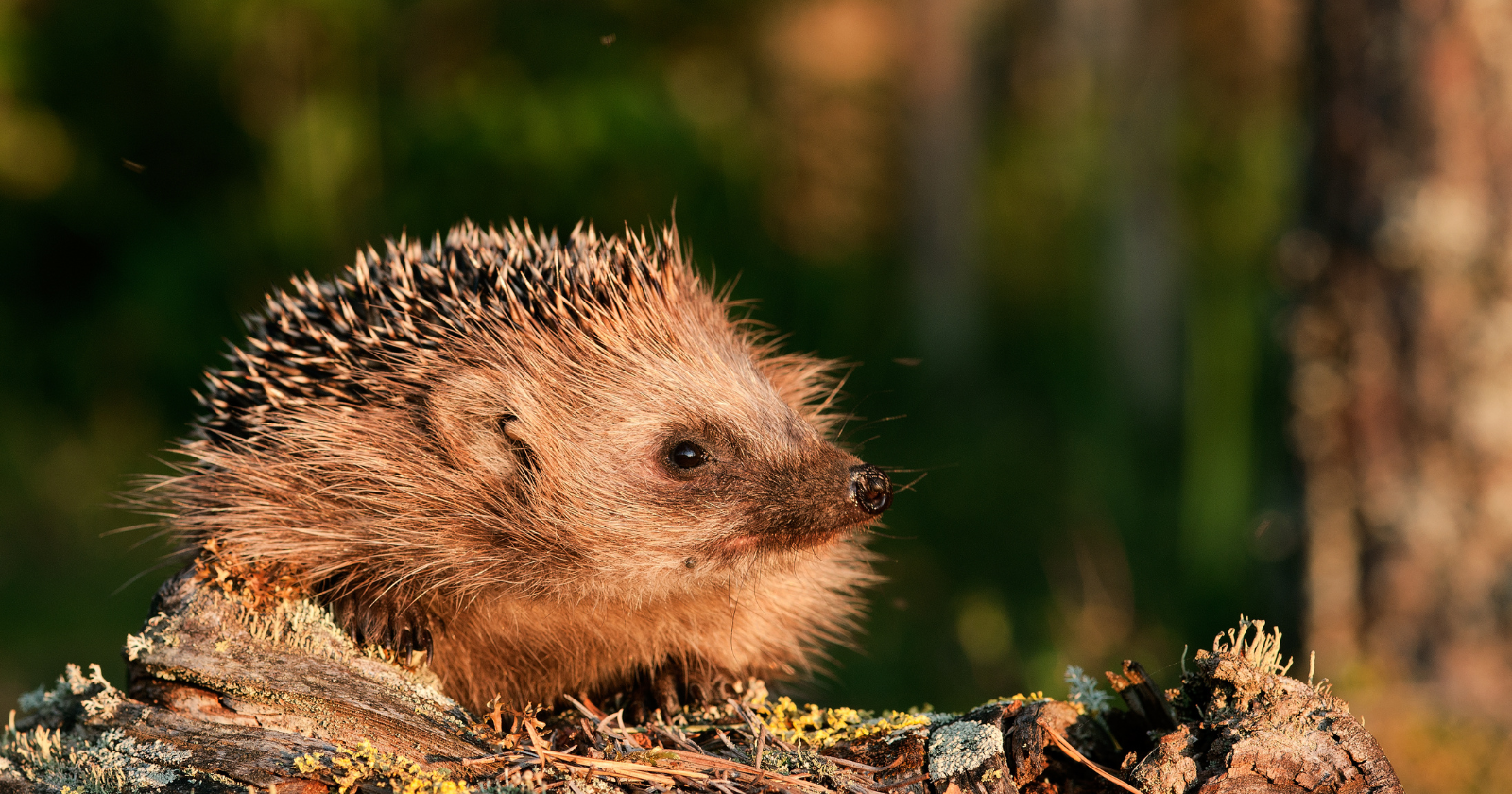
In 1974, someone on South Uist, an island in Scotland’s Outer Hebrides, released seven hedgehogs into a domestic garden hoping they would eat the slugs and snails destroying the vegetable patch. According to NatureScot’s account of the episode, that small, well-intentioned act set off five decades of ecological disruption, a scientific controversy over killing versus relocating wild animals, and a conservation program now projected to cost several million pounds before it is finished. European hedgehogs (Erinaceus europaeus) are native to mainland Britain, but they had never reached the Outer Hebrides on their own, and the islands had no foxes, badgers, or other natural predators to keep a founder population in check.
The seven hedgehogs bred, spread north from South Uist across Benbecula and onto North Uist, and by 2010 had grown to an estimated 3,900 animals across the island chain, according to a 2019 account by SNH staff Charles Thompson and Johanne Ferguson.
Hedgehogs and the wader decline
The Uists host internationally important numbers of breeding wading birds, including dunlin, ringed plover, redshank, snipe, and lapwing. Wader surveys in the early 1980s first flagged a decline, and subsequent research through the 1990s and 2000s identified hedgehogs, which eat eggs directly from nests on the ground, as a leading cause. A long-running study published in Biological Invasions by Calladine and colleagues monitored more than 1,000 nests between 2012 and 2014 and found that nest failure rates were markedly higher on South Uist, where hedgehog density was high, than on North Uist, where hedgehogs were still scarce. Motion-triggered cameras identified hedgehogs as by far the most frequently recorded nest predator, with confirmed hedgehog predation events concentrated almost entirely on South Uist.
From lethal cull to live trapping
Population figures for the hedgehogs themselves fluctuated as management responded to the growing evidence. NatureScot initially responded with a cull. Between roughly 2003 and 2007, hedgehogs were trapped and killed using lethal injection, a program reported at the time to have cost around £90,000, according to a 2013 report. The killing drew sustained opposition from animal welfare campaigners and hedgehog researchers, among them ecologist Hugh Warwick, who has written about the campaign to push the Scottish Government toward abandoning lethal control, even while accepting that the underlying predation problem was real. The program shifted to live trapping and relocation. Captured hedgehogs are now transferred to mainland Scotland through Uist Hedgehog Rescue, a charity that by 2013 was relocating around 250 animals a year with roughly £20,000 in annual funding, layered on top of the Uist Wader Project’s broader relocation strategy, starting with Benbecula before extending to South Uist.
The Drimore trial’s numbers
A trial clearance at Drimore on South Uist tested how efficiently the live-trapping method could work at scale. An initial survey, using live traps, motion-triggered cameras, and trained sniffer dogs, detected signs of 22 to 70 hedgehogs depending on the method. An eight-week removal phase then used 50 traps per square kilometer alongside the dogs, catching 64 hedgehogs — 32 by trap and 32 located by the dogs. A follow-up four-week monitoring period found only two hedgehogs remaining, both in the outer buffer zone rather than the core area. A comparable trial at Lochportain on North Uist cleared its target zone over ten weeks using the same trap density and dog teams.
Those trial results let researchers extrapolate the cost of finishing the job across the roughly 400 square kilometers of South Uist and Benbecula still holding hedgehog populations. A published paper by Thompson and Ferguson states plainly that “using the results from the Drimore trial and the current removal methods,” full clearance “will take between five and 10 years and will require a team of 18 staff,” at an estimated cost of between £3.5 million and £5 million.
A problem still on the move
The problem has also proven mobile. NatureScot trappers were reported in 2022 to be searching the neighboring island of Barra, using live-catch traps, camera traps, and sniffer dogs, after a dead hedgehog turned up there — the first ever recorded on the island — according to STV News.
Half a century after seven hedgehogs were let loose to handle a slug problem in one garden, the Outer Hebrides are still working through the consequences, with the remaining bill measured in millions of pounds and years of fieldwork rather than a single season’s trapping.