

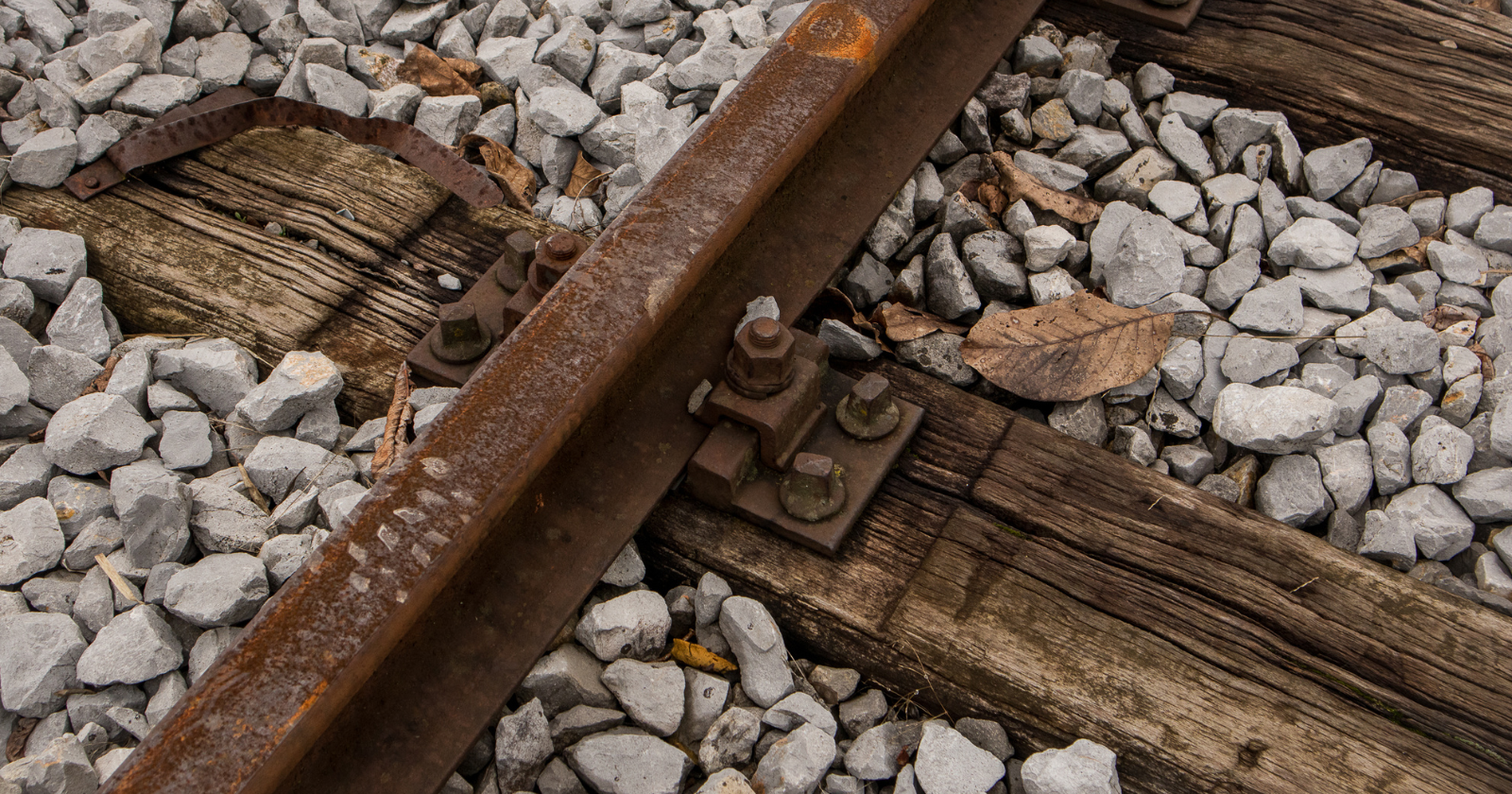
Picture a weekend maintenance crew at a busy suburban station. Trains stopped, old sleepers lifted out, new ones dropped in and clipped down before regular services resumed. Nothing about the scene looks like a milestone. Yet what went into the track that weekend was a first for Victoria’s metropolitan train network.
Over the weekend of 22 to 23 June 2019, Metro Trains laid recycled-plastic railway sleepers beside platform two at Richmond station. Sleepers are the beams beneath the rails that maintain their position and gauge. According to Sustainability Victoria, Metro Trains installed 190 of the sleepers at Richmond station during maintenance work on 22 and 23 June 2019.
What actually went into the track
The sleepers are called Duratrack. They were manufactured in Mildura by Integrated Recycling and developed with rail engineers at Monash University. According to Rail Express, the formulation combines rigid and flexible plastics. The sleepers are about 85 percent recycled plastic waste, including polystyrene, cotton bale wrap, vineyard covers and old mining-industry pipe.
As quoted in Rail Express, Stephen Webster of Integrated Recycling explained the design goal as “harnessing the inherent characteristics of plastic” to provide the longevity and durability rail infrastructure requires.
The Victorian Government supported the project through Sustainability Victoria with $630,000 in grant funding.
The number that carries the point
A kilometer of track uses approximately 1,500 sleepers. According to the Victorian Government, building that kilometer with Duratrack would use about 64 tonnes of plastic waste that might otherwise have gone to landfill.
It is an appealing way to think about waste. Instead of asking what recycled plastic can become that people will buy, the question flips: where is a durable, heavy, weatherproof piece of plastic actually useful? Rail track is a fair answer. The Victorian Government says the sleepers have a potential lifespan of up to 50 years.
The questions a plastic sleeper has to answer
That projected lifespan still has to be demonstrated over time. Plastics can behave differently from timber or concrete under load and changing temperatures.
A 2024 study published in Frontiers in Sustainability tested two recycled-plastic candidates and found that their suitability depended strongly on the material. One withstood the specified track temperature without excessive softening, while the other did not. The study did not test Duratrack itself.
Testing is slow, and rightly so. Ravi Ravitharan, director of Monash University’s Institute of Railway Technology, has said that without transparent standards, regulatory safety and risk concerns make it difficult to introduce new railway products. A sleeper that fails is not a minor inconvenience.
Long-term weathering matters too. Heikki Luomala of Tampere University, who worked on the 2024 study, said in a Tampere University release that long-term behavior, including UV resistance, should also be tested. The point is not that recycled-plastic sleepers fail, but that performance and lifespan depend on their formulation and require evidence.
Where the trial actually went
The Richmond installation began as an 18-month trial under city traffic. Rail Express reported that about 8.3 million gross metric tonnes passed over the sleepers annually and that Webster said their in-track performance helped satisfy rail operators’ requirements.
Sustainability Victoria describes the product as approved for low-speed sidings and yards on the two networks, rather than unrestricted mainline use.
The regulatory landscape also changed. AS 1085.22:2020, the Australian standard for alternative-material sleepers, now sets performance and testing requirements for products made from non-traditional materials.
The Richmond installation is less than a system-wide switch: 190 sleepers beside one platform, while the 64-tonnes-per-kilometer figure describes what full-kilometer installations could divert. But it was more than a display. The sleepers carry real metropolitan traffic, contributed evidence for type approval and demonstrated a practical destination for difficult plastic waste.
Whether that destination becomes common will depend on how the sleepers perform over decades, not one maintenance weekend.