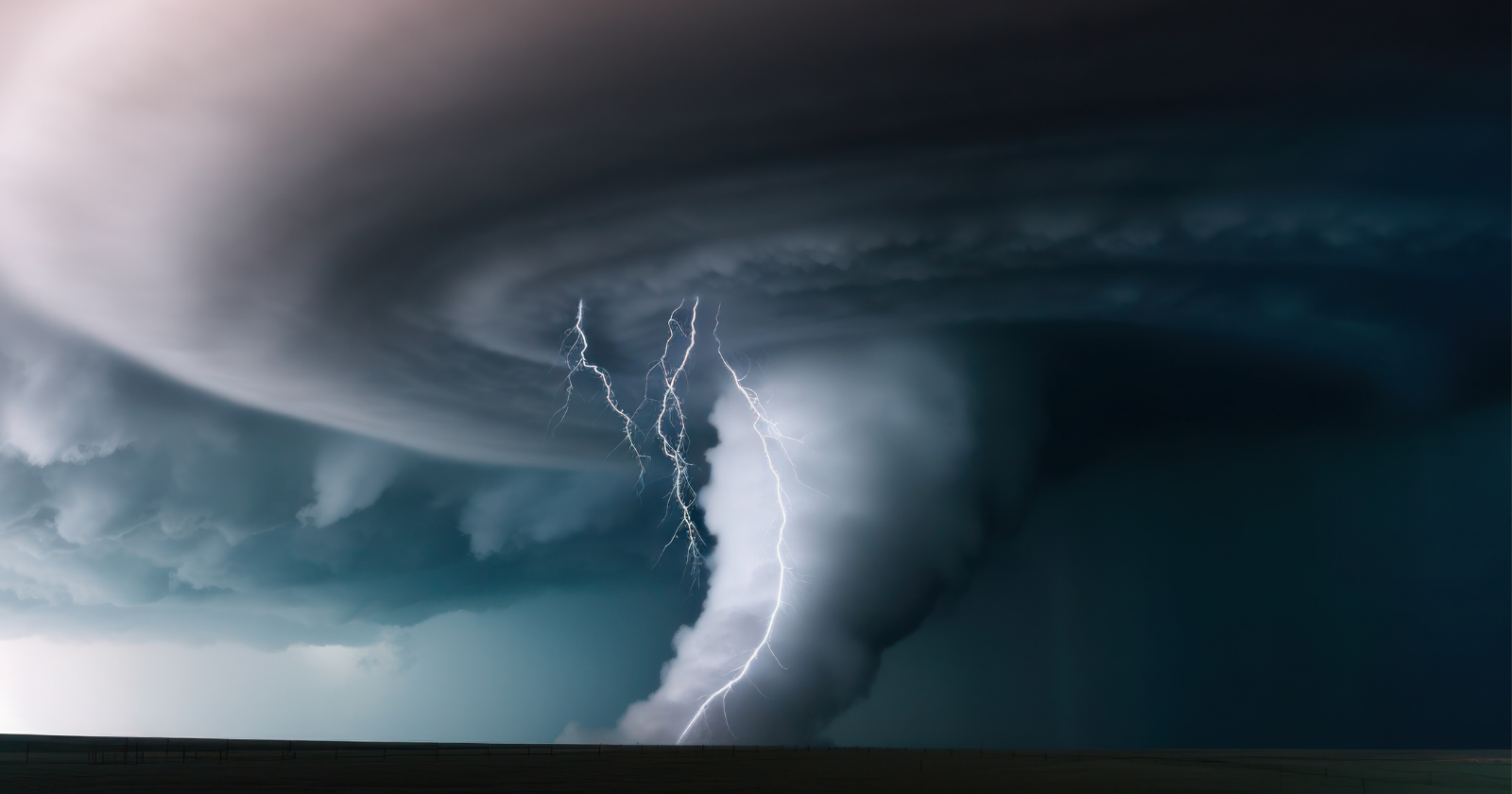
The two cyclones were Mekunu in May 2018 and Luban that October, and neither of them had any business being where they were. The interior of the Rub’ al Khali doesn’t normally see rain in useful quantities, which is precisely why nobody lives there and nobody was watching it. What the two storms did between them was drop somewhere between 100 and 300 millimetres of rain on parts of West Oman and East Yemen, roughly five times the historical average, and leave ephemeral lakes standing in the dune corridors along the Yemen-Oman border. The desert locusts that live in that landscape at low densities most of the time had, for the first time in decades, everything they needed to breed at scale, and no one anywhere near enough to notice they were doing it.
What the sand does when it gets wet
Desert locusts lay their eggs in bare sandy soil with moisture in the top few centimetres, typically between 5 and 25 per cent water content. The eggs need warmth to develop, which the Arabian Peninsula supplies without effort, and they need moist soil to survive the incubation period, which the peninsula normally doesn’t. When both are present at once, the eggs hatch in about two weeks, the hoppers mature over the following six, and the resulting adults can lay their own eggs three weeks after that. Under favourable conditions a single generation can multiply the population by a factor of twenty. Three generations back-to-back, which is what the Empty Quarter got in the nine months after Mekunu, can multiply it by eight thousand.
Two years passed between the rain falling and the swarms arriving, and nobody joined the dots until the crops were gone. That lag is the whole problem with El Niño — warm water in the Pacific now, a failed harvest somewhere else in eight months’ time. There’s a strong one building for 2026. This video we created on one of our sites dives into it. Give it a watch below:
Why nobody saw it happen
According to the United Nations University Institute for Environment and Human Security’s technical report on the 2019-2021 desert locust outbreak, the seeds of the whole upsurge were laid in that unobserved nine-month window. The Empty Quarter is one of the most remote landscapes on the planet, and the FAO’s Desert Locust Information Service, which normally has ground survey teams in the region, had nobody positioned to catch what was happening. The cyclones themselves would have looked, on satellite, like beneficial rainfall over an uninhabited desert. What they were actually doing was setting up conditions for the largest desert locust upsurge in a quarter of a century.
The second cyclone was the one that made the difference. Under normal conditions, the first generation of locusts hatched after Mekunu would have run out of moisture and vegetation and died back before their offspring could establish. Luban arriving five months later kept the soil wet through what should have been the die-off phase, allowed a second generation to breed, and then a third. By January 2019, when the first gregarious swarms crossed into Saudi Arabia and Yemen, there were already enough of them that stopping the outbreak at source was no longer possible.
What the swarms actually are
A desert locust is not, in itself, particularly imposing. It weighs about two grams, it eats about two grams of fresh vegetation a day, and at low population densities it lives a solitary life and is coloured to match the landscape. What changes everything is what happens when the population gets crowded. Solitary locusts that touch each other frequently enough undergo a physiological transition within four hours: they change colour, they change behaviour, they seek each other out, and they start moving as a group. Once gregarious, they lay eggs that hatch as already-gregarious offspring, and the swarms become self-sustaining.
The scale at that point is hard to intuit. A mature swarm can hold between 40 and 80 million individual locusts per square kilometre. It can extend across 1,000 square kilometres or more. It can travel up to 150 kilometres a day on the wind. And because each locust eats its own body weight in fresh vegetation daily, a single square kilometre of swarm consumes somewhere in the region of 80 to 160 tonnes of green matter per day, which is what the FAO calculates as roughly the food intake of 35,000 people. Everything green in the swarm’s path becomes bare ground within hours of it arriving.
How it reached Kenya
By spring 2019 the swarms had spread from the Empty Quarter to Iran and the Indo-Pakistan border in one direction and, having crossed the Gulf of Aden on the seasonal winds, into Ethiopia and Somalia in the other. According to a peer-reviewed 2021 analysis of the outbreak by Wang, Zhuo, Pei, Tong, Han and Fang in the journal Remote Sensing, the propagation from that point was governed almost entirely by rainfall. The satellite record shows the swarms tracking the wet patches of soil, breeding wherever they found appropriate conditions, and moving on when the ground dried out. A late-season cyclonic storm called Pawan in December 2019 kept the Horn of Africa breeding cycle alive through what should have been the natural end of the season, and it was that extension that carried the swarms into Kenya. By early 2020, Kenya was experiencing the worst desert locust infestation in more than seventy years.
What made it uncontrollable
The specific circumstances that let the upsurge run for as long as it did weren’t just meteorological. Yemen’s civil war had degraded the country’s locust monitoring system to the point where it couldn’t function, and large parts of the primary breeding areas along the Yemen-Oman border were physically inaccessible to survey teams for security reasons. Somalia had the same problem for the same reasons. The regional coordinating body, the Desert Locust Control Organization for Eastern Africa, was owed more than $10 million in unpaid member state dues when the swarms arrived, and had almost no operational capacity to respond. The COVID-19 pandemic, which arrived just as the swarms did, disrupted the pesticide supply chain and prevented the deployment of expert teams from other countries. By the time serious international spraying operations got underway, the swarms were already across the Horn of Africa.
What the pattern suggests
Cyclones in the northwest Indian Ocean used to be rare events. Historically there might be one in a given year, and often none at all. In 2018 there were two, both of them landing in the same remote piece of Arabian desert. In 2019 there were eight, the highest count since 1976. The Indian Ocean Dipole, which controls a lot of the weather in that basin, was in one of its strongest positive phases on record during the last quarter of 2019, and there’s now a substantial body of climate research linking that intensification to sea surface warming. If the trend in Indian Ocean cyclone frequency continues at anything like its current pace, the conditions that produced the 2018 Empty Quarter breeding event won’t have been a one-off, and the FAO’s monitoring architecture is going to have to work harder to catch the next one before it gets to Kenya.