

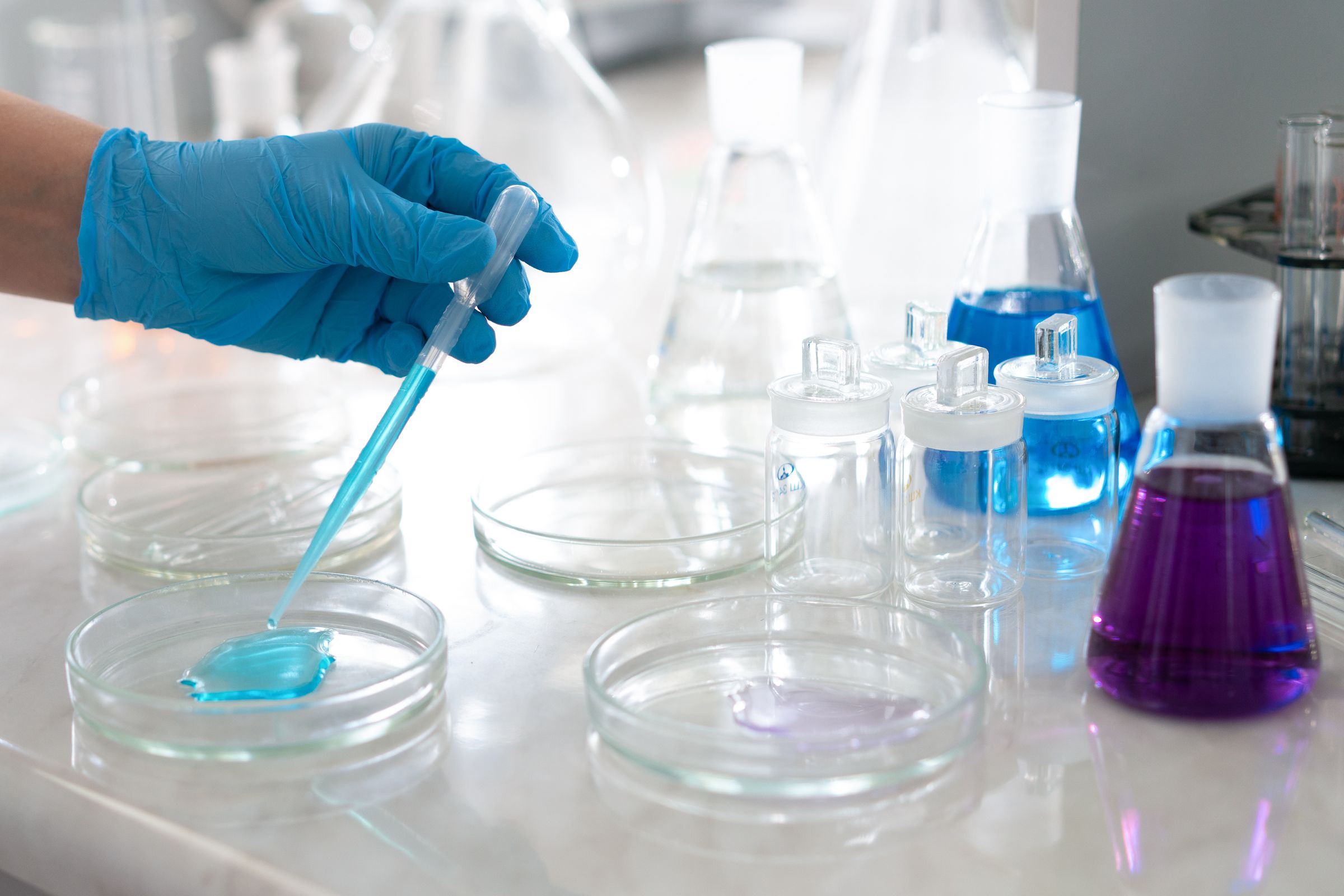
A 35-microliter droplet containing DNA completed a calculation counted as 100 bits of computation, not by stepping through instructions like a silicon processor, but by allowing enormous numbers of molecular configurations to compete. The arrangement representing the correct answer became thermodynamically favored.
The result appears in a Nature study by Tristan Stérin, Abeer Eshra, Constantine Glen Evans, Janet Adio and Damien Woods of Maynooth University. Across more than 700 experiments, the team tested ten programs, including binary addition, multiplication, parity checking, graph reachability and the Rule 110 cellular automaton.
It is an impressive demonstration, but the language needs care. The droplet was not ordinary salt water, the DNA molecules were not organisms competing for survival, and “100-bit” does not describe a 100-bit processor. The real advance is subtler: the researchers designed a chemical energy landscape whose preferred molecular state encoded the answer.
What was actually in the drop
The experiment took place in 35 microliters of buffered liquid, roughly the volume of a small laboratory droplet. It contained a long DNA scaffold, hundreds of shorter synthetic DNA strands and magnesium ions that helped the strands hybridize into stable structures.
Calling that liquid salt water is reasonable shorthand, but it was not seawater or water mixed with table salt. The researchers used TAE laboratory buffer containing 12.5 millimolar magnesium ions and 0.01 percent Tween, a surfactant that helps control how solutions behave in laboratory vessels.
For the largest calculations, the scaffold concentration was 10 nanomolar. At that concentration, 35 microliters contains roughly 210 billion scaffold molecules. The Maynooth University account of the work therefore describes billions, and in some experiments trillions, of DNA strands operating in parallel.
That molecular abundance is important. It does not mean the researchers built one machine containing billions of processing elements. Instead, the droplet held a vast ensemble of closely related molecular computers, each exploring configurations under the same chemical rules.
How DNA strands turn energy into logic
The device is called a scaffolded DNA computer. Its main component is a long strand with a sequence of numbered positions. Shorter “compute strands” can attach at those positions, rather like tiles fitting onto designated spaces along a molecular track.
Each compute strand contains a 24-base position domain, which determines where it belongs, and two 12-base compute domains. Those smaller domains interact with strands attached at neighboring positions. The pattern of compatible and incompatible neighbors encodes the logic of the program.
When neighboring compute domains match as intended, their interactions make the assembled structure more energetically favorable. Incorrect neighbors carry an energetic penalty and can be displaced as the sample is heated and cooled. Over time, the population shifts toward configurations with fewer unfavorable contacts.
The scaffold-and-strand idea has a longer history. ScienceBlog previously covered DNA origami breadboards assembled from a long scaffold and short “staple” strands. The new computer uses related self-assembly principles, but makes the structure’s free-energy landscape perform logical work.
What it means for the correct answer to win
The word “compete” describes competition among strands for binding sites, not Darwinian selection. No DNA molecule reproduces faster because it holds the answer, and no single molecule defeats every alternative in the droplet.
Instead, each scaffold can assemble in numerous possible ways. The researchers designed the sequences so that structures encoding a valid computation should have lower free energy than structures containing logical inconsistencies. During annealing, strands repeatedly attach, detach and replace less compatible arrangements.
The correct answer “wins” when its configuration becomes dominant across the ensemble. That distinction matters because the process does not produce a flawless population. Some scaffolds remain incomplete or incorrectly assembled, and the measured yield depends on the program, sample conditions and time allowed for reorganization.
The team read the result using fluorescent probes and a laboratory instrument. The output was therefore a bulk measurement of molecular populations, not a tiny number appearing spontaneously on the side of the tube. The interpretation comes from which fluorescence signals dominate after the reaction.
Where the 100 bits come from
The headline experiment added two 25-bit binary integers. Together, those numbers supplied 50 input bits. The molecular arrangement also encoded 25 carry bits generated during addition and 25 output bits, producing the reported total of 100 bits of computation.
This accounting does not mean the system added two 100-bit numbers, returned a 100-bit answer or searched through every one of 2100 possible solutions. Nor does it make the droplet equivalent to a conventional 100-bit central processing unit.
The scaled addition experiment used a 624-base segment of M13 bacteriophage DNA as its scaffold. The particular DNA strands supplied to the mixture selected both the program and its input, so “programming” the system meant choosing an appropriate subset from a predesigned collection of sequences.
The same overall architecture supported addition, multiplication by three, division by two, bit copying, balanced-bracket recognition, graph reachability, a finite-state machine, a counter and other programs. That is a different use of DNA than the molecular “movable type” method ScienceBlog covered for writing digital data as chemical marks.
Fast for molecules, slow for silicon
Some four-position test programs reached readable results in 30 to 60 seconds, with mean yields around 81 percent across those fast trials. When the researchers used a slower three-hour cooling schedule followed by a 45-minute hold, the smaller programs averaged about 95 percent yield.
The 25-bit addition was much slower. Easier inputs, especially those requiring less extensive propagation of carry information, could settle in roughly an hour. More difficult examples took as long as 14 hours. Conventional electronics would perform the same arithmetic effectively instantaneously.
Scaling also reduced reliability. In a separate 25-position bit-copying test, about 59 percent of the measured population represented the target configuration after 14 hours. The system can replace mismatched strands and suppress some errors through its energy design, but it does not include a separate error-correction layer guaranteeing perfect output.
The study should therefore be read as a proof of a computing principle, not a challenge to laptops or data-center processors. Molecular parallelism is immense, but a huge population of slow, probabilistic assemblies is not automatically faster or more efficient than a small electronic circuit.
No continuous drive does not mean no energy
A central feature of the design is that the intended result is thermodynamically favored. The molecular computation does not require a continuously applied electrical voltage, a clock signal or a fresh chemical fuel strand for every individual logical step.
That does not make the complete experiment energy-free. Researchers first had to synthesize and dispense the DNA, heat and cool the mixture in a PCR machine, and measure fluorescence with a powered instrument. Preparing the reagents and analyzing the output also consumed energy.
The careful claim is that the molecular rearrangement is driven toward a designed low-free-energy state rather than being forced through every step by continuous external power. The heating and cooling protocol helps the strands escape incorrect arrangements and approach that favored state.
No comparison in the study establishes a total energy advantage over silicon once strand synthesis, temperature control and readout are included. The distinction also applies to an earlier DNA neural network covered by ScienceBlog: extraordinary molecular parallelism in a droplet does not erase the equipment and preparation around it.
Why the energy landscape matters
The most distinctive idea is that the answer is embedded in the physics of the system. Instead of representing logic only as a sequence of reactions, the researchers arranged the relative stability of possible structures so that satisfying the program’s constraints lowered the molecule’s free energy.
The assemblies also showed a degree of reuse. The team renewed a bit-copying computation 25 times, a counter 24 times and an addition system nine times by adding new input and blocker strands and repeating the heating process. In another test, material from a partly dried plate was rehydrated and run again about 18 months later.
The authors have released supporting data and analysis code through Zenodo. The paper also reports that Stérin, Eshra and Woods are inventors on pending patent applications covering elements of the system and its reporting methods.
Possible applications in dense information processing, DNA storage or biological environments remain speculative. For now, as an accompanying Nature research briefing emphasizes, the accomplishment is a new way to make molecular computation progress toward an answer: not by relentlessly spending fuel, but by making the correct configuration the place the molecules are most likely to settle.