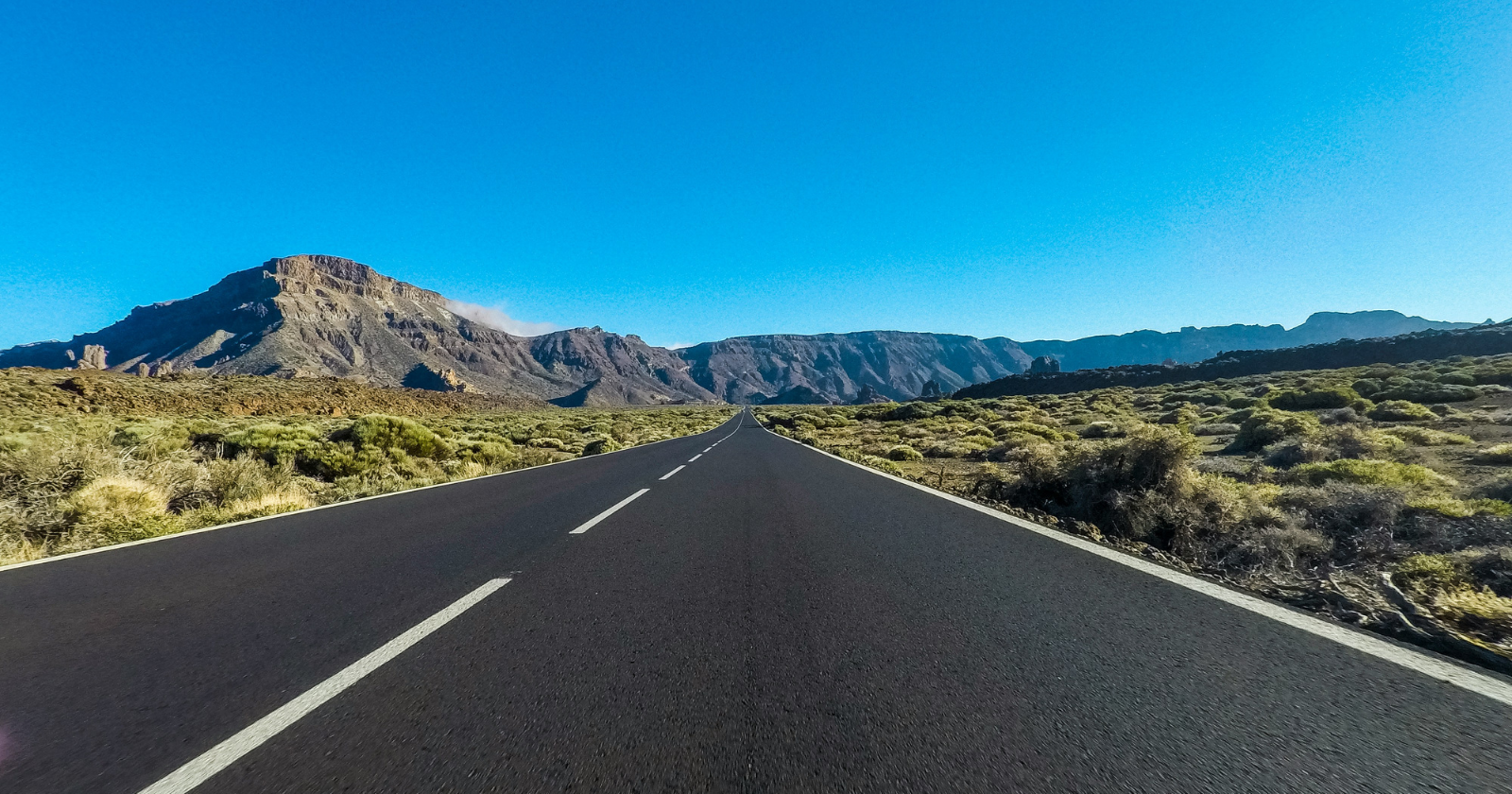
A claim about Arizona’s highways landed in front of me the way these things usually do, dressed up with numbers that sound too specific to be wrong.
Millions of tons of scrap tires, tens of millions of tires recycled, a decibel reading that supposedly dropped overnight on one stretch of Phoenix freeway. Some of that checks out. Some of it, once I went digging through Arizona’s own numbers and the federal reports behind them, does not.
What follows is the version that actually holds up: how a city, not the state, got there first, why 1988 is the year that mattered, what is genuinely in the mix under your tires, and the real noise number, which turns out to be a better story than the rounder one making the rounds. I also kept circling back to why a program like this only holds together when nobody has to finish it all at once, and that thought shows up again at the end.
It started as a way to solve a tire problem
Scrap tires are a genuinely annoying waste product. They do not compress well in a landfill, they trap air and rainwater, and stockpiled tires have a bad habit of catching fire and burning for a very long time once they do, which is roughly the opposite of what a landfill is supposed to do. States spent decades looking for something useful to do with the ones piling up.
Grinding them down and blending the rubber into the asphalt binder used on highways turned out to be one of the more durable answers, literally, since the added rubber makes the pavement more flexible and slower to crack.
Phoenix got there first, decades before it became a state program
“Modern GTR use in paving began in the early 1960s with a highly elastic asphalt rubber (AR) modified chip seal developed for the city of Phoenix, Arizona,” according to a Federal Highway Administration report on recycled tire rubber in asphalt. That was a city engineering department solving a practical cracking problem, years before any state agency turned the idea into an environmental program. The recycling angle came later. The material got adopted first because it worked.
Why 1988 is the year that actually matters
Nothing about 1988 stands out on its own. What matters is what Arizona did starting that year: it began resurfacing highways with rubberized asphalt consistently, not as isolated experiments, and it kept doing it year after year. By the early 2000s, trade press coverage of the program at the time put roughly a third of the state’s highway network under rubberized surfacing already. That is not one showcase freeway. That is a line item somebody kept funding through several administrations.
What actually goes into the mix
Old tires get shredded, then ground down into crumb rubber small enough to blend into hot asphalt binder, often after being chilled first to make the rubber brittle enough to grind cleanly instead of just tearing. That crumb rubber does not replace the asphalt so much as modify it, making the binder more elastic so it stretches instead of cracking as the pavement heats and cools through an Arizona day. I am not a civil engineer and I will not pretend I understand the full chemistry happening in that binder. But the basic idea survives translation well enough: a stiff material gets a rubber additive that makes it behave a little more like, well, rubber.
The flexibility was always the actual goal
A rubberized surface bends and rebounds instead of cracking the way a purely mineral asphalt mix does under Arizona’s heat swings, and that flexibility is a large part of why the state kept using it instead of shelving it as a one-off pilot.
The rubberized overlays used in Arizona’s own pilot testing had an average service life of roughly ten to twelve years, according to a federal report on the state’s pilot program, before needing resurfacing again. What the material buys Arizona, more than anything, is a decade or so of relatively crack-free road between paving jobs.
It also turned out to make the roads noticeably quieter
Why would a road made partly of shredded tires end up quieter than one that isn’t? Most highway noise comes from tires meeting the pavement surface, not from engines, so a smoother, more porous surface measurably changes what people nearby actually hear. Arizona’s early rubberized sections got noticed for this before anyone set out to study it formally.
By the early and mid-1990s, according to that same report, residents near some of the resurfaced freeways in the Phoenix area were asking the state directly whether the new pavement had anything to do with the change, and that public pressure is what eventually got the noise measured properly instead of just remarked on.
One stretch of Phoenix-area freeway made the case plainly
Arizona and the Federal Highway Administration eventually ran a formal pilot program built to measure exactly how much rubberized pavement reduced noise, rather than rely on anecdotes. One of its clearest results came out of Scottsdale, in the Phoenix metro area, where a section of older freeway on State Route 101 was overlaid with the rubberized surface. Close-proximity testing done before and after that overlay found, according to the federal program’s own report, “approximately an 11-dBA difference in noise levels.” That is the kind of change a driver notices without being told to notice it. It is also a stronger number than the one that tends to get repeated, which puts the honest headline closer to eleven decibels than the rounder ten.
Arizona built this one stretch at a time, and that’s the part I keep thinking about
Nobody paved a third of Arizona’s highway network, and then kept adding to it, in one project. It happened one contract, one freeway segment, one paving season at a time, for decades, and the totals only look impressive once you add up thirty-some years of work that would have looked pretty unremarkable in any single year. I am not a transportation planner, so I cannot speak to the engineering trade-offs the state weighed along the way. But as someone who manages her own workload for a living, this is exactly the pattern I trust more than a big dramatic overhaul.
My honest opinion here, and it is only that, an opinion, not anything Arizona’s transportation department would sign off on, is that most people chronically underestimate how long something will actually take and then try to hold the whole thing in their head as one undifferentiated task. Treated that way, it sits there, heavy and vague, easier to avoid than a specific, checkable piece of it would be.
Arizona’s program worked, in part, because nobody had to finish it. Someone just had to finish this year’s stretch of road, then next year’s, then the one after that. It is a duller story than a single dramatic decibel drop. It is also the part of it I actually believe.