

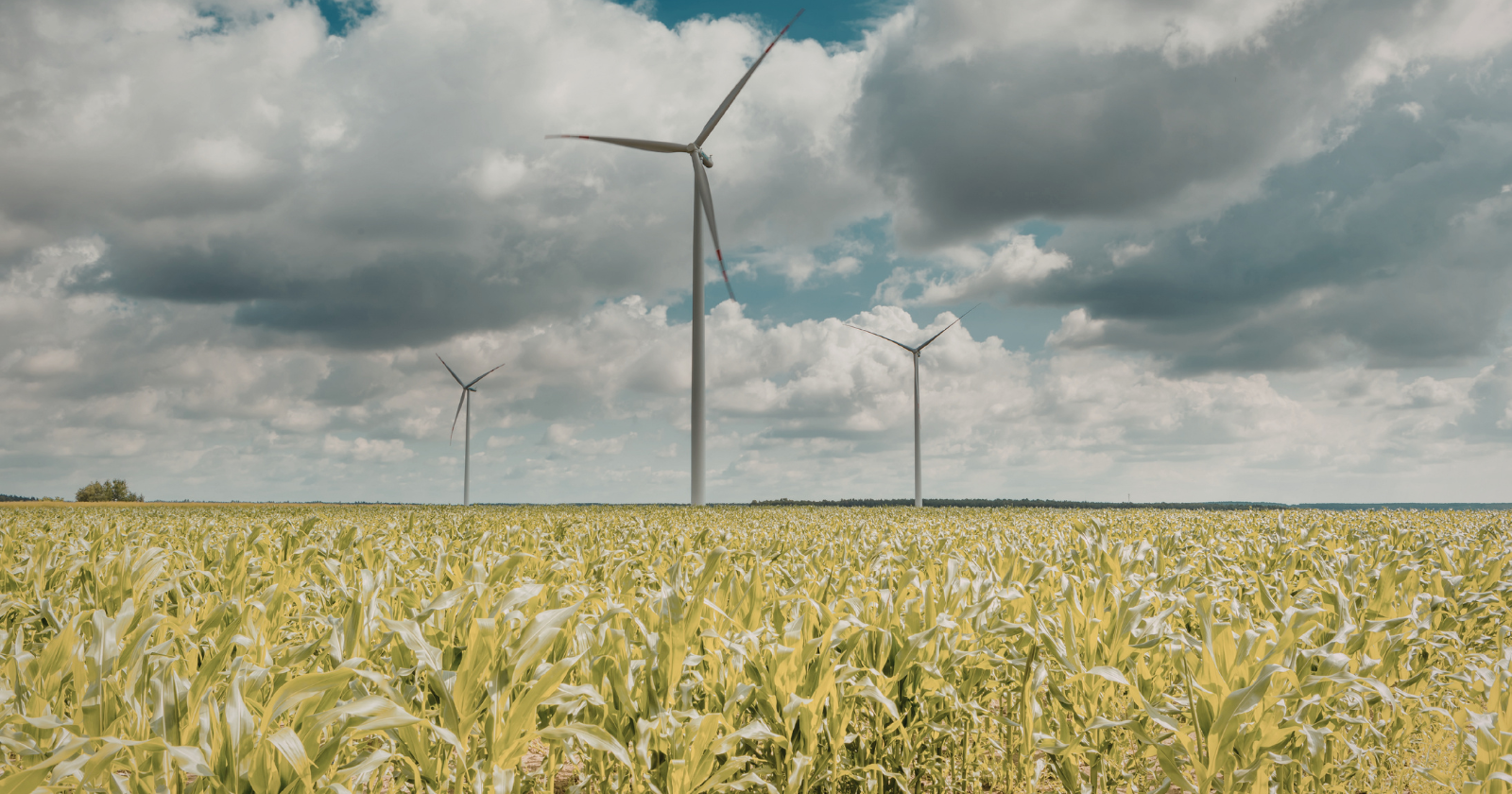
Drive across northern Iowa and the horizon is full of slowly turning blades — more than 6,000 turbines now stand in the state’s corn and soybean country, and Iowa generates around 60 percent of its electricity from wind, a bigger share than anywhere else in the country.
Underneath those turbines, something quiet has changed about what it means to farm. For a growing number of Iowa landowners, the most reliable crop their land produces isn’t grown at all. It’s harvested from the air.
The math that flipped
The reason is brutal arithmetic, and every farmer in the state can recite it.
Commodity prices swing wildly and often sit below the cost of production — there are years when it costs more to grow a bushel of corn than the corn will sell for. A wind turbine ignores all of that. A landowner who leases space for one typically collects somewhere between $7,000 and $10,000 per tower per year, on a contract that runs 20 to 40 years and usually rises a little with inflation.
And the turbine barely touches the farm. Each one takes up only about an acre or two — a patch the size of a couple of garages — leaving the rest of the field perfectly farmable. So the land can, in principle, do both jobs at once: crops below, electricity above.
Why some quit the crops entirely
Here’s the twist that turns a good side income into a career change. Once the turbine payments are large and dependable enough, the farming part starts to look like the risky, low-margin hassle it has become — and some landowners simply stop doing it themselves.
Instead, they lease the cropland out to other farmers to work, and collect two streams of rent: the turbine payments from the energy company, and the ground rent from whoever now plants the corn. The fifth-generation farmer stops being a farmer in the daily, sunrise-to-tractor sense and becomes a landlord to both the wind and the neighbor. Some of them have started calling themselves “wind farmers” — and the wind is the crop they actually tend.
The self-descriptions vary by region and they’re telling. In wind-heavy parts of Kansas, farmers reportedly call the turbines their “second wife,” because the steady turbine check does what a farm wife’s town job used to do — cover the gap between what the land earns and what the family needs.
The money that saved the farm
For plenty of families, the wind income isn’t a lifestyle upgrade; it’s the reason there’s still a farm at all.
The pattern shows up again and again in Iowa. Landowners have used turbine payments to pay off equipment loans, clear old debts, and hold on through the downturns — the drought years, the tariff years, the years the crop price collapses — that have historically forced farms into foreclosure. One central-Iowa widow left with hundreds of thousands of dollars in farm debt after her husband’s death has been steadily paying it down with roughly $35,000 a year from just a few turbines on her land. Statewide, wind leases put somewhere in the range of $20 to $30 million a year into private Iowa landowners’ pockets.
That is money that arrives no matter what the weather does, no matter what China’s tariffs do, no matter what the commodity markets do. In an occupation defined by things the farmer cannot control, the turbine is one of the few things that pays the same in a drought as in a bumper year.
What “farmer” means now
There’s a real debate riding along underneath all this, and it deserves a fair hearing. Critics worry about turbines carving up productive farmland, about the look of the landscape, about long leases that tie up ground for decades and about who really profits when a distant energy company owns the machine. Not every farmer wants a turbine, and not every county wants a wind farm; these fights play out at rural zoning meetings across the Midwest.
But for the farmers who signed, the appeal is hard to argue with, because it solves the oldest problem in agriculture: income you can count on. Farming has always been a bet against the sky — too much rain, too little, too hot, too cold. The wind farmer has, in a sense, made peace with the sky by selling it a job. The same open, windswept Iowa flatness that makes the weather so punishing is exactly what makes the turbines spin.
So the fields still grow corn, mostly — just not always for the person whose name is on the deed. That person may be doing something his great-great-grandfather could never have imagined when he first broke the prairie: standing at the edge of the family land, watching someone else’s tractor work the rows, and getting paid, most of all, for the wind.