

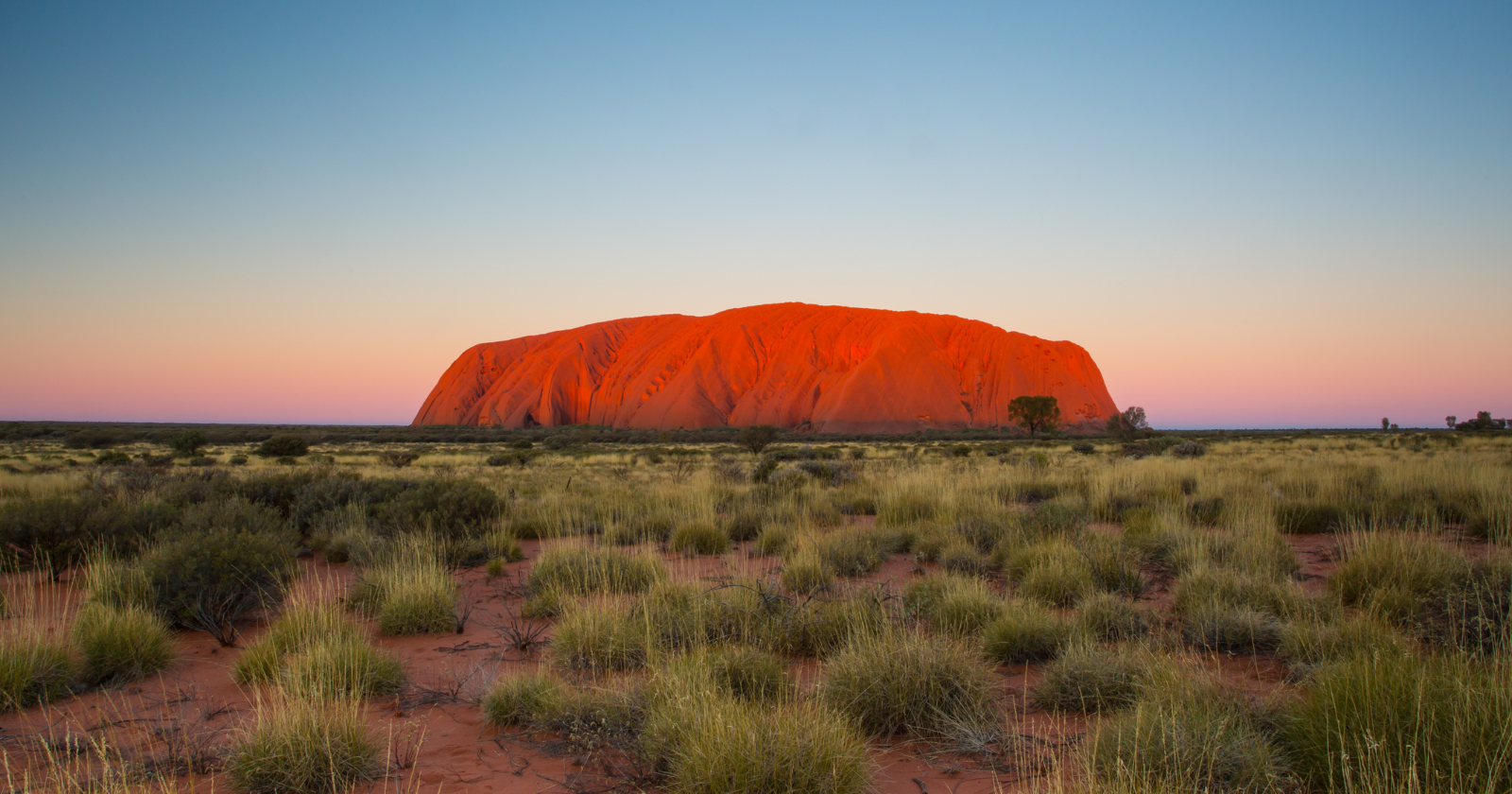
Before dawn on October 25, 2019, hundreds of people gathered in the dark at the base of a giant red rock in the center of Australia, some of them having queued since 4am. They had come from around the world for a single purpose: to climb Uluru one last time, on the final day it would ever be legal.
By the next afternoon the climb was closed forever. And within hours of the last climber stepping down, work crews moved in to erase the route — starting with the chain.
The chain that made it easy
For most of the twentieth century, climbing Uluru was one of Australia’s signature tourist experiences — a strenuous scramble up the sheer western face of a 348-meter sandstone monolith taller than the Eiffel Tower.
To make the near-vertical stretch manageable, authorities had bolted a chain handhold into the rock in 1964, and extended it in 1976. The chain turned a dangerous climb into a merely difficult one, and generations of visitors hauled themselves up it for the view across the flat desert. For decades, Uluru was marketed to the world as a peak to be conquered.
It was never that to the people who own it.
Whose rock it is
Uluru sits on the land of the Anangu, the Aboriginal traditional owners who have lived in this country for tens of thousands of years. To them, Uluru is not a landmark or a challenge; it is a sacred site woven into Tjukurpa — Anangu law, creation knowledge and ceremony — and the climbing route ran directly across ground of deep spiritual significance.
The national park was formally handed back to the Anangu in 1985, and from then on they made their wishes plain. Signs went up at the base of the climb, speaking for the Anangu: “This is our home. Please don’t climb.” Two things weighed on them. One was the desecration of a sacred place. The other was responsibility — under Tjukurpa, the Anangu are responsible for the safety of visitors on their country, so every injury and every death on the rock fell on them as a genuine grief.
There had been many. Since climbing began drawing crowds in the mid-twentieth century, at least 37 people had died on Uluru — from falls, but more often from heart attacks and heat exhaustion on the exposed, baking stone — and hundreds more had needed rescue.
The vote, and the rush
For years the Anangu asked, and slowly the tide turned. As visitors learned more about the culture, fewer chose to climb; by the late 2010s more than four in five visitors were declining to. In November 2017, the park’s board of management — with an Anangu majority — voted unanimously to close the climb, setting the date for October 26, 2019, the 34th anniversary of the handback. The timing was deliberate.
Then came the part that stung. Once a deadline was announced, tourists surged to do the thing that was about to become impossible. Visitor numbers spiked; people camped illegally along roadsides for miles because the accommodation had sold out. The Anangu found the final rush painful — a last stampede up their sacred site by people who had been asked, for decades, not to. One prominent Indigenous academic responded to the crowds with a single line: a curse would fall on all of them.
On that final morning, the desert itself seemed to weigh in. Hundreds had queued from 4am, but when the climb would normally open at 7, rangers kept it shut — standard procedure in high wind, which regularly closes the route for safety. It finally opened around 10am, and the last climbers streamed up.
Erasing the route
The Anangu had been clear about what would happen when the last person came down: every trace of the climb would go.
As soon as the final climber descended on October 26, crews began the work. The area was zoned off as no-access, and the removal of the chain handhold — the 1964 fixture that had made the whole enterprise possible — got underway, to be taken out section by section. The signage, the painted markers, the infrastructure of half a century of tourism: all of it slated for removal, so that the western face could return, as nearly as possible, to bare rock.
The closure was permanent, with no review and no exemption. Uluru would still be one of Australia’s great sights — nearly 400,000 people had visited in the previous year — but from now on it would be looked at, walked around, and understood, not conquered.
There’s a clean symmetry to how it ended, and it belongs to the people whose rock it always was. A handhold was bolted into a sacred site in 1964 so that strangers could stand on top of it; fifty-five years later, the moment the last of those strangers stepped off, it was unbolted again. The climb had a beginning and an end, both decided from the outside and then from within, and the rock outlasted the whole episode without noticing. As one Indigenous ranger put it on that last day, the majority feeling was happiness — that people would no longer be disrespecting the rock, and would no longer be dying on it. The chain came off. The rock stayed exactly where it had been for 500 million years.