

On the morning of April 25, 2024, tourists stepping off the train at Venice’s Santa Lucia station found something no city had ever asked of them before: to get in, they needed a ticket — not for a museum or a monument, but for the streets themselves.
Stewards in yellow vests stood at the station checking QR codes. Day visitors who hadn’t paid a 5-euro access fee, and couldn’t prove an exemption, were in the wrong. Venice had become, arguably, the first city on Earth you have to book.
A city with more beds for tourists than people
The fee was a response to a genuinely alarming statistic. The year before, Venice passed a grim milestone: the number of tourist beds in its historic center exceeded the number of residents for the first time.
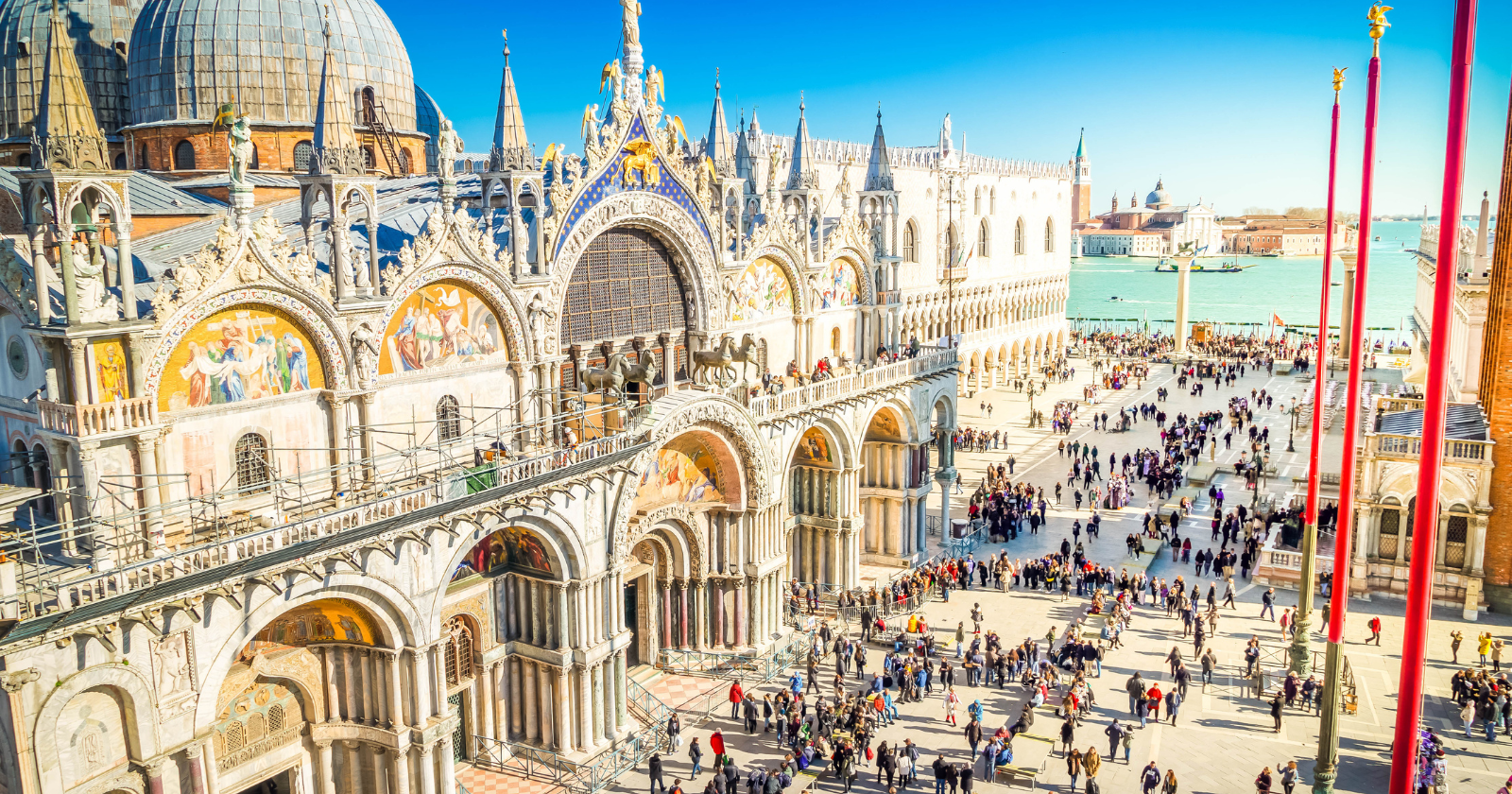
The math is stark. Fewer than 50,000 people now live in the old city of canals; on a normal day it receives around 40,000 tourists, and across a year an estimated 25 to 30 million people pour through — the overwhelming majority of them day-trippers who arrive, photograph St. Mark’s Square, buy a gelato, and leave without spending a night. Residents watched their neighborhoods hollow out: the corner butcher closes, the family apartments become short-term rentals, and the city slides toward becoming, as one local put it, a theme park.
The access fee was meant to push back — to nudge day-trippers away from the most crowded days and, at minimum, to finally count them.
How the turnstile works
The scheme is narrower than “pay to enter Venice” makes it sound, and the details matter.
The charge applies only to day-trippers, only on selected peak days (29 of them in 2024, mostly weekends and holidays), and only between 8:30am and 4pm — arrive in the evening and it’s free. Anyone staying in a hotel is exempt, because they already pay an overnight tourist tax; so are residents, property owners, students, workers, and people from the surrounding Veneto region. Everyone over 14 who doesn’t fit an exemption downloads a QR code as proof, and inspectors run spot checks at the entry points. Get caught without one and the fine runs from 50 to 300 euros.
That thicket of exemptions is why the launch day saw only about 15,700 people actually pay, while more than 97,000 downloaded exemption codes. The paying day-tripper is a specific, and relatively small, slice of the crowd.
The numbers, and the awkward truth
Across the 29 days of the 2024 trial, roughly 485,000 people paid the fee, raising about 2.4 million euros. In 2025 the city expanded the program to 54 days and doubled the charge to 10 euros for anyone booking less than four days ahead — and the paid total climbed to over 723,000 visitors and 5.4 million euros.
Then comes the part the city says less loudly: it didn’t work, at least not at its stated job. Venice’s own monitoring found that on the fee days of 2024, the city actually received around 7,000 more visitors per day than on the same days the year before. An opposition councillor called it a flat failure; a tourism economist at the local university said the fee was “absolutely useless” for reducing crowds, doomed by a price too low and exemptions too broad. The turnstile counted the flood. It did not slow it.
What the fee did do was raise money — earmarked for the punishing costs of maintaining a city built on water — and generate hard data on day-tripper numbers for the first time. And it made Venice the global test case. Officials report keen interest from other over-touristed places, from Barcelona and Amsterdam to Italy’s other art cities, all watching to see whether the first bookable city points to their own future.
The precedent, whether it works or not
There’s a real debate under all this, and it’s not going away. Critics, including many of Venice’s own residents, argue that charging admission to a living city is both an insult and a distraction — it treats a home as an attraction, surveils arrivals with cameras and QR scans, and does nothing about the actual driver of the crisis, which is housing: the short-term rentals steadily converting residents into tourists’ bedrooms. Putting a ticket on the door, they say, is the last step in turning Venice into a museum of itself.
Supporters counter that Venice is a genuinely extreme case — a fragile UNESCO site of fewer than 50,000 people absorbing tens of millions of visitors — and that someone has to experiment first, imperfectly, in public, while everyone else takes notes. Both things are true at once.
Either way, a line has been crossed that won’t be uncrossed easily. For all of history, a city was simply a place you could walk into. Venice has now established that a city can put a price and a booking system on its own front door, check your code at the station, and fine you if you skip it — and that hundreds of thousands of people will shrug and pay. Whether or not the fee ever thins the crowds, it has already proved the more unsettling point: the era of the city you have to reserve has begun, and it began on the streets of the most visited town in Italy.