

In 1984, Barry Marshall swallowed bacteria cultured from a patient’s stomach to test whether they could cause gastritis in a healthy person. His account of the day begins more precisely in the 1985 Medical Journal of Australia paper: after fasting overnight, he took 600 mg of cimetidine at 8 a.m. and, three hours later, swallowed the growth from a three-day culture suspended in 10 ml of alkaline peptone water. A Lindau Nobel Laureate Meetings account names colleague Neil Noakes in the preparation of the bacterial drink, but the published paper is the stronger record for its quantities and timing.
Marshall reported no symptoms other than stomach gurgling during the first week. On day seven he felt unusually full after dinner; on day eight he vomited mucus, and colleagues noticed bad breath during the second week. Biopsies taken on day ten showed both spiral bacteria and acute inflammation. By day fourteen, the paper reported that the gastritis had largely resolved.
On 3 October 2005, the Nobel Assembly at Karolinska Institutet announced the Nobel Prize in Physiology or Medicine jointly for Marshall and pathologist J. Robin Warren. It recognised their discovery of the bacterium now called Helicobacter pylori and its role in gastritis and peptic ulcer disease. The drink was one experiment within that larger body of work, and what it proved is narrower than the Nobel citation.
Perth, 1981: a pathologist’s slides and an unwelcome bacterium
At Royal Perth Hospital, Warren had seen curved bacteria in stomach biopsies and noticed inflammation in tissue near them. Marshall joined the investigation in 1981, and the pair studied biopsies from 100 patients. Marshall cultivated an organism that would later be named H. pylori; they found it in almost all the patients in their study who had gastric inflammation, a duodenal ulcer or a gastric ulcer.
The finding challenged a view of peptic ulcers centred on acid, stress and lifestyle. Finding bacteria beside inflamed tissue, however, did not show whether they caused the inflammation or merely occupied tissue already affected by disease. Marshall’s self-experiment was designed to test that distinction.
What the broth actually proved
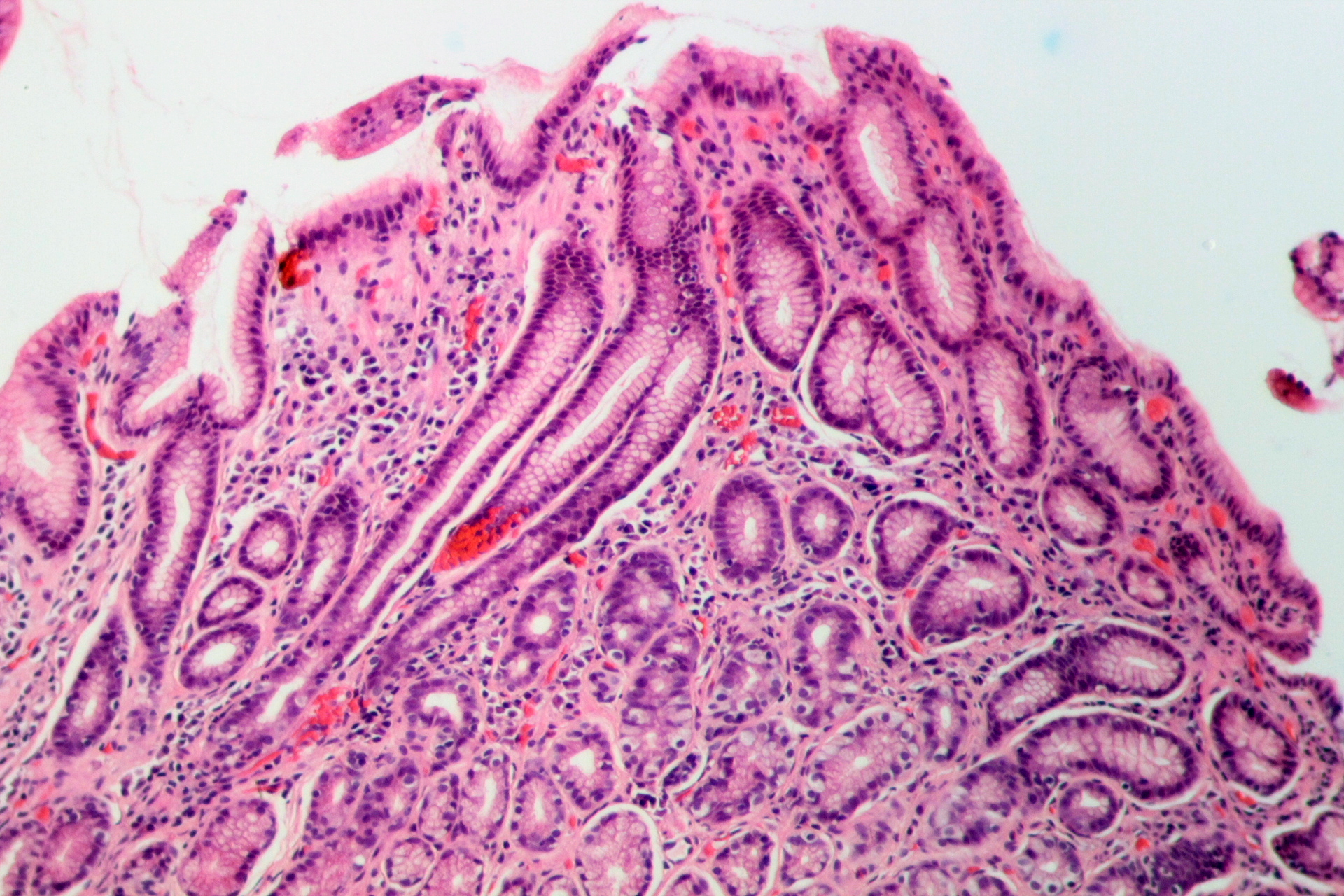
In the 1985 paper, Marshall and coauthors John A. Armstrong, David B. McGechie and pathologist Ross J. Glancy described their attempt to fulfil Koch’s postulates. Marshall’s stomach lining was histologically normal before he swallowed the cultured organism. The team then documented infection and gastritis in biopsies taken ten days later.
The authors described acute pyloric Campylobacter gastritis, using the organism’s name at the time. They proposed that an infection persisting beyond the acute stage might predispose a person to peptic ulcers. That was a proposal drawn from the experiment, not an ulcer demonstrated in Marshall: he did not develop one.
The result answered an important objection. Bacteria from a patient’s stomach had infected a previously healthy volunteer and caused observable inflammation. It supplied evidence that the organism could be a cause of gastritis, while leaving the proposed connection to ulcers to be tested through further work.
From gastritis to eradication, and to Stockholm
The evidence for ulcers grew through patient studies and treatment trials. As the Nobel Assembly summarised, ulcers associated with the infection often returned after acid suppression alone, while studies found lasting treatment depended on eradicating the bacteria. That evidence addressed a different question from Marshall’s two-week self-experiment: whether removing the organism changed the course of peptic ulcer disease.
The Nobel citation brought the discoveries together: Warren’s observations, the patient biopsies, cultivation of the organism, the human infection experiment and evidence from treatment. Its press release said H. pylori colonised the stomachs of about half of all humans and estimated that 10 to 15 per cent of infected people would experience peptic ulcer disease at some point.
Marshall’s drink in 1984 demonstrated that a cultured stomach bacterium could cause acute gastritis in a healthy human volunteer. The prize awarded 21 years later recognised the broader finding that the same organism plays a major role in peptic ulcers and that eradicating it can change the outcome for patients whose ulcers are linked to the infection.