

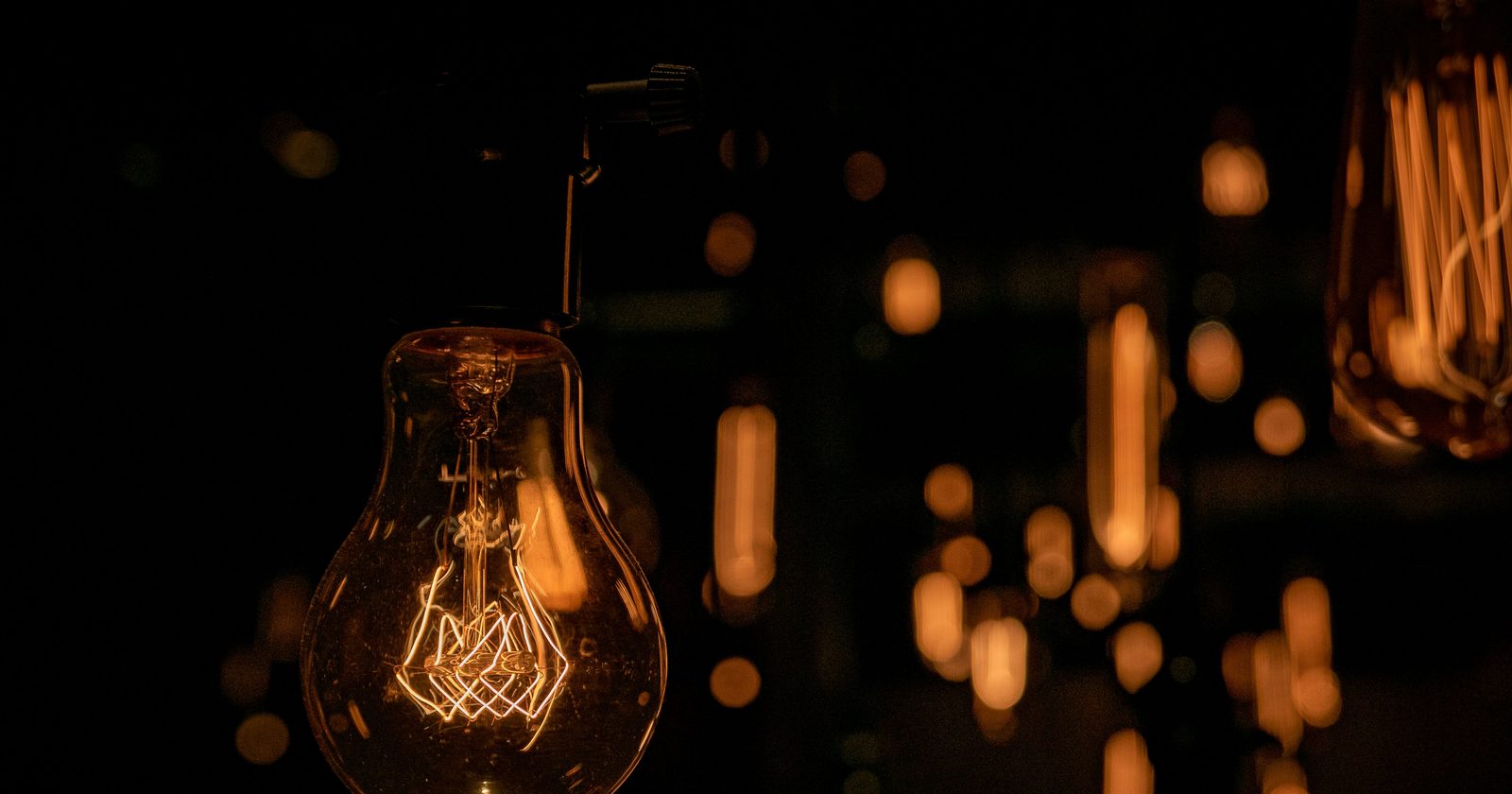
Two pieces of technology, pointed at each other. One is a glass bulb, blown by hand and first lit in 1901. The other is a webcam, a modern webcam whose whole job is to keep an eye on that bulb.
You’d expect the newer device to last longer. It hasn’t. Or rather, they haven’t. As the bulb’s longtime keeper, retired deputy fire chief Tom Bramell, put it in a report republished by FireRescue1, “The lightbulb isn’t burning out, but the webcams are.”
The bulb is the Centennial Light, and it hangs in Fire Station No. 6 in Livermore, California. Donated to the local fire department and first lit in 1901, it has burned almost without a break ever since. Its history includes interruptions for power problems, a renovation and a few moves. Guinness World Records lists it as the longest-burning bulb on the planet.
The story has a recent milestone. The Centennial Light Bulb Committee’s official website records a 125th-anniversary celebration on June 6, 2026. That followed its million-hour celebration in June 2015. The anniversary is another marker of its extraordinary longevity, although its history includes periods without power.
So why hasn’t it burned out? There is no single, conclusively established explanation for this particular bulb’s survival. Its construction and operating conditions offer clues, but examining an irreplaceable working object has obvious limits.
It is a hand-blown, carbon-filament bulb made by the Shelby Electric Company of Ohio. That matters because its filament behaves differently from the tungsten filaments used in later incandescent lamps.
Physicist and electro-optics specialist Martin Kykta explored those differences in a 2021 technical analysis hosted on the bulb’s website. He drew on measurements of another Shelby bulb and calculations to investigate the Centennial Light’s behaviour. He suggested that the strength and thickness of its carbon filament helped it survive as material was gradually lost. These are explanations based partly on a substitute bulb and modelling, rather than a destructive examination of the Centennial Light itself.
Its operating history is unusual, too. The committee’s facts page describes it being left on as a nightlight over the fire trucks. It records roughly a week without power during a 1937 renovation, a move to its present station in 1976, and other interruptions. For most of its life, however, it has simply been left glowing.
The bulb is commonly described as originally rated at 60 watts. Popular Science reports that it now draws about 4 watts, a figure also used in Kykta’s analysis. Watts measure electrical power, not the amount of visible light produced. Its faint glow should not be confused with the brightness of a modern 4-watt LED.
Kykta explains the underlying trade-off: a hotter incandescent filament produces more light, but loses material faster through evaporation. Lower-temperature operation can extend its life while reducing the light produced for each watt consumed.
He calculated that the Centennial Light’s filament operates at a comparatively low temperature and suggested that it might last another century. That is a possibility raised by his analysis, not a forecast anyone can guarantee.
On May 20, 2013, the bulb went dark. The committee’s webcam page records an interruption of nine hours and 45 minutes. The failure was in its power supply, rather than the filament. After the faulty backup system was bypassed, the bulb glowed again.
What the bulb is, and isn’t, evidence of
It is tempting to hold the Centennial Light up as proof that manufacturers once knew how to make everlasting bulbs and then stopped. Its survival alone cannot establish that. One dim antique is not a controlled comparison with generations of brighter lamps designed for everyday use.
The Phoebus cartel, however, was real. On 23 December 1924, representatives of major lighting businesses met in Geneva and founded it. They included Osram, Philips and interests associated with General Electric, which participated through overseas subsidiaries.
As professor of media studies Markus Krajewski documented for IEEE Spectrum, the cartel established a 1,000-hour standard for household bulbs. His account draws on company archives describing efforts to shorten lamp life, testing arrangements and fines for products that fell outside the agreed lifespan.
This is documented commercial history, rather than something inferred from the Centennial Light and The cartel’s history does not make the Centennial Light proof that a bright, efficient household bulb could routinely last 125 years.
A survivor under unusual conditions
What Livermore has is an exceptional object with an unusually well-documented history. Its carbon filament, low-temperature operation and long service as a dim nightlight all belong in the explanation. How much each factor contributed remains harder to establish.