

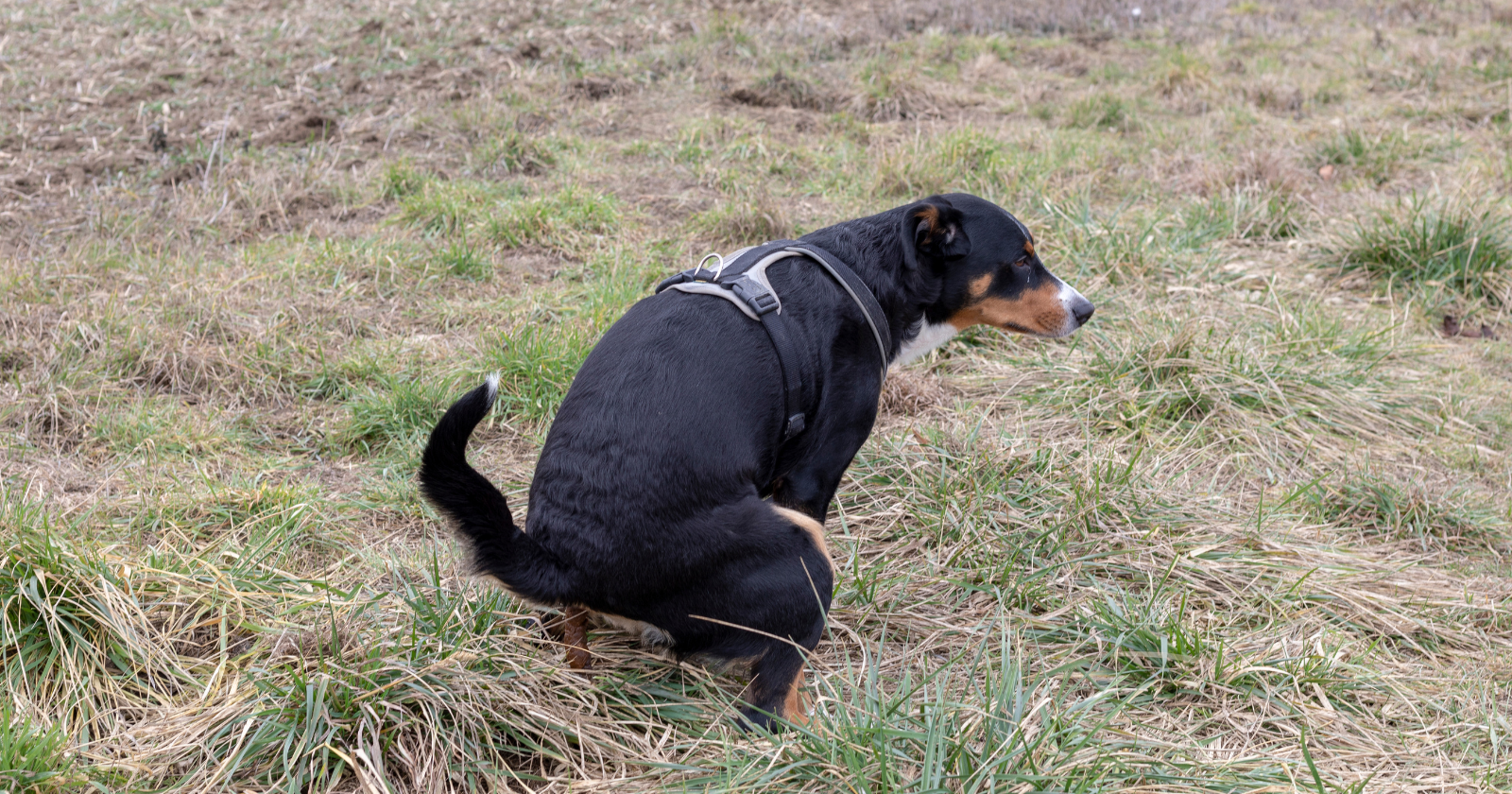
For two years, a few dozen dog owners in the Czech Republic and Germany walked their pets armed with the usual plastic bags and one unusual extra: a compass.
Whenever a dog stopped to relieve itself off the lead, in open ground away from roads, power lines and steel structures, its owner took a bearing along the animal’s spine. The tally, published in a 2013 paper in Frontiers in Zoology, covered 70 dogs from 37 breeds, with 1,893 defecations logged from 55 of them and 5,582 urinations from 59. Leading the project were Vlastimil Hart and Hynek Burda of the Czech University of Life Sciences Prague and the University of Duisburg-Essen, whose group had earlier claimed, in a 2008 study in PNAS, that cattle and deer tend to line up north-south.
The dog work went on to win the 2014 Ig Nobel Prize for biology, per APS News, an award for research that makes people laugh before it makes them think.
Sorting the walks by magnetic conditions
The first pass through the data was underwhelming. Pooled together, the headings showed a weak, heavily scattered trend that fell apart once each dog was averaged separately. Only after sampling ended did the team sort every walk by what the planet’s field was doing at that moment, using readings from a geomagnetic observatory near Munich.
When magnetic declination held completely steady, the dogs had a highly significant preference for a north-south axis. As the rate of change crept upward their headings scattered, and with declination drifting faster than a fiftieth of a degree an hour, they were random. The researchers also found the dogs avoided facing east-west, and because the preference ran along an axis, pointing south counted the same as pointing north.
Shifts in the field’s direction predicted the switch better than shifts in its strength.
How magnetic north shifts
Why would a compass direction move at all? Magnetic north and true north sit in different places, and the angle between them, known as declination, varies with both location and time, as the US National Centers for Environmental Information explains. Over decades it drifts. Within a day it wobbles too, and Hart’s team describes westward nudges in the morning, eastward ones in the afternoon and erratic jolts during magnetic storms.
These movements are tiny. In one worked example, declination moved 10 arcminutes, a sixth of a degree, over four hours, about twice the rate at which the dogs’ headings turned random. Nobody holding a lead would notice.
Sunlight, which switches sides of the sky between breakfast and dinner, is an obvious rival explanation. The authors countered that calm-field alignment held at every hour, and that most walks probably happened under cloud.
Later dog studies disagree
In city parks in Eilat, at Israel’s southern tip, high school students checked the headings of squatting dogs with phone compasses, sometimes after tucking a small bar magnet into the grass, as reported by Science in Poland. Their study, published in the Journal of Veterinary Behavior in 2020, found north-south alignment that shifted when the magnet was nearby.
A year later, a University of St Andrews team repeated those methods in five Lyon dog parks and detected no magnetic alignment. Those dogs did line up with each park’s layout, and the researchers warned that volunteer observers can unconsciously bias what they record.
Back in 2014, Columbia University statistician Andrew Gelman flagged a multiple-comparisons problem in the original paper: slice one dataset enough ways and a fluke starts to look meaningful. He wanted a preregistered replication, with the test fixed before any data came in. Its authors maintained that the late sorting made their work genuinely blind, since nobody had expected declination to matter. For now the canine evidence is contested, with two supporting studies, one failed replication and no consensus.
Hunting dogs and the compass run
“Compass run” is the name the Czech group later gave to a habit of hunting dogs. Writing in eLife in 2020, Kateřina Benediktová and colleagues fitted 27 hunting dogs with GPS collars and action cameras and followed more than 600 forest excursions. Dogs returning to their owner by a fresh route usually began with a dash of about 20 metres along the north-south axis, whichever way home lay, and those runs made the trip back more efficient.
Hart and Burda appear on both author lists, so this extends the group’s own thinking and can’t count as independent confirmation. The proposed explanation is that the run brings a mental map into line with a magnetic sense of direction, an idea the 2013 paper had already floated, likening a squatting dog to a hiker turning a map towards north.
That paper also held that such calibration only makes sense against a stable reference, which would explain why alignment vanished once declination started sliding. By its estimate, the field is calm for only about a fifth of daylight hours. On most walks, then, a dog squatting east-west may simply have judged the map not worth reading.