

Here’s a research result I badly wanted to be true.
In 2018 two researchers compared corn farms in the northern United States and found that the ones farming regeneratively grew 29 percent less grain than the conventional farms, and made more money anyway. Not a bit more, either. Depending on which part of the paper you read, 78 percent more, 70 percent more, or nearly double.
I should say up front why that excites me, because it colours how I read everything that follows.
If a farmer can earn more while rebuilding soil, bringing insects and birds back and holding more carbon in the ground, then the healthy ecosystem comes for free. They chase the better margin and the land heals behind them. And if that holds across thousands of farms rather than a handful, it’s one of the most fundamentally good things I can imagine for the planet.
I’ve also got skin in the game. I’m a partner in a regenerative agriculture project on Marajó Island, in the Amazon in Brazil, with my good friend Rudá Iandê, who’s implementing a number of regenerative practices there. So the question I keep coming back to, with every paper, is whether this travels. Does it work beyond the farms it was tested on?
That’s what I went digging into. I came out less certain than I went in, and I’ll show you why.
What regenerative farming actually is
Five practices come up again and again in these studies.
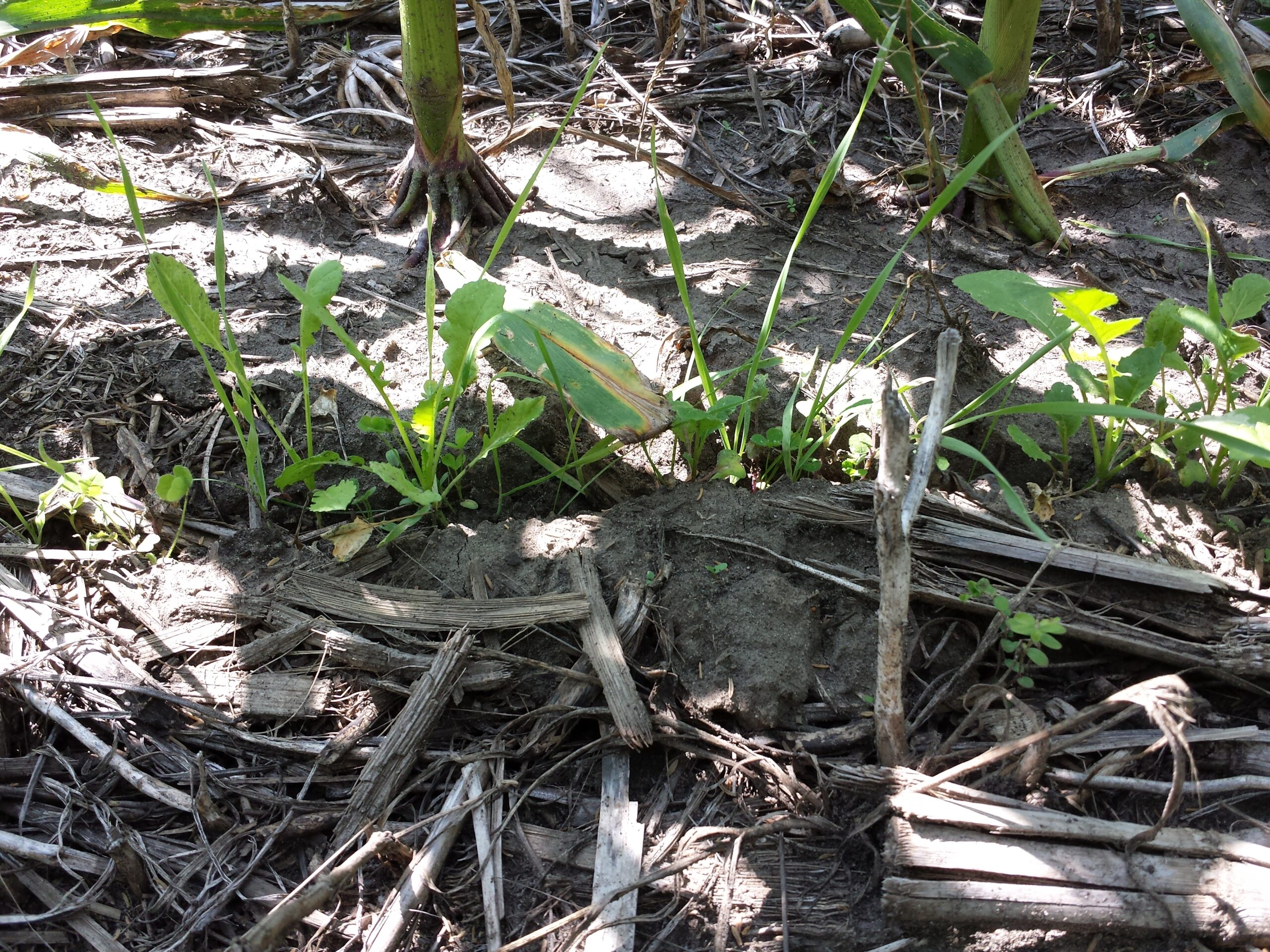
Don’t plough. Ploughing, which the papers call tillage, means turning the soil over with machinery before planting. It kills weeds and buries old stubble, but it also breaks up the soil’s structure and leaves it bare to wind and rain. No-till means cutting a narrow slot and dropping seed straight into undisturbed ground.
Grow cover crops. These are plants grown between the cash crops, the crops grown to sell, so living roots stay in the ground and the surface stays covered when it would otherwise sit bare.
Add organic material such as manure instead of relying only on bagged chemical nutrients.
Bring animals back onto cropland, grazing them on those cover crops so one field produces meat as well as grain.
And cut synthetic fertilizer and pesticides right back, or drop them entirely.
The ecosystem side of this looks pretty solid to me. Less disturbance, more living roots, more life in the soil. The part that’s genuinely contested is the money, and specifically whether the money survives when lots of people start doing it.
What the 2018 study did
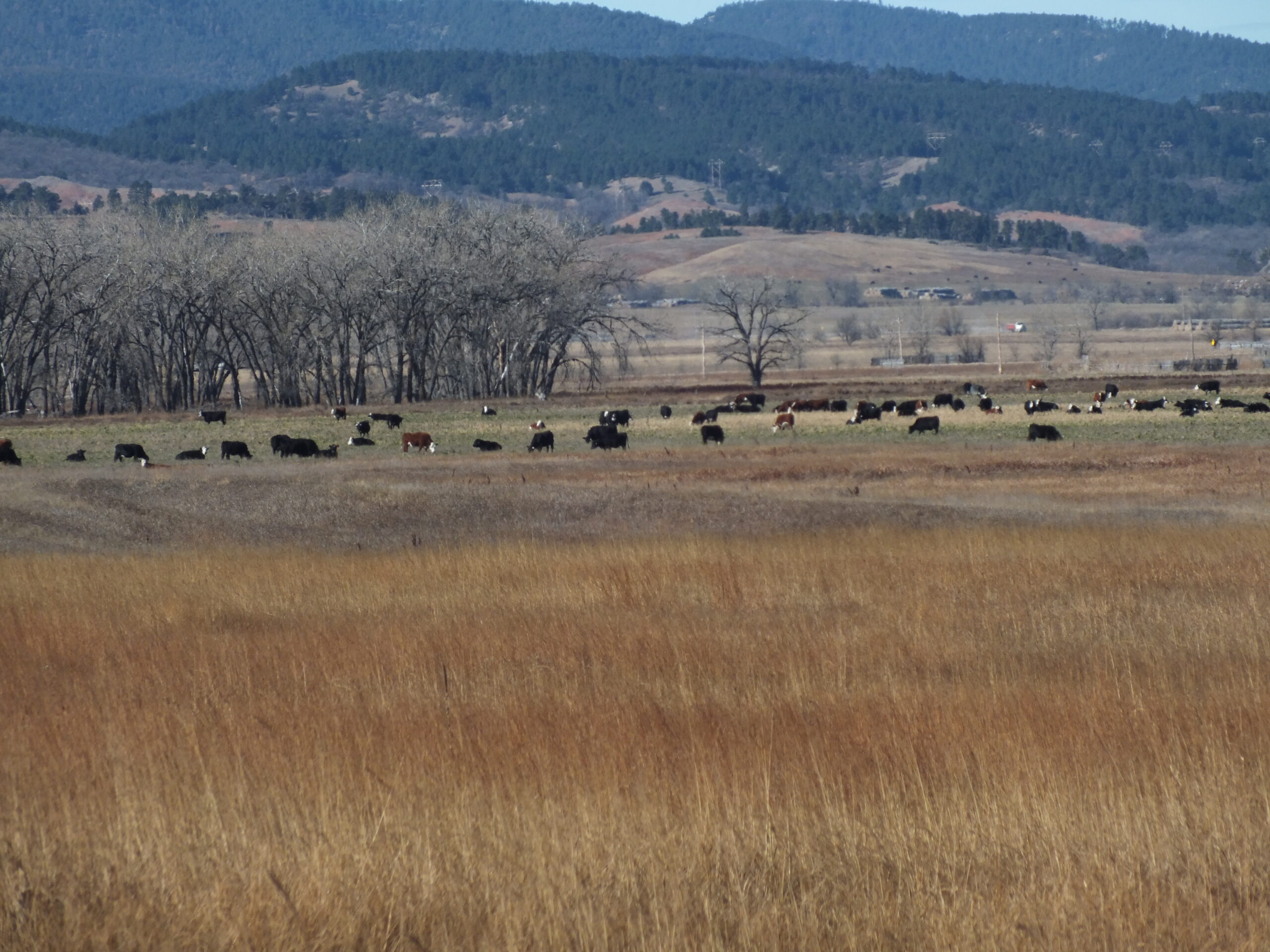
The study was published in PeerJ by Claire LaCanne and Jonathan Lundgren. They went out to working corn farms in South Dakota, Nebraska, North Dakota and Minnesota, real operations rather than research plots, and measured them as they found them.
The paper states its farm numbers in a way that confused me, so I emailed the first author, Claire LaCanne, M.S., who is now an extension educator at the University of Minnesota. Extension is the arm of a university that works directly with farmers. She told me the study covered 20 farms in total, 10 regenerative and 10 conventional, with four fields assessed on each. The paper also mentions a comparison group of eight farms, and she explained why. Two of the conventional farms were no-till without any other regenerative practice, so the eight are the conventional farms that used tillage (ploughed).
Yield is simply how much crop comes off a given area of land. Regenerative fields gave 8,481 kilograms of corn grain per hectare. Conventional fields gave 11,884. That’s the 29 percent gap, and nobody in this story disputes it, including the paper’s critics.
The profit number is messier. The abstract says “78% higher profits”. The caption on Figure 2 says 70 percent higher. The Results section says “nearly twice as profitable”. Same comparison, three figures, one paper, never reconciled. They all point the same way, so I’ll carry the 78 percent because that’s the one that gets repeated.
Now the question that decides whether any of this scales: where did the extra money come from?
The paper gives two answers at once. On the cost side, conventional farms spent 32 percent of their gross income on seed and fertilizer. Regenerative farms spent 12 percent. On the revenue side, regenerative growers “received higher value for their crop by receiving an organic premium, by selling their grain directly to consumers as seed or feed, and by extracting more than just corn revenue from their field (e.g., by grazing cover mixes with livestock)”.
Three things are packed into that sentence. A premium is the extra price a buyer pays for certified organic produce over the ordinary commodity price. Direct marketing means selling to a customer yourself instead of hauling grain to the local elevator, the depot that buys bulk grain at whatever the market pays that day. And grazing means the same acre is producing meat.
So the honest answer is both. Lower costs and extra revenue, and the paper never says how much of the gap came from each.
That’s where I first paused. Spending less on seed and fertilizer travels anywhere. A premium exists because the thing is scarce. Direct selling needs customers within reach. Grazing needs animals, fencing, water and someone who knows livestock. Half of this mechanism is portable and half depends on being unusual.
Two more findings from 2018. On these farms, a field’s yield told you almost nothing about its profit. Yield explained under 1 percent of the differences in profit from field to field. If that holds elsewhere, the 29 percent yield gap stops being the objection it looks like. And the authors warn in their own abstract that their result needs “a systems-level shift”, meaning the whole farm changes at once, and that “simply applying individual regenerative practices within the current production model will not likely produce the documented results”. That warning ends up mattering a lot for the scaling question.
The sceptic
I wanted someone outside the research group to go through this with me. Andrew McGuire works with growers on irrigated crops as an agronomist, a crop and soil scientist, at Washington State University Extension, and he had already taken the 2018 paper apart. When I asked him about it he pointed me to his Perspectives post rather than adding anything new, so what follows is from the post.
He doesn’t dismiss the farming. The core principles, no-till, soil cover, biodiversity and livestock, he calls “hard to disagree with”. What he goes after are the claims stacked on top, and his test is the familiar one: “extraordinary claims require extraordinary evidence.”
On the corn paper, his objections go like this.
The pests don’t matter. The study found ten times fewer pests on the regenerative fields. But the paper itself says none of the pests were at economically damaging levels in either system, so nobody was losing crop to them. And the conventional pest control was insect-resistant genetically modified corn plus insecticide coated onto the seed, which he calls “Not really a high concern scenario”. The conventional fields weren’t being heavily sprayed to begin with.
The soil comparison was promised and not delivered. Soil organic matter, the decayed plant and animal material that makes soil dark and crumbly, was measured, but the paper “does not directly compare these values for conventional and regenerative farms”. His guess is that the study didn’t control for region, soil texture or manure, meaning the farms weren’t matched closely enough for a fair soil-to-soil comparison.
The profit isn’t like-for-like. “The regenerative farm’s profits include meat production from grazing, organic premiums, and direct marketing. It is not possible to tell from the paper how much these influenced the net profits.” This is exactly the gap I’d already tripped over.
And the conclusion outruns the data. Profit in the study tracked soil organic matter rather than yield, and the paper’s conclusions then call organic matter “a more important driver of proximate farm profitability than yields were”. Two things moving together across a set of fields is a correlation. One causing the other is a driver. The measurements show the first and the wording claims the second.
His bottom line is deflating. “We know that tillage degrades soil, cover crops improve soil, and organic premiums and direct marketing can improve profits”, and then, “nothing new there.”
The twist
I’d lined these two up as opponents. Then I read Jonathan Lundgren’s reply properly.
Lundgren is the senior author of the 2018 paper and runs the Ecdysis Foundation, a research organisation that studies this kind of farming and openly argues for it. He wrote back with two newer papers and a clear statement of where he stands. “Regenerative agriculture is not on the fringe anymore,” he said. “It is the win that farmers have been looking for, and it is the best opportunity out there for conventional farmers to stay resilient.”
Then this: “Profit equity came from reducing inputs, and greater profits are attained by regenerative operations through local marketing and associated price premiums.”
Profit equity means coming out level with conventional. So in his own words, cutting inputs gets a regenerative farm to a tie, and the premiums and local selling are what lift it above.
Read that next to McGuire. They’re describing the same mechanism. Matching profits come from spending less. Beating conventional comes from the premium. The advocate and the sceptic disagree completely about what it means for the future of farming, but on what actually happened in those fields I can’t find any daylight between them.
Which narrows the scaling question down to one thing. If adoption grows, does the premium survive?
Widening the lens
The first of Lundgren’s two papers is the obvious next step, a much bigger survey from the same group, published in Environmental Research: Food Systems in August 2026.
It covers 210 farms sampled in 2022 and 2023 across 15 US states and two Canadian provinces, growing 15 crops, mostly corn, soybean and wheat. These are row crops, planted in rows across big fields and harvested in bulk. Instead of sorting farms into two boxes, each got a score from 0 to 8 for how many regenerative practices it used, and four or more counted as regenerative. That scoring also tells you how unusual this farming still is. The authors estimate at least 90 percent of US field crop farmers would score 1 or lower.
The yield and profit analysis used a subset of 98 fields, 38 wheat, 30 corn and 30 soybean, with economics reported by the growers themselves and checked against state price data.
The finding, in the authors’ words: “Yields were significantly reduced in corn, soybean, and wheat fields as the number of regenerative practices were increased … but despite these yield reductions, there were equivalent gross and net profits regardless of the number of regenerative practices employed.” Gross profit is roughly what comes in before costs. Net profit is what’s left after them. Both came out level.
Equivalent. The 78 percent advantage is gone. With ten times the farms and a finer measure of what each one actually does, the lead shrinks to a tie.
I think that’s the most important number in this whole pile of papers, and it carries extra weight because the same group produced both results. It doesn’t sink the 2018 study. It says that when you widen the lens, the profit gap flattens, which is what you’d expect if the extra money in 2018 came from being rare.
Lundgren reads his own data more hopefully than I can. The paper argues regenerative farmers “often could produce as much grain as conventional farmers … but they choose to prioritize other farm outcomes”, and in his reply he said the spread of the numbers suggests “the profit and yield potentials for regenerative row cropping systems are likely higher for regenerative than conventional systems”. He added that “the sociological motivators behind management decisions and farming intensity are important factors to weigh”.
I take that seriously. A farmer who’s decided maximum yield isn’t the goal will harvest less. But a survey can’t see that. It measured yields falling and profits level, and whether the lower yield was chosen or imposed sits outside the data.
Two things to hold in mind about this paper. It compares different farms at one moment rather than following the same fields through a change, the farms chose themselves by already farming this way, and the money figures are self-reported. And funding came from donors including the General Mills Foundation and the Walton Family and Rockefeller Foundations. I mention that because a reader should weigh it, the same way you’d weigh who paid for any study.
Testing the premium
If the premium is the thing that might not survive mass adoption, the useful evidence is whatever isolates it. Three sources do.
The cleanest is Lundgren’s second paper, a 2021 study of California almonds by Fenster and colleagues. Sixteen orchards, eight regenerative and eight conventional, paired within about 15 kilometres of each other and matched on soil type, which is the matching McGuire said the corn study lacked. “Pest populations, yields, and nutrient density of the almonds were similar.” And “profit was twice as high.”
No yield penalty, double the money. So what did it? The authors say it straight. “The greater revenue of the regenerative orchards was due to the premium paid … All the regenerative producers in this study were certified organic.” In almonds, the premium is the whole story.
That pushed me outside regenerative research to the best evidence on what premiums do at scale. Crowder and Reganold’s 2015 paper in PNAS is a meta-analysis, which means it pools the results of many earlier studies, in this case across 55 crops on five continents, comparing organic with conventional farming. Organic isn’t the same as regenerative, so treat it as adjacent evidence. The money question, though, is identical.
Organic yields were 10 to 18 percent lower. Strip the premiums out and organic came out 23 to 27 percent less profitable over the long run. Leave real premiums in and it was 22 to 35 percent more profitable. The whole result sits on the price gap.
Then the number I keep coming back to. The break-even premium was only 5 to 7 percent. These are two different measures in the paper. The 23 to 27 percent figure is how much less profitable organic was with no premium at all. The 5 to 7 percent is the smallest price premium at which organic matched conventional. So a premium could shrink a long way before organic farming stopped paying. What none of these papers tell me is what happens to that price if the practice stops being unusual.
The last piece is the Wisconsin Integrated Cropping Systems Trial, which is different in kind. It’s a replicated long-term experiment running since 1990, with farming systems assigned deliberately and repeated on the same ground year after year, so you’re watching the same soil under a controlled design instead of comparing whichever farms volunteered.
Chavas and colleagues reported in 2009 that at elevator prices alone, “the no-till corn-soybean system … was the most profitable grain system”. That’s a conventional system that happens to use no-till, the portable half of the mechanism, paying for itself on the bare commodity price. Add government programs and organic premiums into the sums and “returns increased by 85 to 110% for the organic grain system”. On price alone the system without extras wins, and the organic system’s returns only rise sharply once money from outside that price (government programs and premiums) is added.
Sanford and colleagues looked at 26 years of the same trial and found output greatest for the non-organic corn rotations and lowest for the organic grain system, though the more diverse systems “exhibited greater resilience in the face of drought”. That’s the one benefit in this whole story that doesn’t depend on anyone paying extra.
Line it all up and the pattern is consistent. Every grain comparison shows a yield penalty. Wherever the regenerative or organic system came out ahead on money, it was because costs fell a long way, or revenue came from somewhere other than bulk commodity sales, or both.
What would actually settle it
I set out to find out whether this scales. I can’t tell you, and I don’t believe anyone can yet. What the reading did was turn a vague worry into a short list of missing studies.
Somebody needs to track what happens to premiums as adoption actually grows. The 5 to 7 percent break-even says there’s room, but nobody’s measured the slide.
Somebody needs to test whether a large grain-only operation in the middle of a commodity landscape, with no livestock and no customers in reach, can get anywhere near these results. This is where that 2018 warning comes back. The authors said bolting individual practices onto a normal operation won’t reproduce their result. But the whole system in their study included cattle on cover crops and grain sold direct to buyers, exactly the parts a big commodity grain farm is least able to copy. Nothing I read tests that farm.
And somebody needs to follow the same ground through the change, the way Wisconsin does, and separate the practices from the people. Both Ecdysis designs compare farms as they already are, and farmers who chose a method and stuck with it for years aren’t a random sample. Lundgren’s point about sociological motivators cuts both ways.
Then there’s Marajó. What Rudá Iandê is putting into the ground on an island in the Brazilian Amazon has nothing in common with a corn field in South Dakota except the principles. Every regenerative paper here is North American, row crops plus one orchard, and the one piece of global evidence is about organic farming. So I finish knowing a fair bit about what these methods did to the margins on 20 corn farms, and honestly nothing about whether that tells me anything about our project.
That gap is the scaling question in miniature. The exciting version of this story is clearly true somewhere. Whether it stays true when a lot of people do it is a question the existing studies can’t answer, and I’d rather admit that than pretend the papers settle it either way.

_(15056923645).jpg)
.jpg)