

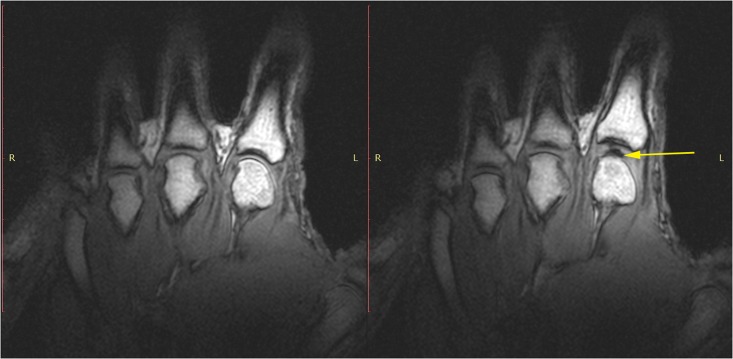
“Stop that, you’ll get arthritis.” It is a familiar warning for anyone who grew up cracking their knuckles, and Donald Unger heard it from several people close to him. His mother, several aunts and, later, his mother-in-law all believed the habit would damage his fingers.
Unger, a physician, decided to test the claim with the hands available to him. For 50 years, he deliberately cracked the knuckles on his left hand while leaving his right as a comparison.
When he reported the result in 1998, neither hand had developed arthritis, and he could see no difference between them. It was a satisfying answer to a family warning. Answering the same question for everyone else would take more than one unusually persistent man.
What Unger actually did
In his letter to Arthritis & Rheumatism, Unger described cracking his left-hand knuckles at least twice a day for 50 years. That added up to a minimum of 36,500 cracks, not an exact tally.
His right hand was not entirely silent. Those knuckles cracked “rarely and spontaneously,” he explained. So the comparison was between a deliberate daily habit and occasional cracking.
“There was no arthritis in either hand, and no apparent differences between the two hands,” he wrote. The letter does not say how he checked: it describes no X-ray and no formal examination.
The account was a short letter to the editor, not a full research paper. Unger paid for the experiment himself, called his result preliminary, and said a larger group would be needed to confirm it.
He also wondered whether other parental beliefs, such as the importance of eating spinach, deserved the same scrutiny. The tone was playful, but the question underneath was fair: what evidence supported a warning repeated with such confidence?
Why one man can’t settle it
The journal printed a tongue-in-cheek reply from physician Robert L. Swezey alongside Unger’s letter. Swezey had asked RAND statistician John Adams to “review” the design. The mock assessment described a two-arm trial with no randomization and an obvious problem with blinding.
“Blinding would only be possible if the investigator didn’t know left from right,” it observed. Beneath the joke was a real limitation: Unger knew which hand he had cracked, so his expectations could colour how he judged them.
Comparing his own two hands did control for age, genes and much of his lifestyle. But both hands still belonged to one person, whose experience could not stand in for people with different inherited risks, injuries or jobs.
He also chose which hand to crack rather than leaving it to chance. Hands differ in workload and injury history, so the two sides were not necessarily equal starting points.
Most importantly, repeating an action thousands of times does not create thousands of participants. Unger had 50 years of persistence, but his sample size was still one.
What the bigger studies found
In a 1975 paper, Robert Swezey and his son, Stuart, surveyed 28 older patients about whether they had cracked their knuckles. They found no link between the habit and wear-and-tear changes in the joints at the base of the fingers. This was the paper Unger cited, although his letter dated it to 1973.
A 1990 study by Jorge Castellanos and David Axelrod examined 300 people aged 45 and older, 74 of them habitual knuckle crackers. Arthritis was no more common among the crackers, but they had more hand swelling and weaker grip. They were also more likely to do manual work, smoke and drink alcohol, which makes it hard to blame cracking alone for poorer hand function.
Then, in a 2011 study, Kevin deWeber and colleagues looked back at 215 adults aged 50 to 89. All had had a hand X-ray: 135 showed hand osteoarthritis and 80 did not. Knuckle cracking was not linked to osteoarthritis, even when the researchers counted how many years people had cracked and their total lifetime exposure.
DeWeber, a sports medicine physician at PeaceHealth Southwest who led the study, told me by email that it was a retrospective case-control design. He said it was able to “harness the power of large numbers to make a more convincing argument that [knuckle cracking] wasn’t associated with hand arthritis.” It also used X-rays, which he called “the gold standard measure of arthritis,” and checked the joints of the hand one by one.
The consistent finding is narrower than “cracking can never harm you.” These studies did not find that habitual knuckle cracking makes hand osteoarthritis more likely.
What we still don’t know
DeWeber is careful not to overstate his own result. “No study has proven conclusively that [knuckle cracking] doesn’t harm joints,” he said.
He pointed to a weak spot in his own study. Everyone in it had already had a hand X-ray for some reason, and the researchers did not know what hand problems led to those X-rays. That makes it a selected clinical group, not a random slice of the population. Participants also had to recall habits stretching back decades, which a survey cannot capture as reliably as records kept along the way.
The strongest test would be a randomized trial. DeWeber noted that researchers would need to start with very young children and follow them for many years. No one has done that.
Grip strength is also unsettled. He described the results as mixed and the studies as small. The 1990 study linked cracking to weaker grip, but a study presented at the Radiological Society of North America’s 2015 meeting found no immediate difference. That study examined 40 healthy adults, 30 of them habitual crackers, and found no pain, swelling or loss of function right after cracking. It was not designed to look at decades of the habit.
There is one real, if rare, risk. Doctors have reported a small number of ligament and tendon injuries after unusually forceful attempts to crack a joint. Pulling a finger hard enough to injure it is a different question from whether everyday cracking causes osteoarthritis.
So what is the pop?
In a 2015 MRI study, Gregory Kawchuk and colleagues at the University of Alberta filmed ten finger joints from a single volunteer as they cracked. Like Unger’s experiment, it rested on one person’s hand. They saw a gas-filled cavity form in the synovial fluid, the liquid that lubricates the joint, as the joint surfaces pulled apart. Because the cavity was still visible after the crack, they argued that its formation, not its collapse, made the sound.
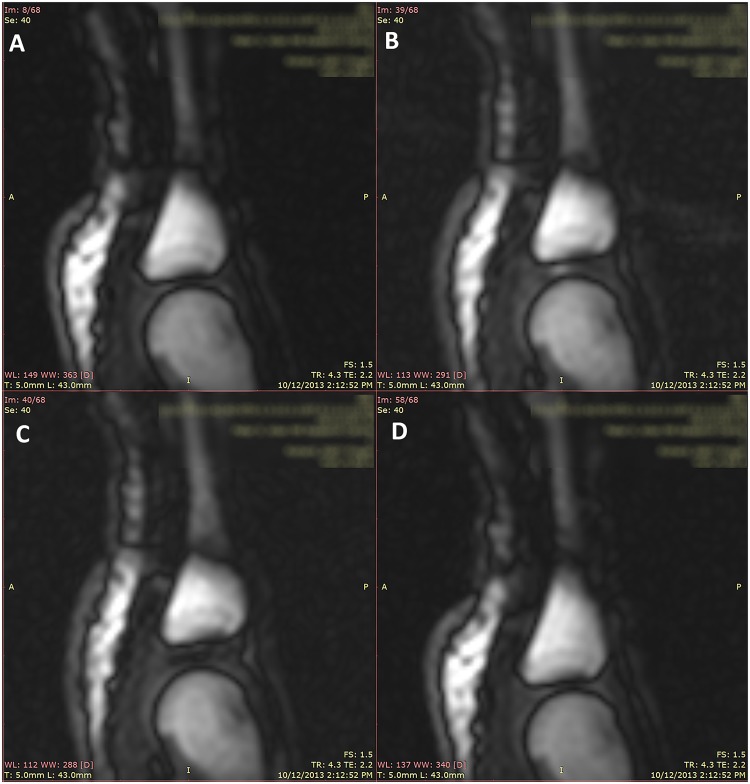
A 2018 mathematical model offered another explanation: a bubble that partly collapses could make the sound while leaving a cavity behind. The two accounts still compete, and neither, on its own, says whether repeated cracking harms the joint.
A warning that outlasted its evidence
The best available evidence has not found that habitual knuckle cracking causes hand osteoarthritis, which puts Unger’s personal result in line with the larger studies. His experiment is memorable because he turned an everyday warning into a comparison he kept up for half a century.
A smaller question still sits underneath the habit, and it is the one deWeber says he would most like answered. Do uncomfortable hands make people crack their knuckles, or does cracking create a feeling that only more cracking can relieve? Unger could compare his two hands, but he could not untangle that for everyone else.
