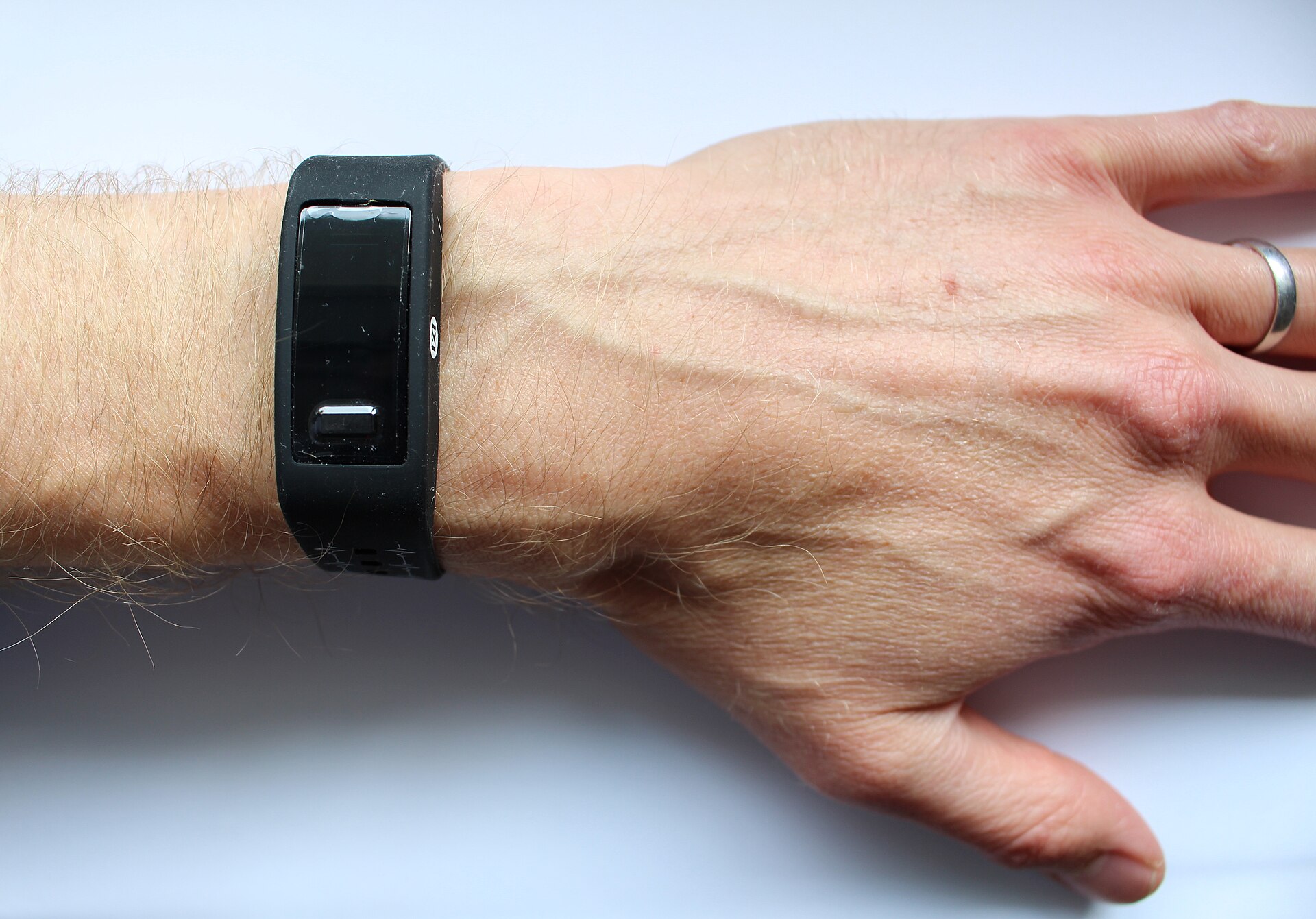
An AI system reading the optical pulse and motion sensors of a Google Pixel Watch 3 picked up 65.8 per cent of people with high blood pressure, against 55.3 per cent for a standard first reading in a clinic, in a study of 196 adults published in Nature.
Both methods flagged the same share of healthy people wrongly, with a specificity of 90 per cent each. The watch needed no cuff and no calibration. The work was led by Paolo Di Achille and Ming-Zher Poh at Google Research, with Stephen Juraschek of Beth Israel Deaconess Medical Center and Harvard Medical School. The paper appeared online on 5 November 2026 as an accelerated article, ahead of final edits.
A common condition that goes unnoticed
High blood pressure usually has no symptoms. The paper cites a study finding that 57.8 per cent of US adults with uncontrolled hypertension did not know they had it, rising to 68.4 per cent among those aged 18 to 44.
Smartwatches already measure the pulse with light, a method called photoplethysmography, or PPG. Turning that signal into a reliable blood pressure number has proved hard, because skin temperature, strap pressure, wrist position and movement all distort it. Most cuffless devices also need regular calibration against a cuff.
The Google team set a narrower goal. The system does not estimate a blood pressure reading. It judges whether a person’s pressure is persistently high, by pooling sensor data over several days. “Instead of attempting to estimate exact, point-in-time systolic and diastolic blood pressure values, which are highly susceptible to transient environmental noise, our system reframes the problem,” Di Achille and Poh wrote in a Google Research blog post.
How the model was built
The researchers first trained a neural network on 492,347 hours of unlabelled watch data from 2,109 people, so that it learned to summarise 15-second stretches of pulse and motion signals. The motion sensor can also pick up the tiny recoil of the body with each heartbeat.
A simple classifier then learned to spot hypertension from those summaries, plus each person’s height, using data from 663 people in 44 US states who had worn a 24-hour blood pressure monitor. Adding the motion data and height improved performance during development, the paper says.
The test against the gold standard
The validation study ran at five US sites. It enrolled adults with no known heart disease who were not taking blood pressure drugs. Of 296 people enrolled, 196 had complete data and were analysed. Most of the 100 excluded lost data from the reference monitor, not the watch.
Participants wore the watch for about a week, for an average of 14.7 hours a day. The reference was 24-hour ambulatory monitoring, a cuff worn through the day and night, which the paper calls the clinical gold standard. Hypertension was defined as an average of at least 130/80 mmHg over 24 hours. By that measure, 38.8 per cent of participants had it.
Of the people the watch flagged, 80.6 per cent truly had high blood pressure, against 77.8 per cent for an initial office reading. A model using only age, sex and body mass index caught 34.2 per cent of cases.
The team also tested a second use: confirming high readings in the 48 people whose first office measurement was raised. Here the watch caught 78.4 per cent of true cases, against 67.6 per cent for a repeat office reading and 89.2 per cent for at least three days of home cuff readings. Its specificity was 90.9 per cent, against 63.6 per cent and 81.8 per cent.
Most of the watch’s errors were not random. Of its 26 false negatives, 17 were also missed by the office reading. Nine of its 12 false positives met some criteria for high blood pressure, especially at night. The team found no link between errors and age, sex, body mass index or skin tone. About 35 per cent of participants had dark skin, as measured by a colour meter.
A screening flag, not a diagnosis
The authors present the watch as a prompt to see a doctor. “A positive test result from the smartwatch should act as a trigger for the user to seek formal clinical assessment,” the authors write in their preprint, with confirmation by validated cuff devices.
Apple’s hypertension notification feature, cleared by US regulators, uses a 30-day window. The paper reports its sensitivity as 41.2 per cent against home readings of at least 130/80 mmHg, though the two studies used different reference tests.
The Google post says the methods are “purely exploratory and are not indicative of any existing or upcoming commercial product feature or device capability”. The study was funded by Alphabet, and most of the authors are Alphabet employees.
What the study cannot show
The watch still missed about one in three people with high blood pressure. The validation group was small, and a third of those enrolled dropped out of the analysis, mostly because the reference monitor failed. The authors found no significant differences between those enrolled and those analysed.
The results apply only to adults without heart disease who were not on blood pressure drugs. The authors say the system has not been tested for monitoring treatment, and that larger and more globally representative groups are needed. They also say randomised trials are needed to show that it finds people who would otherwise go undiagnosed, and that this improves their health.
The details here come from the authors’ medRxiv preprint, whose headline figures match the published abstract. The final Nature version may still change in editing.
Spot an error in this article? Email [email protected]