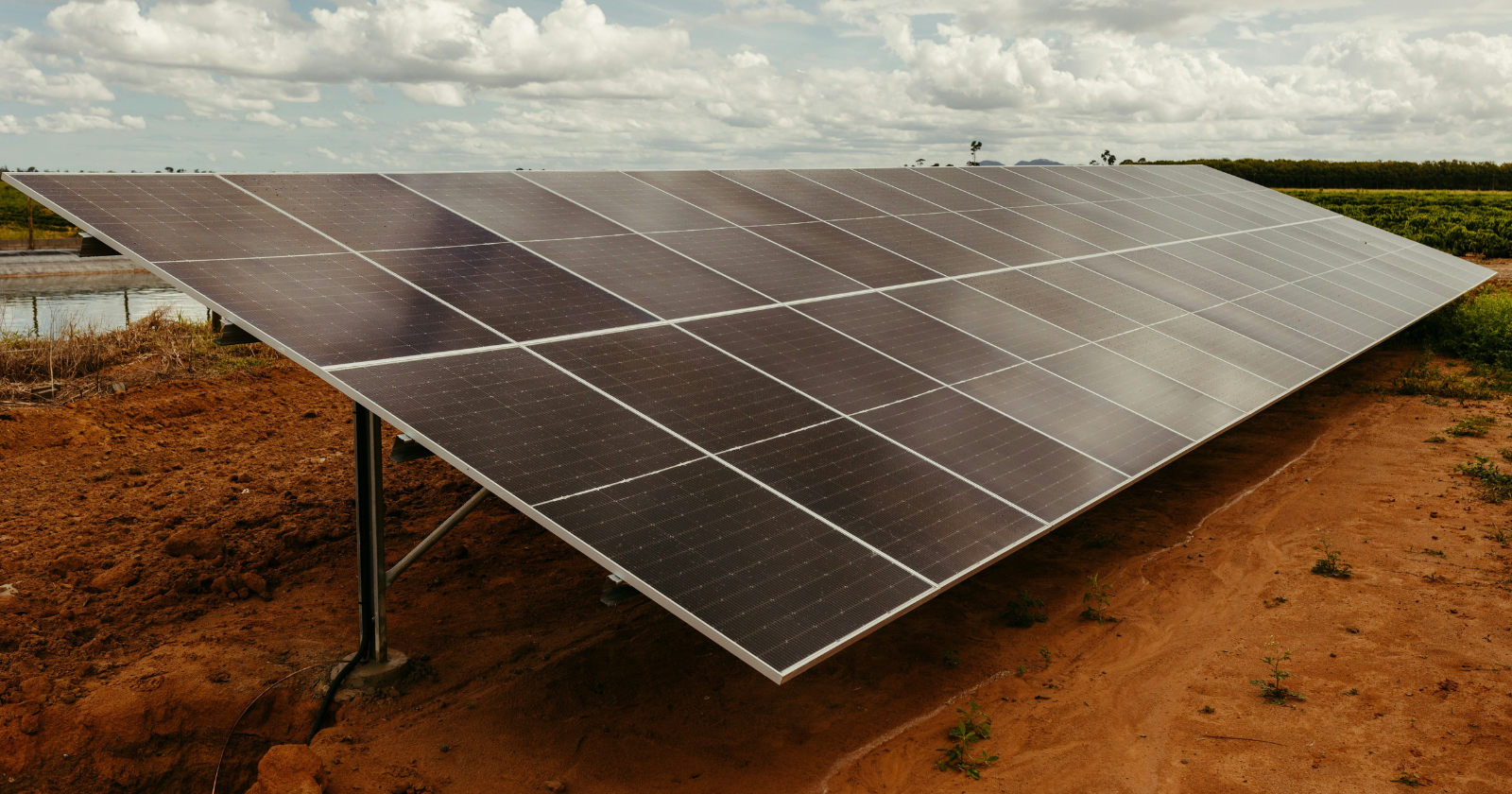
In 2006, a crew in Brockton, Massachusetts finished sealing off a patch of land that had been sitting ruined for longer than most of the people walking past it had been alive. They weren’t digging anything up. They were capping what was underneath, then standing 1,395 solar panels on top of it. I came across this project decades after it happened, and what caught me wasn’t the panels themselves. It was the math of how long a piece of land can sit wrecked before anyone bothers to do something with it besides fence it off.
A quick caveat before I go further: I’m not an environmental engineer, and I have no technical background in remediation or solar construction. Everything below comes from reading contemporaneous reporting and government records, not from any expertise of my own.
A gasworks, then nothing
Before it was a solar field, the site on Grove Street was a manufactured gas plant, part of a roughly 27-acre former gas works property that had been feeding gas to the city the way dozens of towns across the Northeast once ran on plants exactly like it. When the plant stopped operating, it left behind what these sites tend to leave behind: coal tar and ash worked into the ground. Reporting from the site in 2006, journalist Mark Baard described the panels as rooted in crushed rock covering that old coal tar and ash. That detail is the part of the brightfield story that doesn’t make it into ribbon-cutting photos. The land didn’t get scrubbed clean. It got sealed and left in place.
Brockton spent decades figuring out what to do with land like that, and this wasn’t the only site in the city carrying that kind of history. Lori Ribeiro, who had consulted for the city on its brownfields since 2000, put it directly when the solar project finally broke ground: “We want people to know that if you’re proposing to use these sites for all of your trash uses, we had something else in mind.” That line has stuck with me since I read it, because it names a specific kind of insult. Hand a city a ruined industrial lot, and the default assumption from developers is usually the least imaginative one available: another site for the uses nobody wants near a neighborhood people actually live in.
What “brightfield” actually meant
The word itself is a small pun on brownfield, and it names a fairly specific approach. Instead of trying to scrub a contaminated site clean enough for homes or a park, which gets enormously expensive once contamination runs deep, you cap it, keep any new construction from penetrating the ground, and put the site to work generating electricity instead. By the time it was finished, Brockton’s version came out to a 3.7-acre, 425-kilowatt solar garden carved out of the larger 27-acre parcel. Contracts were signed in March 2006, site preparation ran through April, and the panels went up in May, ahead of an October ribbon-cutting that drew local officials and, from what I can tell, a fair amount of genuine surprise that the plan had worked at all.
Not everyone believed in it going in. Brockton City Council member Linda Balzotti recalled her first reaction to hearing the pitch from the project’s original organizer, years before the panels ever arrived: “I thought he had rocks in his head.” I like that quote because it’s honest in a way these retrospectives rarely allow themselves to be. Most write-ups on a project like this skip straight to the triumphant framing. Balzotti’s line is a reminder that putting a small power plant’s worth of equipment on top of poisoned ground probably sounded like a stretch to plenty of reasonable people in that room.
Mayor James Harrington, once the contract was finalized, framed it the way officials tend to when a plan finally clears: “Brockton is very fortunate to be able to redevelop an idle brownfield into a solar ‘Brightfield’ that generates emission-free solar energy.” By the time the array switched on that October, it was producing on land that had generated nothing but liability for decades.
Largest, for a while
How do you check a claim like “largest in the country”? In this case, mostly by looking at what trade press was saying at the time. Coverage from late 2006, including a write-up in Electrical Contractor magazine, described the Brockton array as the biggest brightfield in the nation at the moment it opened. That claim was accurate as a snapshot of a young, small industry, when a 425-kilowatt array could plausibly top a very short list. It was never built to last, and it didn’t. Solar scaled fast in the years after, and a 2025 accounting of brownfield-to-solar conversions counted more than 600 brightfield projects scattered across the country, with nearly every closed landfill in Massachusetts alone now carrying a solar array of some kind. Brockton wasn’t the ceiling. It turned out to be closer to a proof of concept that the rest of the industry then ran with.
That’s the more interesting fact to me than the record itself. A “largest in the country” claim is the kind of thing that photographs well and ages fast. What outlasted the record here was the model, not the ranking.
Whose land this was
I grew up in a household where money was tight, in ways that shape how you look at a place like this for the rest of your life. I’ve since built a comfortable, upper-middle-class life with my husband, and that gives me an odd vantage point on a story like Brockton’s. I’ve seen both sides of the line that decides who ends up living next to a ruined industrial lot and who gets to never think about it. Cities built up on gasworks and leatherworks and textile mills tend to be working-class cities, and the sites those industries leave behind tend to sit in the neighborhoods with the least leverage to demand something better than a fence and a warning sign.
That’s my own opinion, drawn from where I come from rather than any expertise on land use policy, so take it as one. I don’t think it’s a coincidence that a site like this sat idle for decades before anyone found a use for it that didn’t require moving the people around it first. A solar array is a genuinely good outcome for that kind of land. It is also a fairly modest one, next to what a wealthier zip code would likely have gotten instead of a fence.
What’s still standing
The panels installed in 2006 are, as far as the public record shows, still the same ones doing the work today, sitting on the same crushed rock, over the same sealed ground. Nobody drives past expecting a monument. From what photos exist, it looks like exactly what it is: a fenced lot of solar panels next to a city with plenty of other things going on. The most useful fixes rarely announce themselves. This one just keeps quietly producing electricity on land that spent longer being useless than it has spent being useful, and one of these years that ratio finally tips the other way for good.