

Could fighting obesity be as simple as revving up the body’s own heat-producing fat? Researchers at the Institute for Research in Biomedicine (IRB Barcelona) think so, and their experiments in mice point to a surprising candidate: a brain-linked protein called Neuritin 1.
The work, published in Nature Communications, shows that turning on Neuritin 1 in brown adipose tissue boosted energy expenditure, improved insulin sensitivity, and shielded the animals from fatty liver disease, even while they ate calorie-rich diets.
Most anti-obesity medications today suppress appetite. Ozempic and its cousins have become household names by helping people eat less. But the Barcelona group pursued a different angle: what if fat itself could be coaxed into burning more energy, no matter the menu? Brown fat, unlike the familiar white fat that stores calories, is specialized for thermogenesis—converting chemical energy directly into heat. Humans carry modest deposits of it in the neck and shoulders, and its activity tends to decline with age and weight gain.
Dr. Antonio Zorzano, a senior author on the study, explained the team’s approach. “By increasing the levels of Neuritin 1 specifically in brown fat, we observed that the animals burned more energy, which helped prevent fat accumulation,” he said. That shift rippled through the body: mice with elevated Neuritin 1 gained less weight, responded better to insulin, and showed reduced inflammation in the liver.
From Nerve Cells to Fat Cells
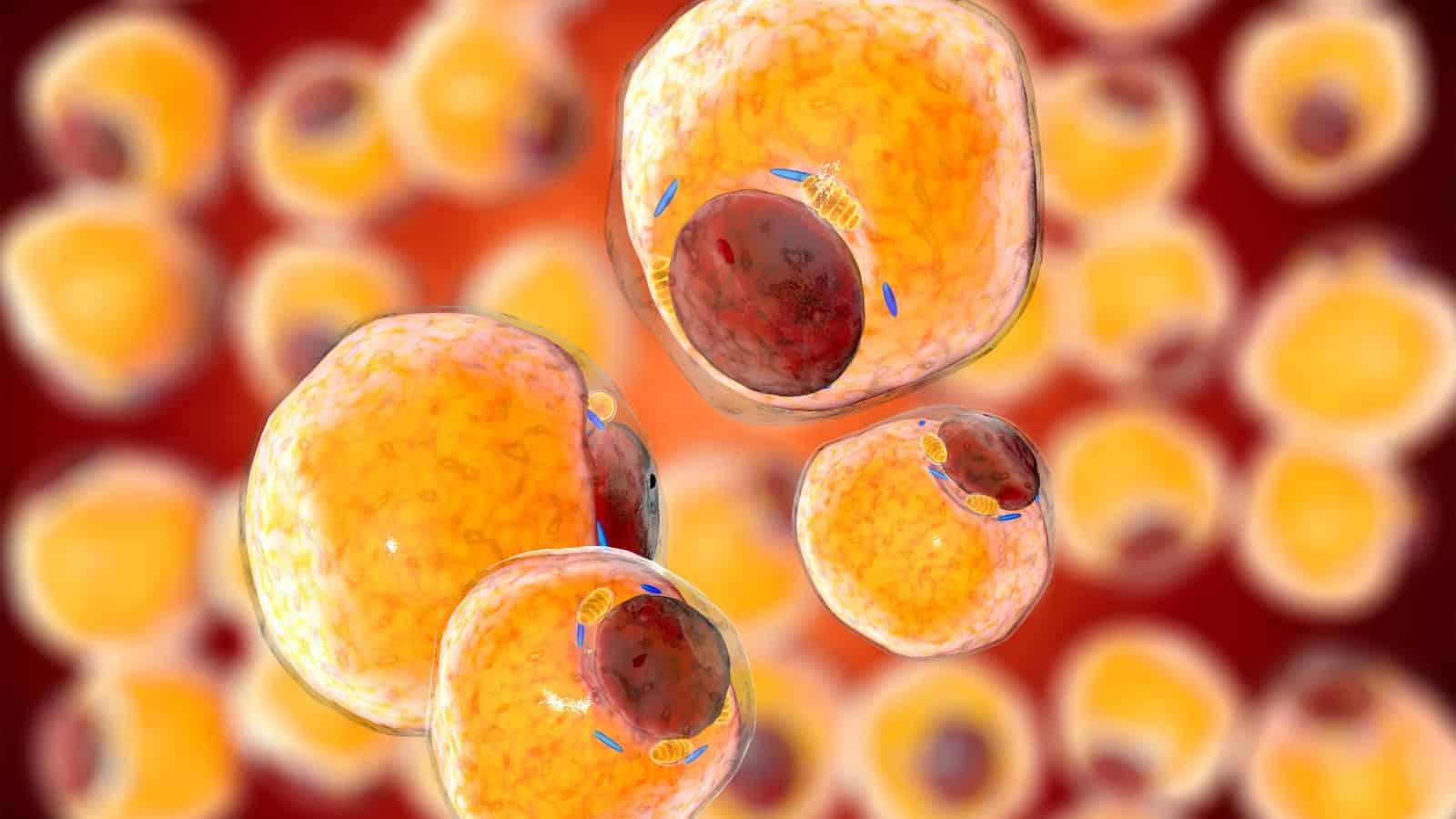
Neuritin 1 has a backstory in neuroscience. It was first characterized as a growth and plasticity factor in the brain, helping neurons form new connections. The surprise here is that brown adipose cells also produce it. When the researchers used viral vectors to ramp up Neuritin 1 production only in these fat cells, the tissue lit up metabolically. Mitochondria worked harder, thermogenic genes switched on, and cells shrank as they burned through their lipid droplets.
The effect was robust enough to offset the harms of a high-fat diet. Even when mice gorged on calorie-dense food, those with boosted Neuritin 1 in brown fat were leaner, healthier, and more metabolically resilient than controls.
Dr. Manuela Sánchez-Feutrie, co-lead author, highlighted the potential. “These findings point to Neuritin 1 as a promising therapeutic candidate for treating obesity and its associated conditions, such as type 2 diabetes and fatty liver disease, through a mechanism that differs from current approaches,” she said.
What It Might Mean for People
For now, this story is firmly in the mouse house. But the team also combed through human genetic data and saw links between Neuritin 1 variants and obesity risk. That connection suggests the biology is not just a rodent curiosity. Translating it into a therapy, though, will take years of work. Delivering proteins or gene vectors into specific fat depots in people is a far trickier challenge than in lab animals.
Still, the commercial and public health implications are hard to ignore. Obesity affects more than 650 million people worldwide and fuels a cascade of chronic illnesses, from diabetes to heart disease. An intervention that boosts calorie burning without curbing appetite could complement, or even compete with, the blockbuster weight-loss drugs now dominating pharmaceutical markets. And unlike appetite suppressants, which can carry psychiatric or gastrointestinal side effects, a fat-targeted metabolic tune-up might avoid some of those pitfalls.
But here’s the catch: biology rarely offers silver bullets. The history of obesity research is littered with miracle molecules that faded once they hit human trials. The IRB Barcelona team is cautious, stressing that their discovery is an early proof of principle. Whether Neuritin 1 can be safely harnessed in people remains very much an open question.
What Stuck With Us
The real surprise was seeing a molecule known for wiring the brain pop up as a metabolic regulator in fat. It’s a reminder that biology recycles its tools, and that the wall we draw between the nervous system and metabolism is far leakier than we like to think. If Neuritin 1 ends up helping people burn more energy, it will be another case where a protein crossed boundaries, and scientists had to follow it.
Journal: Nature Communications
DOI: 10.1038/s41467-025-62255-2