

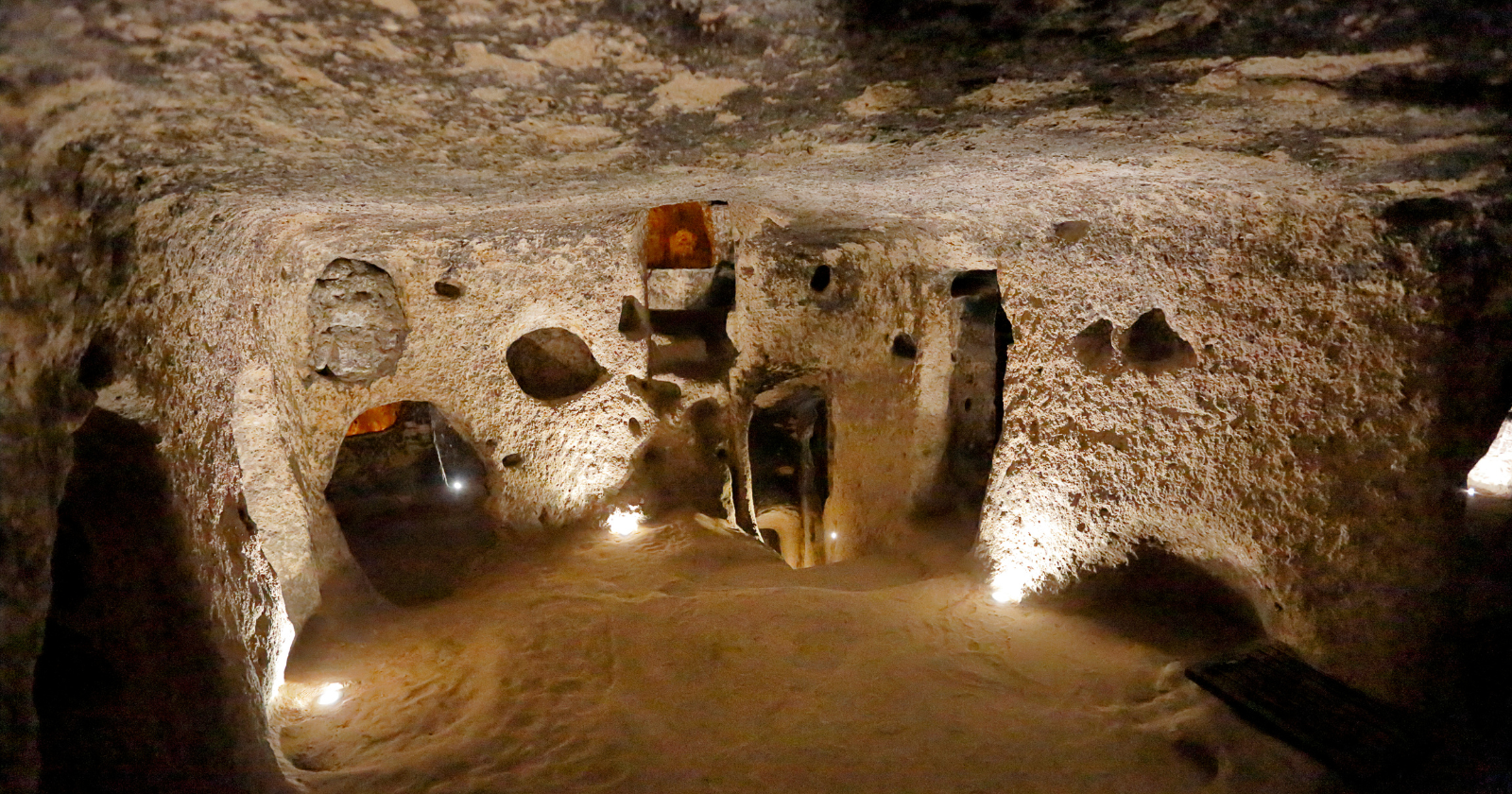
To reach the cave, you have to climb.
There is no road. There has never been a road. The Freser Valley in the eastern Pyrenees is protected wilderness now, and it was, in every meaningful sense, wilderness five and a half thousand years ago. Getting to Cova 338 — the archaeological designation of the site — requires a steep multi-hour hike, on foot, carrying everything you need up 2,235 metres of altitude, and everything you find back down.
The modern archaeologists working the site do this every excavation season. They carry their picks, their brushes, their sample bags, their tents, their food, their bones. Then they carry their finds back down the way they came.
And what they are gradually discovering, dig by dig, is that they are not the first people to have done this. They are not even the tenth generation. Prehistoric people were making the same climb up to this cave 5,500 years ago, and they kept coming back, for at least two thousand years, on trips carefully planned and heavily supplied — carrying nothing anyone would have carried on a whim, going to a place nobody would have gone by accident.
The reason they came, the archaeologists think, is that the cave contained something worth climbing for. Small green stones. Malachite, most likely. And they came up to work with it, generation after generation, in fires they built inside the cave itself.
The 23 hearths
The Cova 338 excavation, led by Professor Carlos Tornero of the Catalan Institute of Human Paleoecology and Social Evolution (IPHES), has been ongoing for several years. Its findings were published in Frontiers in Environmental Archaeology in 2026.
In the second and third occupation layers of the excavation, the team recovered 23 hearths. Twenty-three separate fireplaces, built at different times across the site’s long history of use, each containing fragments of a specific green mineral. Nearly 200 fragments were recovered in total. Analysis suggests, though final confirmation is still underway, that the mineral is malachite — a copper carbonate that forms in vivid green nodules and has been one of the primary source ores of metallic copper across human history.
Crucially, the malachite fragments show clear signs of thermal alteration. They have been heated deliberately. Other materials in the same archaeological layers — bone, wood charcoal, sediment — do not show the same alteration patterns.
As co-author Dr Julia Montes-Landa of the University of Granada put it in the study announcement: “Many of these fragments are thermally altered, while other materials in the cave are not, which clearly suggests that fire played an important role in their processing and that there was a deliberate intention behind it. In other words, they weren’t burned by accident.”
What they were doing (carefully framed)
It is important, when writing about a site like this, to describe what the evidence actually supports rather than romanticise it.
What Cova 338 clearly does not prove is that prehistoric people were smelting copper at 2,235 metres of altitude. Copper smelting requires sustained temperatures above 1,000 degrees Celsius, specific reducing conditions, and equipment the site does not seem to have contained. The researchers themselves use the words “exploitation” and “processing” throughout their published paper, not “smelting.” The distinction matters.
What the site does strongly suggest is that prehistoric communities were deliberately climbing to this altitude, over and over again for centuries, to work with a copper-bearing mineral using fire. Whether they were heat-treating the stones to make them easier to crush, roasting them as a preparation for later processing at lower altitudes, or attempting some form of early metallurgy that didn’t succeed in producing metallic copper, is still being worked out.
The paper calls the site “among the earliest known examples of this type of activity in Western Europe.” That is a careful, precise claim. It doesn’t require the archaeologists to prove more than they can. And it is genuinely revolutionary, because prior to Cova 338, the standard assumption in Pyrenean archaeology was that high-altitude sites above 2,000 metres were essentially marginal — places prehistoric groups passed through briefly during seasonal migrations but did not use for organised, resource-intensive activity.
Cova 338 breaks that assumption. Twenty-three hearths, spread across occupation layers spanning something like two thousand years, all containing evidence of the same deliberate processing activity — this is not incidental use. This is a site people came to on purpose. Repeatedly. For a very long time.
The child
Alongside the copper evidence, the team recovered something else.
In the third layer of the excavation, embedded among the ancient fireplaces and the burned green stones, they found a baby tooth and a finger bone, both belonging to a child who died at roughly eleven years of age. Whether the two bones come from the same individual, or from two different children, is not yet clear. Cause of death cannot be determined from what has been recovered so far.
The finding raises a possibility the team is now investigating: that Cova 338 was not only a work site but also, at least occasionally, a burial site. The unexplored back chambers of the cave may contain more human remains.
There is something quietly moving about this. A prehistoric child, dead at eleven years old, in a cave at the top of a mountain nobody would casually visit. Whether they died in an accident during a family’s supply trip, or died elsewhere and were carried up to be buried in a place that mattered to their people, or died as part of some ritual practice we cannot begin to reconstruct — we don’t know. But somebody carried that child’s bones up 2,235 metres. Or the child was carried up while still alive, and never came down.
Why the site matters
Cova 338 is not, on its own, a revolutionary discovery in the sense of overturning our fundamental understanding of prehistoric Europe.
What it is, more precisely, is a piece of evidence that complicates a long-standing assumption in archaeology — the assumption that high-altitude environments were marginal to prehistoric life, used only briefly and incidentally. What the growing evidence at Cova 338 shows is that some prehistoric communities integrated high mountains into their organised economic lives, sending members up to specialised resource sites like this cave and returning, over and over, across many centuries.
The 4,000-plus years mentioned in some popular reports refers to the total span of the site’s history — from the earliest occupation around 5,500 years ago to the traces of activity into the Bronze Age. The intensive, focused period of repeated use appears to have been about 2,000 years within that span.
That is still an extraordinary duration for a single cave in a single valley to remain economically important. Two thousand years is roughly the entire span of recorded history from the birth of Christ to today. And in the case of Cova 338, we are talking about that duration passing before written records existed at all, before wheels, before most metallurgy — and yet a community, somewhere in the eastern Pyrenees, kept climbing back up to the same cave, generation after generation, to work with the same green stones.
Excavations resume again this year. What is still under the surface of the cave floor, in the unexplored back chambers, in the sediment layers not yet reached, has not yet given up its story.