

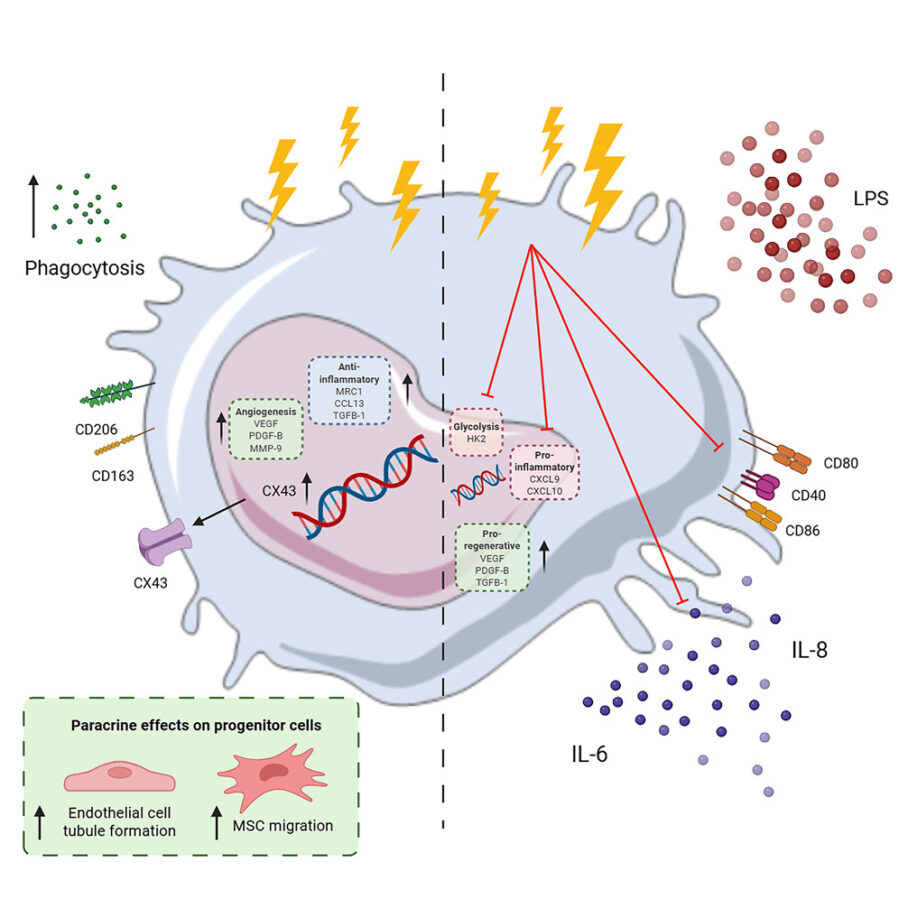
It began with a pulse. Researchers at Trinity College Dublin have shown that carefully applied electrical stimulation can reprogram human macrophages, the immune system’s frontline defenders, to reduce inflammation and accelerate healing. The findings, published in Cell Reports Physical Science, open the door to new electrotherapies for wounds, degenerative disease, and inflammatory conditions.
The body’s repair crew under new management
Macrophages are white blood cells with a double-edged role. They devour pathogens and clear away dead cells, but they also fuel inflammation, a process that can spiral into tissue damage if unchecked. For years, scientists have sought ways to coax macrophages into their calmer, regenerative state without shutting down their essential defense functions.
“Not only does this study show for the first time that electrical stimulation can shift human macrophages to suppress inflammation, we have also demonstrated increased ability of macrophages to repair tissue,” said Dr Sinead O’Rourke, first author.
The Trinity team isolated macrophages from healthy human donor blood, then exposed them to one hour of precisely controlled electrical pulses in a custom bioreactor. The cells responded with a remarkable transformation. Instead of producing inflammatory signals, they ramped up genes linked to repair, angiogenesis (blood vessel growth), and tissue regeneration. Their phagocytic activity, the capacity to engulf debris, also increased.
A therapy hiding in plain sight?
Electrical stimulation is already used in medicine, from pacemakers to wound healing devices. But until now, little was known about its direct effects on immune cells. What makes this study stand out is its use of primary human macrophages, not just cell lines or animal models. That detail pushes the findings closer to clinical translation.
The researchers also noted lasting effects. Even 72 hours after stimulation, macrophages retained their regenerative phenotype. This sustained shift is critical, because wound healing depends on a delicate timing of immune phases. The first days after injury are when the immune system decides whether to escalate inflammation or pivot to repair. Electrical guidance may tip the balance toward healing.
Next steps and wide horizons
Professor Michael Monaghan, co-lead author, emphasized that this is just the beginning. The team plans to test more advanced electrical patterns and explore devices that could deliver the therapy directly at wound sites or within inflamed tissue.
“Among the future steps are to explore more advanced regimes of electrical stimulation to generate more precise and prolonged effects on inflammatory cells,” Monaghan said.
Because the approach is non-invasive, relatively safe, and potentially low-cost, it could be deployed widely, from chronic wound clinics to treatments for autoimmune or degenerative diseases. Of course, the path from petri dish to patient is long. The researchers stress the need for preclinical models to confirm how electrically tuned macrophages behave in living systems.
Still, the image is compelling: an immune system not bludgeoned by drugs, but nudged by currents into a healing mode. Perhaps the body’s own bioelectric language has always carried this possibility; it just needed scientists to learn how to speak it.
Explainer: What are macrophages?
Macrophages are immune cells that act like cleanup crews and traffic controllers in the body. They engulf pathogens and dead cells, but also release chemical signals that shape the overall immune response. In their “pro-inflammatory” mode, they fight infection aggressively, but can cause tissue damage if they don’t switch off. In their “anti-inflammatory” or “regenerative” mode, they calm inflammation and help rebuild tissue. Finding ways to safely encourage this switch is a central goal of regenerative medicine.
Journal: Cell Reports Physical Science
DOI: 10.1016/j.xcrp.2025.101234