

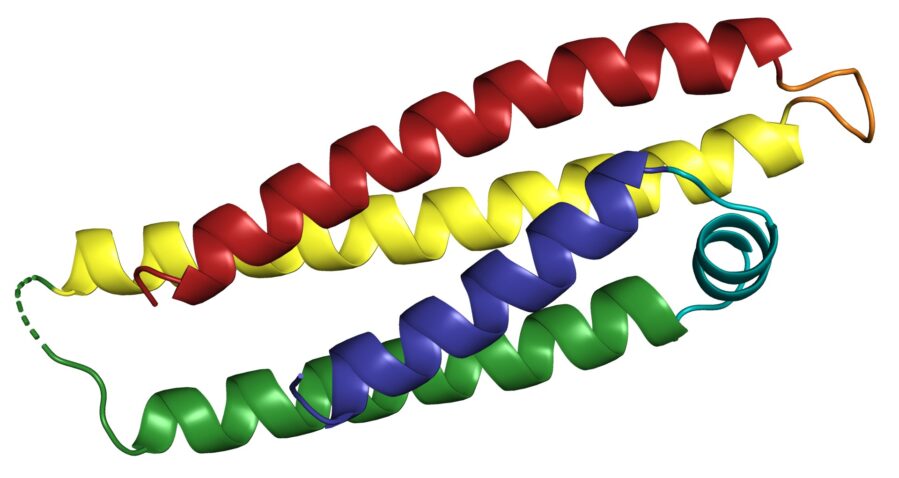
In a new study that combines precise gene editing with a noninvasive delivery method, researchers successfully reduced levels of APOE ε4, a key genetic risk factor for Alzheimer’s disease, by using focused ultrasound and CRISPR-loaded viruses in the mouse brain.
This approach achieved a 12.6 percent knockdown of APOE ε4 expression in the hippocampus and reduced apoE4 protein and inflammatory glial cells by more than 20 percent. Crucially, the method required no surgery, opening the possibility of long-term genetic therapy for Alzheimer’s without penetrating the skull.
Ultrasound Unlocks the Brain
The blood-brain barrier blocks most drugs and gene therapies from reaching brain tissue. But focused ultrasound (FUS), paired with injected microbubbles, can temporarily and safely open this barrier at targeted locations. In this study, published July 15 in Alzheimer’s & Dementia, researchers used FUS to guide adeno-associated viruses (AAVs) into the hippocampus of mice engineered to carry the human APOE ε4 gene.
“Our findings demonstrate a noninvasive, targeted approach for APOE ε4 knockdown,” the authors wrote. “FUS-mediated brain-directed interventions [are] a promising therapeutic strategy for Alzheimer’s disease.”
The AAVs were engineered to carry a CRISPR-Cas9 system targeting the APOE ε4 variant. After a single intravenous injection, the ultrasound beam focused on one side of the mouse brain, temporarily opening the barrier to allow the virus in. The untreated side served as a built-in control.
Key Outcomes in the Mouse Brain
Three weeks later, the effects of this targeted gene therapy were measured. The highlights include:
- 12.6 percent knockdown of APOE ε4 gene expression in the hippocampus
- Over 20 percent reduction in apoE4 protein levels
- Decreased astrocyte and microglial activity, markers of neuroinflammation
- No significant off-target gene edits detected in mouse or human cells
- No observable tissue damage or toxicity from the treatment
Confocal imaging showed fewer apoE4-positive astrocytes and lower expression of glial proteins like GFAP and Iba1 on the treated side. Enzyme assays confirmed a reduction in apoE4 protein levels as well. Importantly, none of these changes occurred in mice that received the virus without ultrasound, showing that FUS was essential for delivery.
Why APOE ε4 Is a Target
The APOE ε4 allele is the strongest known genetic risk factor for late-onset Alzheimer’s. One copy triples your risk; two copies raise it by up to twelvefold. APOE ε4 contributes to amyloid buildup, tau tangles, cholesterol imbalance, and inflammation in the brain.
While antisense therapies and antibodies are being tested to lower apoE4 levels, they require repeated dosing. CRISPR offers a one-time gene disruption, potentially removing the source of the problem permanently. The main obstacle has been delivering CRISPR safely into the brain.
A Safer Way to Edit Genes in the Brain
Direct brain injections can deliver AAVs but come with serious risks. This study avoided those risks by using focused ultrasound to open the blood–brain barrier at precise locations. The barrier resealed within 48 hours, and MRI scans showed no bleeding, swelling, or damage.
“We were the first to report FUS-mediated delivery of CRISPR-based AAVs in mouse brain for efficient neuronal gene editing,” the team wrote.
Another advantage: they used a relatively low dose of virus, about one-sixth the amount used in some other systemic studies. This makes the approach more scalable and clinically relevant. The vector they used, AAV9, is already approved in gene therapies like Zolgensma.
Can This Prevent Alzheimer’s?
The researchers treated young mice before signs of disease appeared. That may be critical. APOE ε4 mice show early changes in metabolism, inflammation, and cognitive function. Previous work has shown that reducing apoE4 in astrocytes can lessen amyloid buildup and glial activation later in life.
Although behavioral outcomes were not tested in this study, the authors suggest future work will include memory and learning tests such as the Morris water maze and contextual fear conditioning.
What’s Next for This Therapy?
The team is already thinking ahead. To improve efficiency, they propose engineering better AAV capsids, exploring base editing to convert ε4 to ε3, and developing lipid-based delivery systems that do not rely on viruses. They also suggest that repeated FUS treatments, already being studied for plaque reduction, might be combined with gene therapy for stronger effects.
“Our work serves as a proof-of-concept for FUS-mediated systemic delivery of CRISPR-based AAVs for gene editing in the brain,” they concluded. This approach, they argue, may one day offer a preventive therapy for people who carry the APOE ε4 gene and are at high risk for Alzheimer’s disease.
Journal Information
Published in: Alzheimer’s & Dementia
DOI: 10.1002/alz.70464