

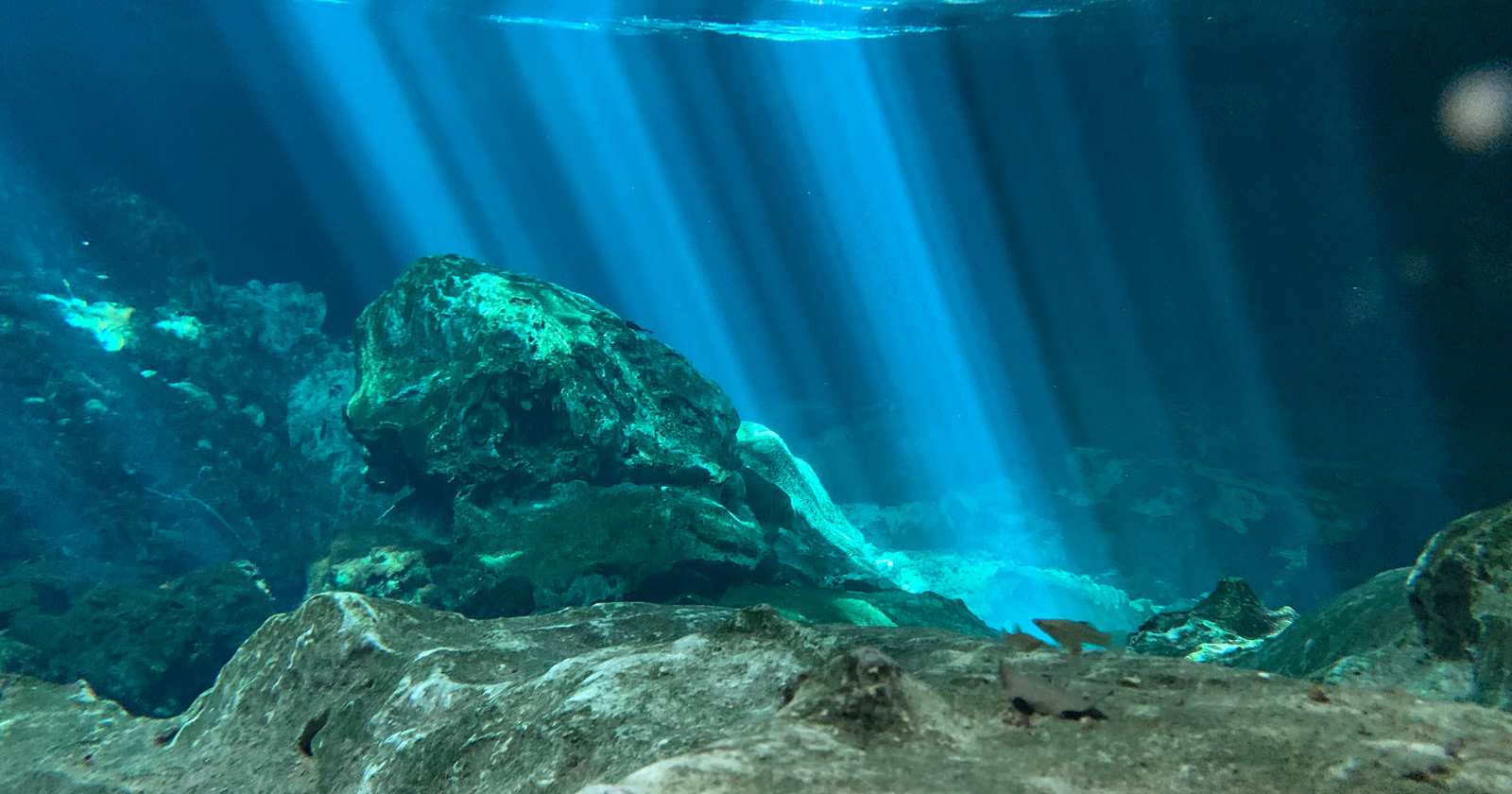
Four thousand metres down, in the darkest and quietest part of the central Pacific Ocean, there is a region the size of the continental United States where the seafloor is scattered with small dark rocks.
They look, from close up, like potatoes or apples — rough-surfaced, mostly black, roughly fist-sized. They lie on top of a fine muddy sediment that has been undisturbed for millions of years. Around and between them, in some of the least explored habitat on the planet, live thousands of species of animals — corals, sponges, worms, small crustaceans, translucent fish — that no scientist has ever formally described.
The rocks are called polymetallic nodules. And they are, by any reasonable measure, one of the most valuable naturally occurring deposits of industrial metal anywhere on Earth.
Each nodule is approximately 25 to 30 percent manganese, 1 to 2 percent nickel, 1 to 2 percent copper, and 0.2 to 0.3 percent cobalt by weight. These metals — particularly cobalt and manganese — are essential ingredients in the batteries, electric vehicles, and renewable-energy infrastructure the world is trying to build in the coming decades. The specific region of the Pacific where they are concentrated, called the Clarion-Clipperton Zone, holds an estimated 21 billion tons of these nodules in total, containing approximately 5.95 billion tons of manganese and 0.05 billion tons of cobalt.
The USGS estimates that the CCZ contains 21.1 billion dry tons of nodules, with tonnages of several critical metals greater than estimated global terrestrial reserves. That is a reserve comparison, not a claim that the nodules exceed every known occurrence on land.
How the nodules formed
The specific way these nodules came to exist is worth being direct about, because it is not what most people imagine when they picture “underwater rocks.”
They did not form as normal rocks form. They were not pushed up by geological activity. They were not deposited by ancient rivers. They accumulated, atom by atom, from the surrounding seawater — dissolved metals precipitating out onto small nuclei of shell, bone, or hardened sediment on the abyssal floor.
Each nodule began as something tiny. A fragment of a shark tooth. A piece of shell. A small hard particle of something dropped from above and left on the sediment.
Around that nucleus, dissolved manganese and iron in the surrounding water — held in solution at trace concentrations — began to precipitate. Not in bursts. Slowly. So slowly that the accretion rate for a typical Clarion-Clipperton nodule is estimated at approximately one millimetre of growth per one to ten million years.
The apple-sized nodules that mining companies now want to collect are, by this measure, between five and ten million years old at their outer surface. Their inner cores may be considerably older. They have been sitting on the abyssal plain, growing at the rate of a single atomic layer per year, since long before humans existed as a species.
What lives around them
The nodules are not just economically valuable. They are also, ecologically, doing something that is not immediately obvious.
The abyssal plain of the Clarion-Clipperton Zone is almost entirely soft sediment. There is no rock. There are no cliffs. The nodules are, in significant stretches of the region, the only hard surface for hundreds of kilometres in any direction. This makes them essential habitat for any species that requires something solid to attach to.
Corals grow on them. Sponges anchor to them. Small sessile animals — creatures that spend their entire lives attached to one place — depend on nodules for that place. Around them, in the sediment itself, whole communities of tiny worms, crustaceans, and microorganisms have evolved to specific microhabitats that only exist because the nodules exist.
A 2023 checklist in Current Biology catalogued 5,578 animal species recorded from the Clarion-Clipperton Zone. Of those, 436 had been formally named; the authors estimated that 92% of the recorded species were undescribed, while warning that synonyms and incomplete sampling add uncertainty.
The 90-percent-undescribed figure is the conservative reading of the data. Newer surveys, using environmental DNA sampling and improved deep-sea imaging, continue to turn up species previously unknown to biology on nearly every expedition.
The asymmetry of the extraction
The specific technical proposal of the deep-sea mining industry is to send collector vehicles to the seabed, sweep up the nodules, pipe them to surface ships, and bring them to processing facilities on land.
The extraction rate the industry is targeting is, at commercial scale, on the order of thousands to millions of tons of nodules per year. In 2022, a single feasibility test conducted by The Metals Company collected approximately 3,300 tons of nodules in the space of weeks.
The formation rate of the nodules, as noted earlier, is approximately one millimetre per one to ten million years.
That asymmetry — hours of collection versus millions of years of formation — is one of the more extreme extraction rate mismatches in modern industry. In practical terms, the nodules are being treated as if they were a mineral resource on a comparable time scale to coal or copper ore. They are not. Coal takes hundreds of millions of years to form, but coal beds are thick and continuous. Nodules take similar geological time to form, but each individual apple-sized rock is a discrete, individually-grown, sedimentary artefact that will not be replaced within any human timescale.
This is why the Clarion-Clipperton Zone is regulated by the International Seabed Authority — a UN body established under the Convention on the Law of the Sea. As of 2026, 19 exploration licences covering approximately 1.5 million square kilometres have been granted. Full commercial mining has not yet begun at scale but is projected to be authorised within the current decade if the ISA’s regulatory framework is completed.
What has not been established
Because the region is so poorly studied, the full ecological consequences of nodule removal cannot currently be predicted with confidence.
What is known, from small-scale experimental mining tests and modelling studies, is that removing the nodules destroys the microhabitat for the sessile species that depend on them. Sediment plumes generated by mining vehicles smother larger areas beyond the direct mining footprint. Dewatering discharge — the seawater and sediment waste returned to the ocean from surface ships — has been shown, in recent research published in Nature Communications, to potentially disrupt midwater food webs at depths well above the abyssal floor.
What is not known is what the aggregate consequences of full-scale commercial mining across hundreds of thousands of square kilometres would be for a habitat where 90 percent of the species have not been described. It is not currently possible to conduct rigorous impact assessment on species that have not yet been named.
The nodules will still be there whether they are mined this decade or not. The species living around them, if they are lost, will not be recoverable. The specific extraction currently under consideration is genuinely, in the honest sense, one of the largest interventions in an unstudied ecosystem in the history of human industry.
Whether it happens, and at what scale, will be decided within the next few years — by regulatory bodies, corporate boards, and national governments — in decisions that will affect a place where almost no one has ever been.