

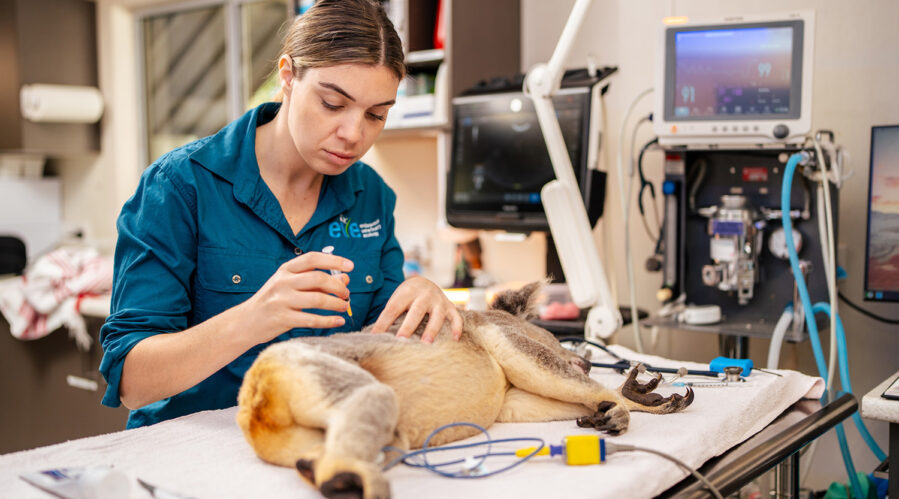
A single shot could save Australia’s koalas from extinction. After more than a decade of development, regulators have approved the world’s first vaccine to protect the nation’s iconic marsupials from chlamydia, a sexually transmitted disease that kills nearly half of all wild koalas.
The University of the Sunshine Coast vaccine represents a critical intervention for a species teetering on the edge. Some koala colonies report infection rates as high as 70 percent, with the disease causing painful urinary tract infections, infertility, blindness and death. Until now, the only treatment was antibiotics, which often proved worse than the disease itself.
“We knew a single-dose vaccine, with no need for a booster, was the answer to reducing the rapid, devastating spread of this disease,” said Professor Peter Timms, who led the research team. The timing couldn’t be more urgent. Individual colonies are ‘edging closer to local extinction every day,’ particularly in Southeast Queensland and New South Wales.
But here’s the cruel irony: treating infected koalas with antibiotics disrupts their ability to digest eucalyptus leaves, their sole food source. The cure literally starved them to death.
A Decade In The Making
The vaccine’s journey from laboratory to approval involved hundreds of wild koalas across multiple generations. Dr Sam Phillips, who conducted the largest and longest study of wild koalas ever undertaken, found the vaccine reduced mortality by at least 65 percent during breeding age.
“This study found that the vaccine reduced the likelihood of koalas developing symptoms of chlamydia during breeding age and decreased mortality from the disease in wild populations by at least 65 percent,” Dr Phillips said.
The vaccine targets Chlamydia pecorum’s major outer membrane protein and offers three levels of protection: reducing infection, preventing progression to clinical disease, and in some cases, reversing existing symptoms. It’s a complicated formulation with six components, including three chlamydia proteins designed to cover different strains circulating across the country.
What makes this vaccine particularly suited for wildlife is its single-shot design. Capturing wild koalas for booster shots would be logistically impossible and dangerously stressful for the animals. The researchers specifically engineered an adjuvant system that provides long-lasting immunity from just one dose.
Global Collaboration, Local Impact
The project drew expertise from unexpected corners of the globe. The adjuvant system originated from the University of Saskatchewan’s Vaccine and Infectious Disease Organization, developed with funding from the Bill and Melinda Gates Foundation. French animal health company Ceva Santé Animale provided crucial support through its Wildlife Research Fund.
“This initiative transcends basic research; it represents a crucial intervention to safeguard endangered species and maintain ecological balance in Australia’s unique environments,” said Pierre-Marie Borne, Director of the Ceva Wildlife Research Fund.
Dr Terri Irwin from Australia Zoo Wildlife Hospital, whose facility participated in real-world trials, emphasized how the research combined scientific rigor with compassionate care. The trials involved vaccinating koalas in actual field conditions, providing researchers with invaluable data on the vaccine’s practical effectiveness.
The Australian Pesticides and Veterinary Medicines Authority approved the vaccine under its minor use category, clearing the way for production by Sydney-based Tréidlia Biovet. But approval is just the beginning. Professor Timms acknowledges the team still needs major funding for national rollout to at-risk populations.
Federal Environment Minister Murray Watt noted the government’s $76 million Saving Koalas Fund has supported this research, while Queensland has contributed over $550,000 specifically to University of the Sunshine Coast projects. The state recently committed an additional $39.6 million for protected areas and wildlife hospital facilities.
The vaccine arrives as koalas face multiple threats beyond disease. Habitat destruction continues to fragment their territories, and climate change affects eucalyptus leaf quality. Chlamydia, however, remains one of the most immediate and treatable threats to their survival.
For a species that has become synonymous with Australia’s unique wildlife, this vaccine offers something increasingly rare in conservation: a concrete solution to a specific problem. Whether it arrives in time for the most vulnerable populations remains the pressing question.