

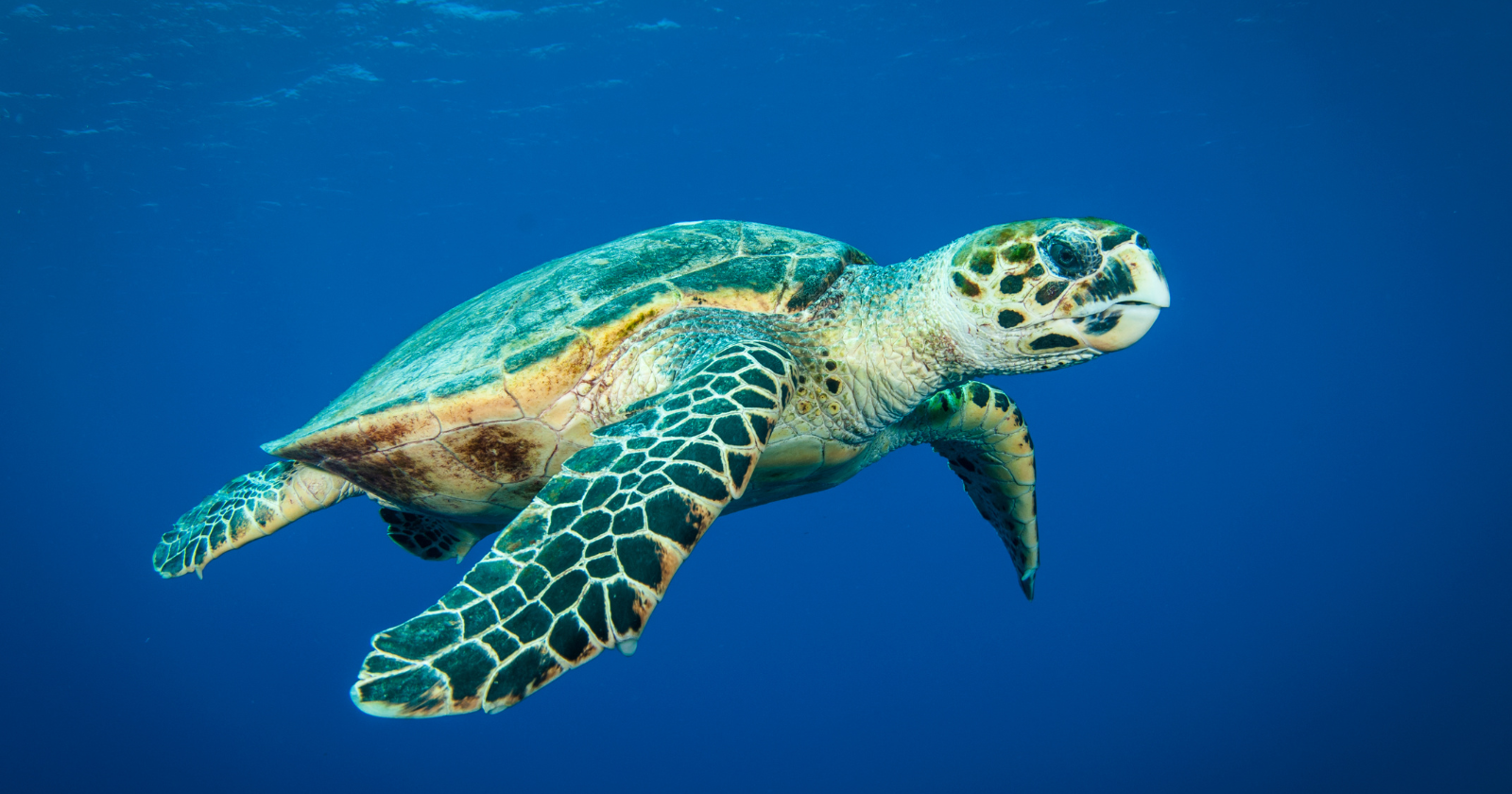
The insight arrived on a camping trip. Evan Budz, 15, of Burlington, Ontario, was watching a snapping turtle move through the water, and what struck him was how little it disturbed — no wake, barely a ripple, an animal crossing a pond and leaving it undisturbed behind him.
Then he thought about how a machine sent to study that pond would move: by spinning a propeller.
That mismatch became a science project. Conventional underwater drones push themselves forward with a screw, which is noisy, throws off turbulence, and stirs sediment up off the bottom — and a cloud of stirred silt and a mechanical whine are precisely what drive off the fish, and blur the water, in the ecosystem the drone was sent to observe. The propulsion system, Budz realized, works against the mission. So he copied the turtle instead.
BURT
His robot is called BURT — Bionic Underwater Robotic Turtle — and it swims the way the snapping turtle did: by flapping a pair of front flippers, not by turning a propeller.
The design copies the real division of labour in a swimming turtle. The front flippers generate forward thrust; the smaller rear limbs steer and stabilize rather than propel. Budz modeled the parts in SolidWorks and 3D-printed them, built around a clear tube of electronics with a thumb-sized camera at the front. The whole machine weighs about 11 pounds — a large house cat — runs up to eight hours on a lithium battery with a solar panel to extend it, and cruises at about half a mile an hour, roughly the pace of an actual sea turtle. He can make it faster, he says, by flapping the flippers harder.
The point of all that biomimicry is a single property: BURT crosses the water without stirring it. That is the reason the machine exists, and everything else is built on top of it.
The eyes, and the murk
BURT is not just a quiet swimmer; it is a quiet swimmer that looks for trouble.
The forward camera feeds into an onboard Raspberry Pi — a computer the size of a playing card — running machine-learning models trained to recognize signs of ecological stress: coral bleaching, invasive growth, plastic waste. The robot follows a preset search grid on its own, which means no tether and no remote pilot — it swims the pattern, records what it sees, and can send the data out. An autonomous, silent, self-navigating observer.
The real world then edited the design, which is the part most retellings skip. When Budz moved BURT out of clear water, murk, current and shifting light defeated the camera — so he added two things that weren’t in the original drawing: lights on the front, and an ultrasonic transducer that uses high-frequency sound to sense obstacles the camera can’t see. The problems of the actual water column, not the tidy plan, forced the final machine.
The 96 percent, honestly
Which brings us to the number in the headline, and it deserves its asterisk stated plainly, because the honest version is more instructive than the hype one.
The 96 percent figure is real, and it is exactly what your skepticism should expect it to be: in testing, BURT correctly flagged replicated coral bleaching 96 times out of 100. “Replicated” is the load-bearing word. The coral was 3D-printed models; the water was his grandparents’ backyard pool, just over eight feet deep; the light was steady, the depth fixed, and the machine had been shown in advance what bleaching looks like. It later went into Lake Ontario — nothing like a pool — but the 96 percent belongs to the controlled test, not the open lake, and certainly not a real reef.
None of which is a knock. It is how a prototype is supposed to be reported. A 15-year-old established a clean baseline under controlled conditions, hit 96 percent, and then took the machine somewhere messy enough to reveal what the baseline missed — which is the exact shape of real instrument development, just run in a swimming pool by someone in grade 10.
The judges agreed it was more than a school project. BURT won Best Innovation Project at the 2025 Canada-Wide Science Fair, out of a national field drawn from around 25,000 students, then took one of the top prizes at the European Union Contest for Young Scientists in Riga against dozens of countries.
The idea underneath the awards is the durable part, and it is a genuine critique of how we watch nature. We build loud, wake-throwing machines to study animals that flee loud, wake-throwing things, then trust the data they bring back from an environment they disturbed by arriving. A teenager watched a turtle solve that problem 200 million years ago and simply copied the answer. The best way to observe a pond without changing it, it turns out, was patented in the Mesozoic — flippers, not propellers — and it took a camping trip and a snapping turtle to file the reminder.