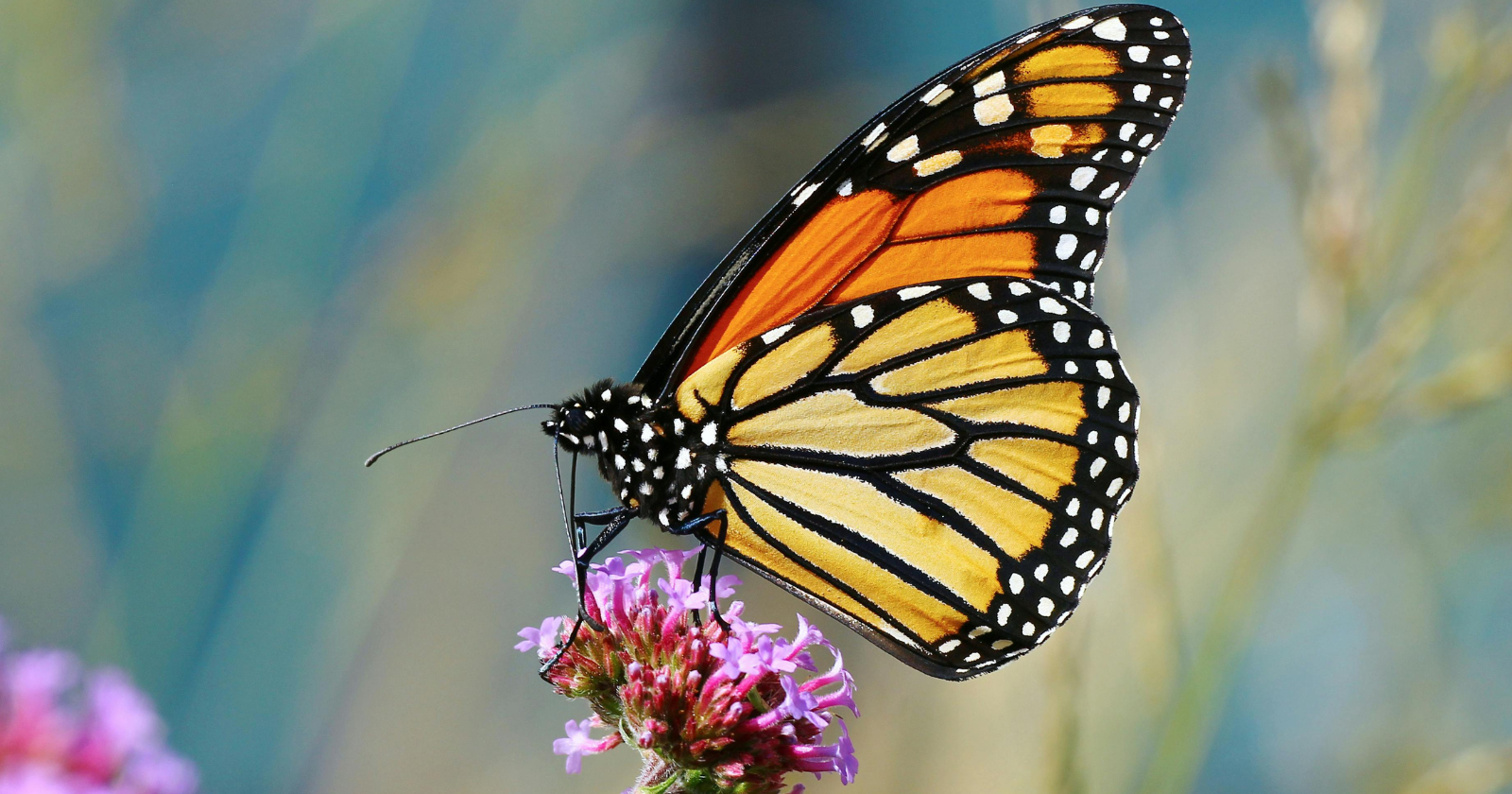
Every autumn, a monarch butterfly born in Canada or the northern United States does something that should be impossible. Weighing about half a gram, with a brain the size of a poppy seed, it flies up to 4,000 kilometres to a handful of specific mountain peaks in central Mexico, a place it has never been, following a route its great-great-grandparents flew the year before.
No individual monarch ever makes the round trip. The butterflies that head south in fall are three or four generations removed from the ones that came north in spring. Whatever map they are using is written somewhere in their genes, and for a century scientists have had no way to watch a single butterfly read it.
Now they do. The butterflies are wearing radios.
The weight problem
The reason nobody tracked a monarch before is brutally simple: physics. A GPS tracker light enough for a songbird still weighs a few grams, several times more than an entire monarch. Stick one on a butterfly and you don’t have a migration study, you have a grounded insect.
The rule of thumb in wildlife tracking is that a tag should weigh no more than a few percent of the animal’s body mass. For a monarch, that budget is measured in tens of milligrams, lighter than a large raindrop. Any tracker had to shrink to almost nothing, carry no meaningful battery, and still somehow report where the insect went.
Backpacks the size of a lentil
Two teams cracked the problem in different ways. Engineers at the University of Michigan built mSAIL, a 62-milligram chip-stack measuring eight millimetres a side, with solar cells for power, sensors for light and temperature, and a tiny radio. It does not transmit its position en route. Instead it logs light and temperature all the way to Mexico, and when the butterfly arrives at the overwintering site, receivers there download the data. Day length and temperature vary with latitude and longitude, so software can reconstruct the whole journey from the recordings, like working out someone’s road trip from their sunrise times.
The second approach, from a company called Cellular Tracking Technologies, went live in the field in September 2023, when the first solar-powered coded radio tags were glued to monarchs at Cape May Point, New Jersey. These 60-milligram tags have no battery at all. As long as sunlight hits them, they chirp a unique ID once per second on the same frequency as Bluetooth, which means an ordinary smartphone running the project’s app can detect a passing butterfly from up to a couple of hundred metres away. Every phone becomes a tracking station.
Lionel goes to Florida
The new tags started paying off almost immediately. In late 2024 a tagged monarch nicknamed Lionel flew from New Jersey down to Florida while phones and receiver stations logged him along the way, giving researchers the first full southbound track of a single monarch across more than a thousand miles. Since then, more than 400 monarchs have flown with tags, on both the eastern flyway and among the smaller population that winters on the California coast, and the tracks are already full of surprises: unexpected detours, backtracking, and long runs that don’t match the tidy arrows in textbooks.
The question the radios might answer
The tracking is in service of a deeper mystery: how does a naive insect navigate to a destination it has never seen?
Lab work over the past two decades has produced pieces of the answer. Monarchs carry a sun compass, using the sun’s position corrected by an internal clock that, remarkably, lives partly in their antennae. They appear to sense Earth’s magnetic field as a backup for cloudy days. But a compass only gives you a heading. It cannot explain how millions of butterflies from across half a continent funnel onto the same few hectares of fir forest in the mountains of Michoacán.
That is what individual tracks can test. Do monarchs correct course after a storm blows them sideways, which would suggest something map-like rather than a fixed heading? Do they follow landscape features, ride particular winds, or converge along traditional corridors? Do the ones that stray ever find their way back? With one butterfly’s actual path on a screen, day by day, these stop being campfire questions and become measurable ones.
A map drawn just in time
There is an unhappy urgency underneath the engineering. Monarch numbers have fallen steeply over recent decades, hit by habitat loss, herbicides wiping out the milkweed their caterpillars need, and increasingly erratic weather along the migration route. The western population has flirted with collapse more than once. In 2024 US authorities proposed listing the monarch as a threatened species.
Knowing precisely where the butterflies fly, rest and refuel matters for protecting them, because you cannot conserve a corridor you cannot see. The radio backpacks arrived just as the migration they are built to decode has become fragile. With luck, the little tags chirping their way south each autumn will map the monarchs’ inherited highway in time to keep it open.